Papas Marion, Catalán Jaime, Fernandez-Fuertes Beatriz, Arroyo Laura, Bassols Anna, Miró Jordi, Yeste Marc
Equine Reproduction Service, Department of Animal Medicine and Surgery, Faculty of Veterinary Sciences, Autonomous University of Barcelona, E-08193 Bellaterra, Spain.
Biotechnology of Animal and Human Reproduction (TechnoSperm), Unit of Cell Biology, Department of Biology, Institute of Food and Agricultural Technology, Faculty of Sciences, University of Girona, E-17003 Girona, Spain.
Antioxidants (Basel). 2019 Nov 9;8(11):539. doi: 10.3390/antiox8110539.
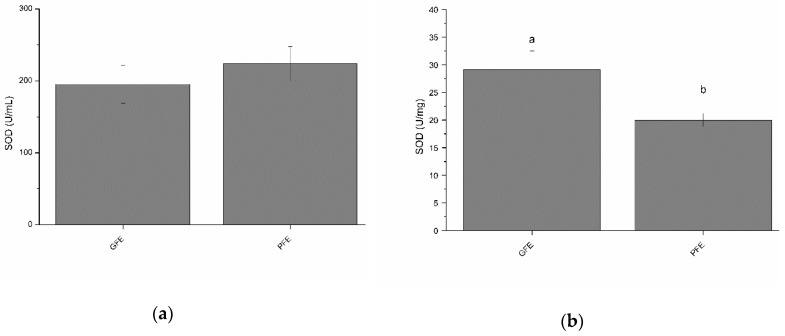
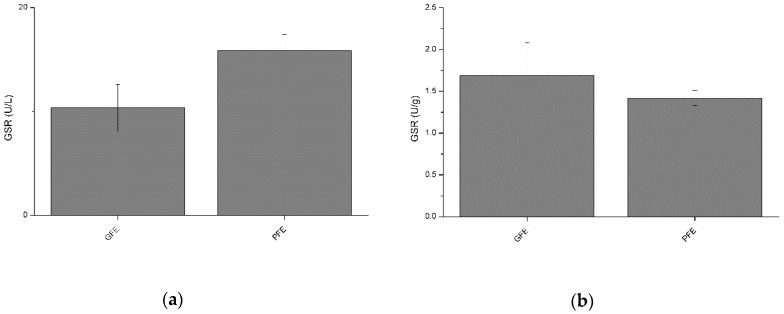
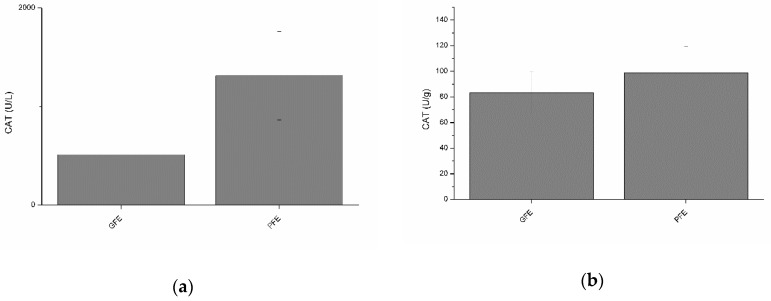
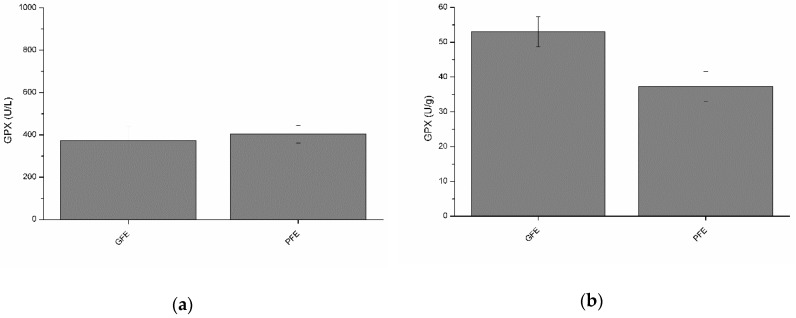
While the removal of seminal plasma is a routine practice prior to equine sperm cryopreservation, this fluid contains the main source of antioxidant enzymes able to scavenge these reactive oxygen species. Therefore, stallion seminal plasma components may have an impact on ejaculate freezability. Against this background, this study was designed to investigate whether the activities of the main stallion seminal plasma antioxidant enzymes are related to sperm cryotolerance. With this purpose, 16 ejaculates were collected from 14 healthy stallions, and each ejaculate was split into two aliquots. The first one was used to evaluate the activities of superoxide dismutase (SOD), catalase (CAT), glutathione peroxidase (GPX), and glutathione reductase (GSR) in seminal plasma. The second aliquot was extended and then processed for cryopreservation. Sperm motility and viability were evaluated before and after cryopreservation, and ejaculates were classified as of good (GFE) or poor freezability (PFE) based on total motile and viable spermatozoa at post-thaw. We observed that, while the specific activities of CAT, GPX, and GSR were similar between GFE and PFE, that of SOD was significantly ( < 0.05) higher in GFE than in PFE. We can thus conclude that, in stallions, the specific activity of SOD in the seminal plasma of a given ejaculate might be related to its freezability.
虽然在马精子冷冻保存之前去除精浆是一种常规做法,但这种液体含有能够清除这些活性氧的抗氧化酶的主要来源。因此,种马精浆成分可能会对射精的冷冻能力产生影响。在此背景下,本研究旨在调查种马主要精浆抗氧化酶的活性是否与精子冷冻耐受性有关。为此,从14匹健康种马中收集了16份射精样本,每份射精样本均分成两份。第一份用于评估精浆中超氧化物歧化酶(SOD)、过氧化氢酶(CAT)、谷胱甘肽过氧化物酶(GPX)和谷胱甘肽还原酶(GSR)的活性。第二份样本进行稀释,然后进行冷冻保存处理。在冷冻保存前后评估精子活力和生存能力,并根据解冻后总活动精子和活精子数量将射精样本分为冷冻能力良好(GFE)或冷冻能力差(PFE)两类。我们观察到,虽然GFE和PFE之间CAT、GPX和GSR的比活性相似,但GFE中SOD的比活性显著(<0.05)高于PFE。因此,我们可以得出结论,在种马中,给定射精样本精浆中SOD的比活性可能与其冷冻能力有关。