Chen Bing, Carr Lauren, Dun Xin-Peng
Department of Neurology, The Affiliated Huaian No.1 People's Hospital of Nanjing Medical University, Huai'an, Jiangsu Province, China.
Plymouth University Peninsula Schools of Medicine and Dentistry, Plymouth, UK.
Neural Regen Res. 2020 May;15(5):948-958. doi: 10.4103/1673-5374.268930.
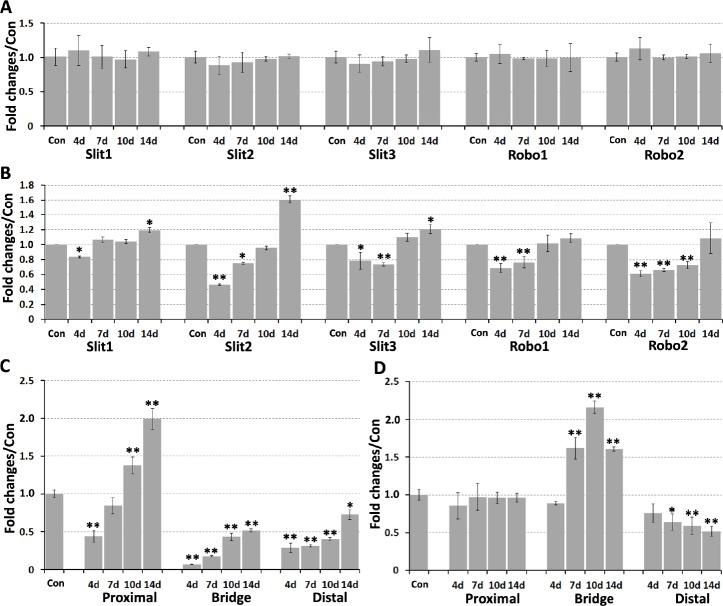
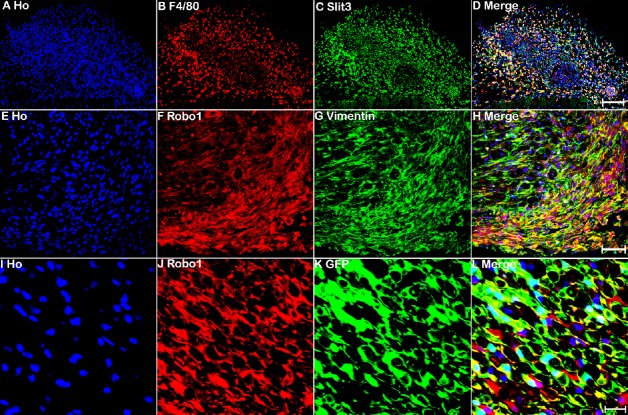
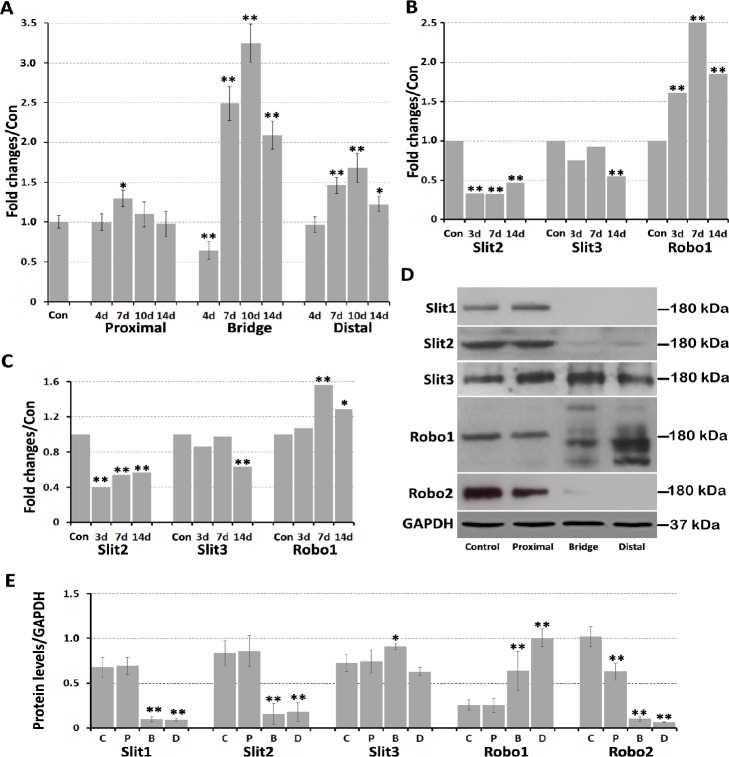
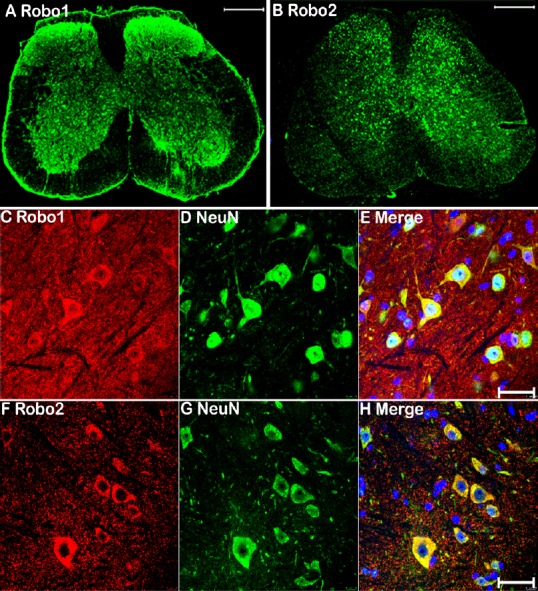
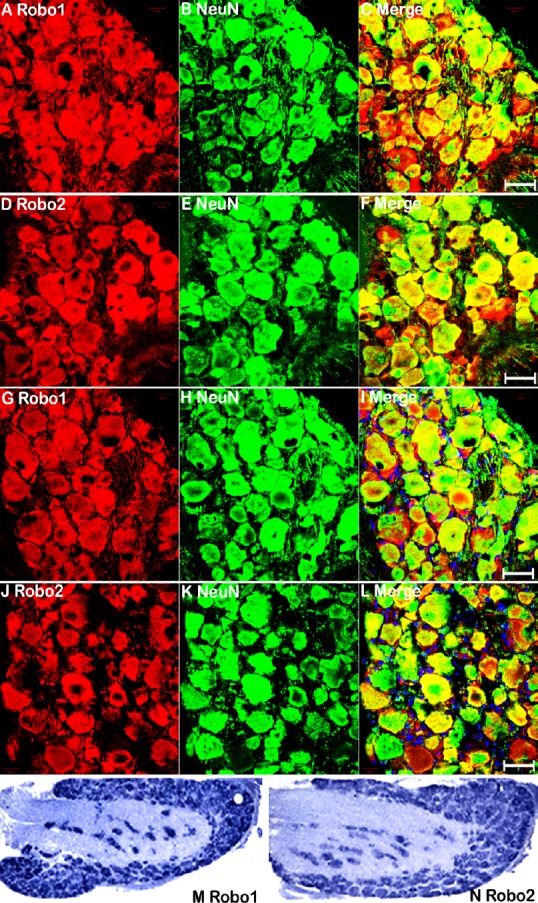
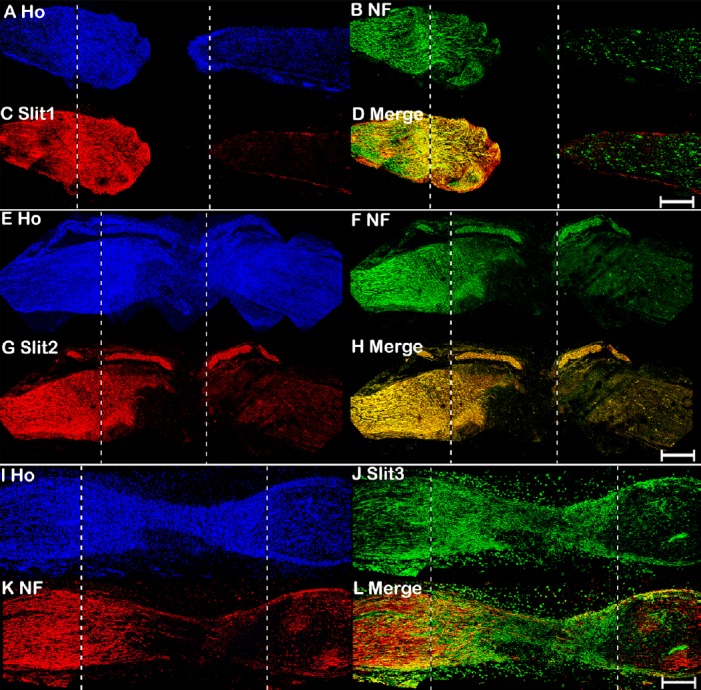
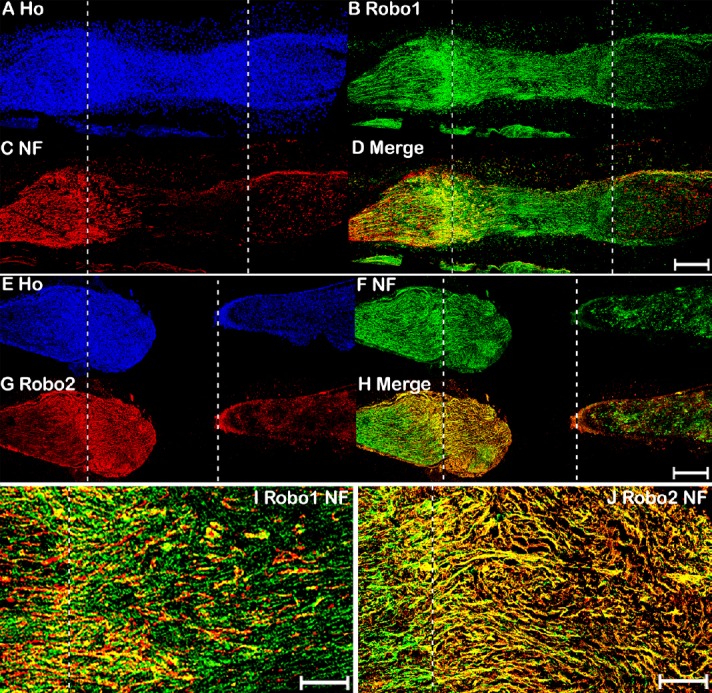
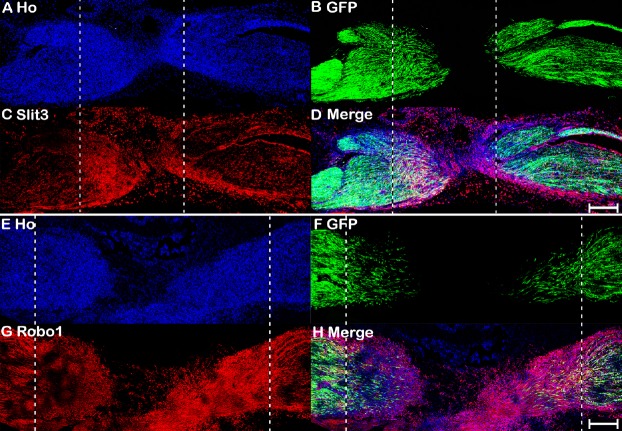
The Slit family of axon guidance cues act as repulsive molecules for precise axon pathfinding and neuronal migration during nervous system development through interactions with specific Robo receptors. Although we previously reported that Slit1-3 and their receptors Robo1 and Robo2 are highly expressed in the adult mouse peripheral nervous system, how this expression changes after injury has not been well studied. Herein, we constructed a peripheral nerve injury mouse model by transecting the right sciatic nerve. At 14 days after injury, quantitative real-time polymerase chain reaction was used to detect mRNA expression of Slit1-3 and Robo1-2 in L4-5 spinal cord and dorsal root ganglia, as well as the sciatic nerve. Immunohistochemical analysis was performed to examine Slit1-3, Robo1-2, neurofilament heavy chain, F4/80, and vimentin in L4-5 spinal cord, L4 dorsal root ganglia, and the sciatic nerve. Co-expression of Slit1-3 and Robo1-2 in L4 dorsal root ganglia was detected by in situ hybridization. In addition, Slit1-3 and Robo1-2 protein expression in L4-5 spinal cord, L4 dorsal root ganglia, and sciatic nerve were detected by western blot assay. The results showed no significant changes of Slit1-3 or Robo1-2 mRNA expression in the spinal cord within 14 days after injury. In the dorsal root ganglion, Slit1-3 and Robo1-2 mRNA expression were initially downregulated within 4 days after injury; however, Robo1-2 mRNA expression returned to the control level, while Slit1-3 mRNA expression remained upregulated during regeneration from 4-14 days after injury. In the sciatic nerve, Slit1-3 and their receptors Robo1-2 were all expressed in the proximal nerve stump; however, Slit1, Slit2, and Robo2 were barely detectable in the nerve bridge and distal nerve stump within 14 days after injury. Slit3 was highly ex-pressed in macrophages surrounding the nerve bridge and slightly downregulated in the distal nerve stump within 14 days after injury. Robo1 was upregulated in vimentin-positive cells and migrating Schwann cells inside the nerve bridge. Robo1 was also upregulated in Schwann cells of the distal nerve stump within 14 days after injury. Our findings indicate that Slit3 is the major ligand expressed in the nerve bridge and distal nerve stump during peripheral nerve regeneration, and Slit3/Robo signaling could play a key role in peripheral nerve repair after injury. This study was approved by Plymouth University Animal Welfare Ethical Review Board (approval No. 30/3203) on April 12, 2014.
在神经系统发育过程中,轴突导向因子Slit家族作为排斥分子,通过与特定的Robo受体相互作用,实现精确的轴突路径寻找和神经元迁移。尽管我们之前报道过Slit1 - 3及其受体Robo1和Robo2在成年小鼠外周神经系统中高表达,但损伤后这种表达如何变化尚未得到充分研究。在此,我们通过横断右侧坐骨神经构建了外周神经损伤小鼠模型。在损伤后14天,采用定量实时聚合酶链反应检测L4 - 5脊髓、背根神经节以及坐骨神经中Slit1 - 3和Robo1 - 2的mRNA表达。进行免疫组织化学分析,检测L4 - 5脊髓、L4背根神经节和坐骨神经中的Slit1 - 3、Robo1 - 2、神经丝重链、F4/80和波形蛋白。通过原位杂交检测L4背根神经节中Slit1 - 3和Robo1 - 2的共表达。此外,采用蛋白质免疫印迹法检测L4 - 5脊髓、L4背根神经节和坐骨神经中Slit1 - 3和Robo1 - 2蛋白表达。结果显示,损伤后14天内脊髓中Slit1 - 3或Robo1 - 2的mRNA表达无显著变化。在背根神经节中,损伤后4天内Slit1 - 3和Robo1 - 2的mRNA表达最初下调;然而,Robo1 - 2的mRNA表达在损伤后4 - 14天再生过程中恢复到对照水平,而Slit1 - 3的mRNA表达仍上调。在坐骨神经中,Slit1 - 3及其受体Robo1 - 2均在近端神经残端表达;然而,损伤后14天内神经桥和远端神经残端中几乎检测不到Slit1、Slit2和Robo2。Slit3在神经桥周围的巨噬细胞中高表达,损伤后14天内在远端神经残端中略有下调。Robo1在神经桥内波形蛋白阳性细胞和迁移的雪旺细胞中上调。损伤后14天内Robo1在远端神经残端的雪旺细胞中也上调。我们的研究结果表明,Slit3是外周神经再生过程中在神经桥和远端神经残端表达的主要配体,Slit3/Robo信号可能在损伤后外周神经修复中起关键作用。本研究于2014年4月12日获得普利茅斯大学动物福利伦理审查委员会批准(批准号30/3203)。