Faculdade de Medicina FMUSP, Universidade de Sao Paulo, Sao Paulo, SP, BR.
Departamento de Psiquiatria, Instituto de Psiquiatria, LIM-23, Hospital das Clinicas HCFMUSP, Faculdade de Medicina, Universidade de Sao Paulo, Sao Paulo, SP, BR.
Clinics (Sao Paulo). 2019 Nov 11;74:e1316. doi: 10.6061/clinics/2019/e1316. eCollection 2019.
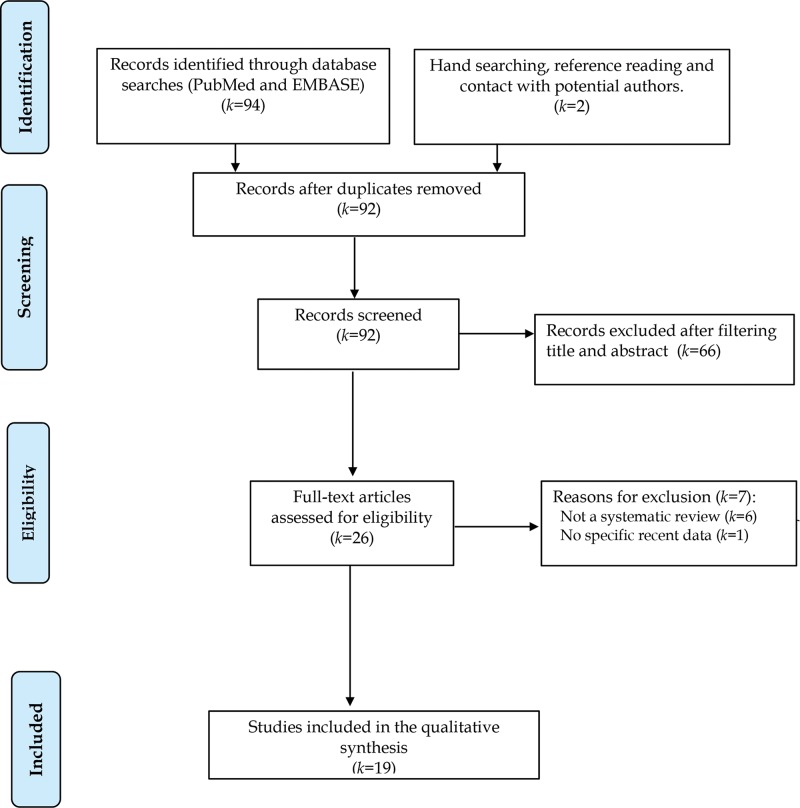
The aim of this study was to review emerging evidence of novel treatments for anxiety disorders. We searched PubMed and EMBASE for evidence-based therapeutic alternatives for anxiety disorders in adults, covering the past five years. Eligible articles were systematic reviews (with or without meta-analysis), which evaluated treatment effectiveness of either nonbiological or biological interventions for anxiety disorders. Retrieved articles were summarized as an overview. We assessed methods, quality of evidence, and risk of bias of the articles. Nineteen systematic reviews provided information on almost 88 thousand participants, distributed across 811 clinical trials. Regarding the interventions, 11 reviews investigated psychological or nonbiological treatments; 5, pharmacological or biological; and 3, more than one type of active intervention. Computer-delivered psychological interventions were helpful for treating anxiety of low-to-moderate intensity, but the therapist-oriented approaches had greater results. Recommendations for regular exercise, mindfulness, yoga, and safety behaviors were applicable to anxiety. Transcranial magnetic stimulation, medication augmentation, and new pharmacological agents (vortioxetine) presented inconclusive benefits in patients with anxiety disorders who presented partial responses or refractoriness to standard treatment. New treatment options for anxiety disorders should only be provided to the community after a thorough examination of their efficacy.
本研究旨在综述新型焦虑障碍治疗方法的最新证据。我们检索了 PubMed 和 EMBASE 数据库,寻找过去 5 年中成人焦虑障碍的循证治疗选择。纳入的文章为系统评价(无论是否进行了荟萃分析),评估了非生物或生物干预焦虑障碍的治疗效果。对检索到的文章进行了概述。我们评估了文章的方法、证据质量和偏倚风险。19 篇系统评价提供了近 8.8 万名参与者的信息,分布在 811 项临床试验中。关于干预措施,11 篇综述调查了心理或非生物治疗;5 篇为药理学或生物学治疗;3 篇为多种积极干预措施。计算机辅助心理干预对治疗低至中度强度的焦虑有效,但以治疗师为导向的方法效果更大。建议定期锻炼、正念、瑜伽和安全行为适用于焦虑症。对于对标准治疗有部分反应或耐药的焦虑障碍患者,经颅磁刺激、药物增效和新型药物(沃替西汀)的疗效不确定。新型焦虑障碍治疗选择应在全面评估其疗效后,再向社区提供。