Institute of Biochemistry, Faculty of Medicine, University of Ljubljana, 1000, Ljubljana, Slovenia.
Institute of Computer Science, University of Tartu, Liivi 2, 50409, Tartu, Estonia.
Sci Rep. 2019 Nov 13;9(1):16738. doi: 10.1038/s41598-019-52899-8.
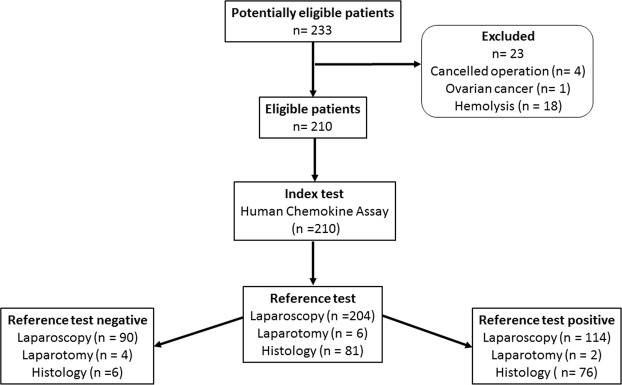
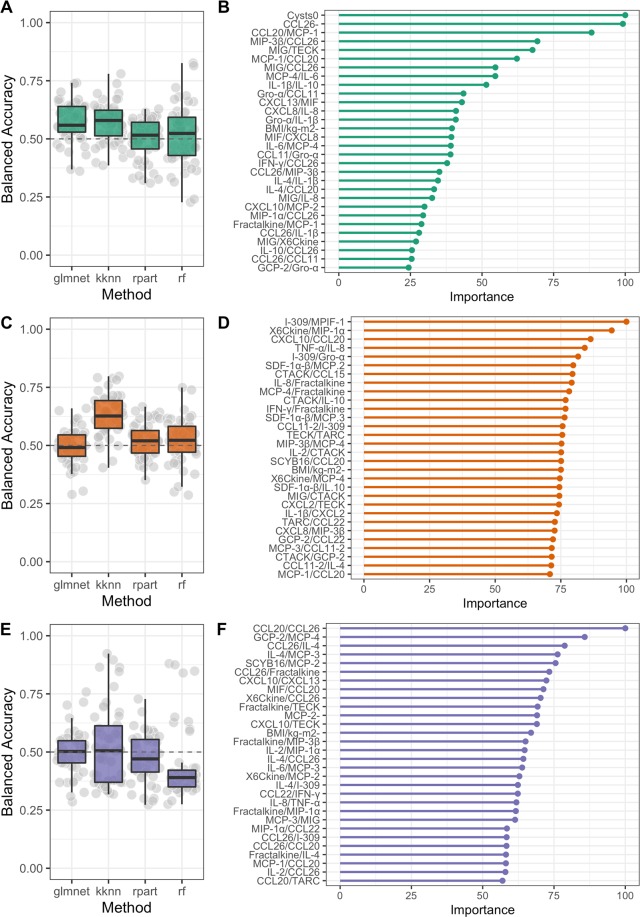
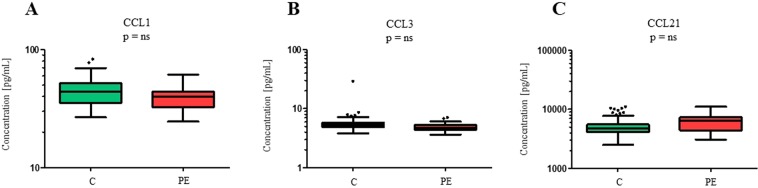
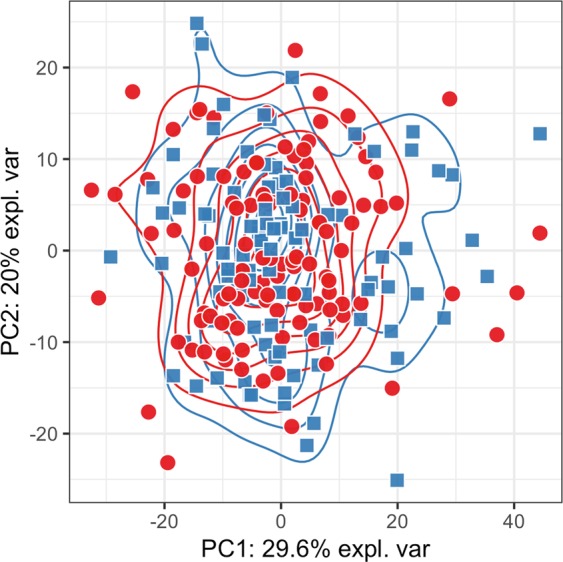
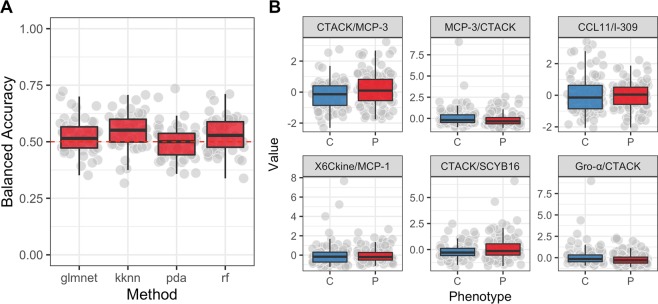
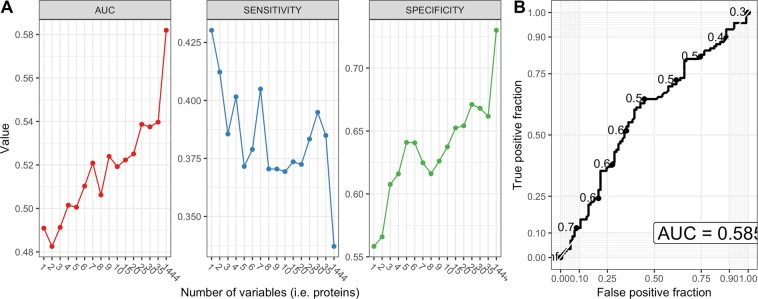
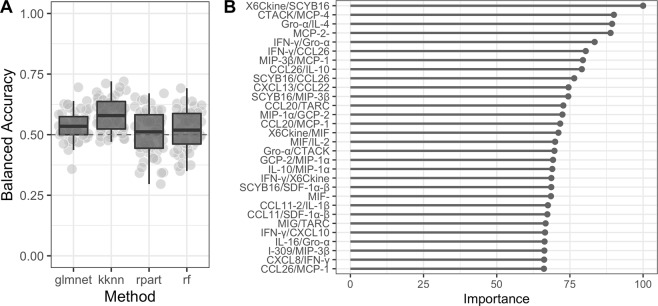
Endometriosis is a common gynaecological condition characterized by severe pelvic pain and/or infertility. The combination of nonspecific symptoms and invasive laparoscopic diagnostics have prompted researchers to evaluate potential biomarkers that would enable a non-invasive diagnosis of endometriosis. Endometriosis is an inflammatory disease thus different cytokines represent potential diagnostic biomarkers. As panels of biomarkers are expected to enable better separation between patients and controls we evaluated 40 different cytokines in plasma samples of 210 patients (116 patients with endometriosis; 94 controls) from two medical centres (Slovenian, Austrian). Results of the univariate statistical analysis showed no differences in concentrations of the measured cytokines between patients and controls, confirmed by principal component analysis showing no clear separation amongst these two groups. In order to validate the hypothesis of a more profound (non-linear) differentiating dependency between features, machine learning methods were used. We trained four common machine learning algorithms (decision tree, linear model, k-nearest neighbour, random forest) on data from plasma levels of proteins and patients' clinical data. The constructed models, however, did not separate patients with endometriosis from the controls with sufficient sensitivity and specificity. This study thus indicates that plasma levels of the selected cytokines have limited potential for diagnosis of endometriosis.
子宫内膜异位症是一种常见的妇科疾病,其特征为严重的盆腔疼痛和/或不孕。由于非特异性症状和侵袭性腹腔镜诊断的存在,促使研究人员评估潜在的生物标志物,以实现子宫内膜异位症的非侵入性诊断。子宫内膜异位症是一种炎症性疾病,因此不同的细胞因子代表潜在的诊断生物标志物。由于生物标志物组合有望更好地区分患者和对照组,我们评估了来自两个医学中心(斯洛文尼亚、奥地利)的 210 名患者(116 名子宫内膜异位症患者;94 名对照者)的血浆样本中的 40 种不同细胞因子。单变量统计分析的结果表明,患者和对照组之间测量细胞因子的浓度没有差异,主成分分析也证实了这两组之间没有明显的分离。为了验证特征之间存在更深入(非线性)差异的假设,我们使用了机器学习方法。我们在蛋白质的血浆水平和患者的临床数据上训练了四种常见的机器学习算法(决策树、线性模型、k-最近邻、随机森林)。然而,构建的模型并没有足够的敏感性和特异性将子宫内膜异位症患者与对照组区分开来。因此,这项研究表明,所选细胞因子的血浆水平对子宫内膜异位症的诊断具有有限的潜力。