Mohammed Shimels Hussien, Habtewold Tesfa Dejenie, Birhanu Mulugeta Molla, Sissay Tesfamichael Awoke, Tegegne Balewgizie Sileshi, Abuzerr Samer, Esmaillzadeh Ahmad
Department of Community Nutrition, School of Nutritional Sciences and Dietetics, Tehran University of Medical Sciences, Tehran, Iran (the Islamic Republic of)
Department of Epidemiology, University of Groningen, Groningen, The Netherlands.
BMJ Open. 2019 Nov 14;9(11):e028238. doi: 10.1136/bmjopen-2018-028238.
Low neighbourhood socioeconomic status (NSES) has been linked to a higher risk of overweight/obesity, irrespective of the individual's own socioeconomic status. No meta-analysis study has been done on the association. Thus, this study was done to synthesise the existing evidence on the association of NSES with overweight, obesity and body mass index (BMI).
Systematic review and meta-analysis.
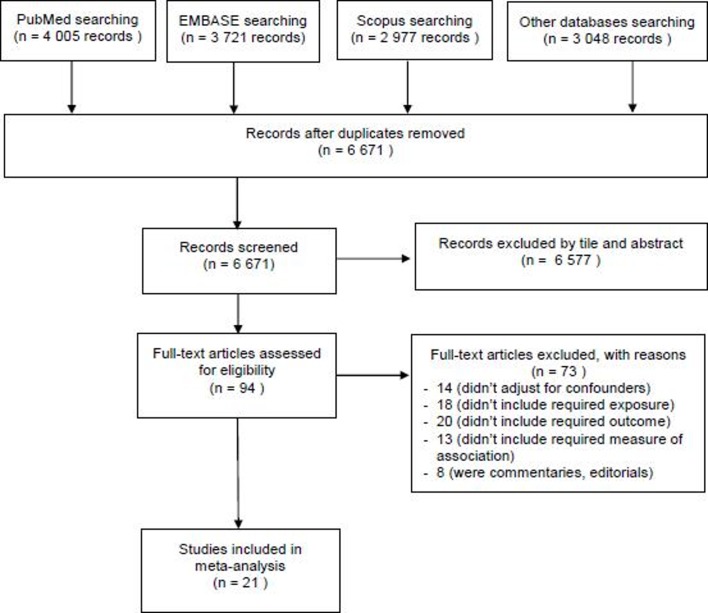
PubMed, Embase, Scopus, Cochrane Library, Web of Sciences and Google Scholar databases were searched for articles published until 25 September 2019.
Epidemiological studies, both longitudinal and cross-sectional ones, which examined the link of NSES to overweight, obesity or BMI, were included.
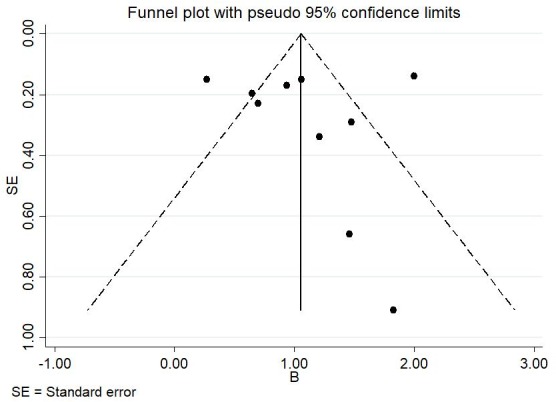
Data extraction was done by two reviewers, working independently. The methodological quality of included studies was assessed using the Newcastle-Ottawa Scale for the observational studies. The summary estimates of the relationships of NSES with overweight, obesity and BMI statuses were calculated with random-effects meta-analysis models. Heterogeneity was assessed by Cochran's Q and I statistics. Subgroup analyses were done by age categories, continents, study designs and NSES measures. Publication bias was assessed by visual inspection of funnel plots and Egger's regression test.
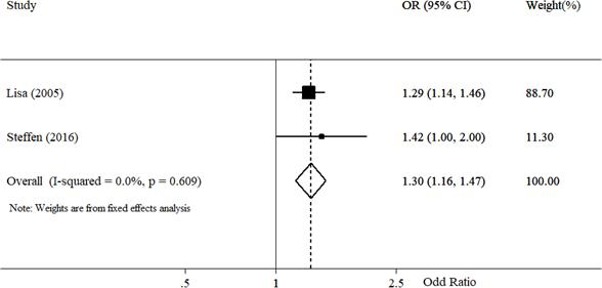
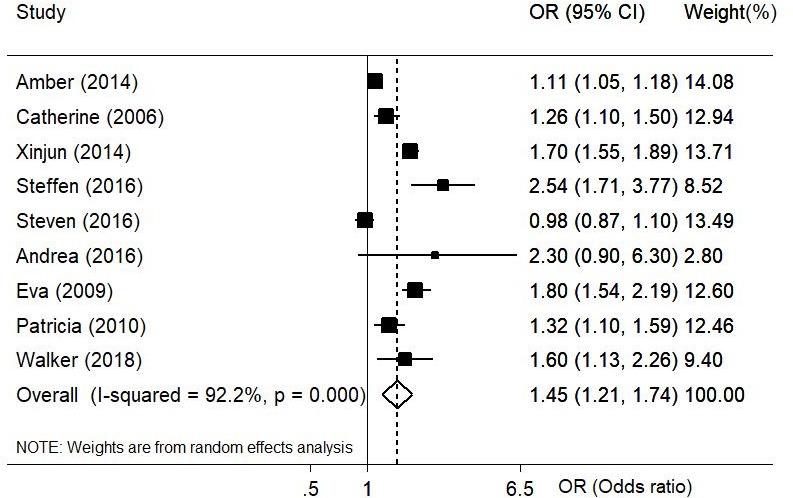
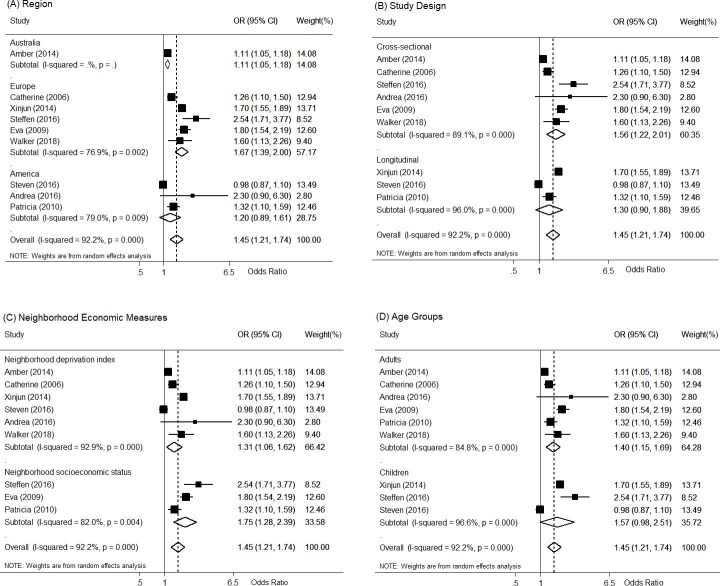
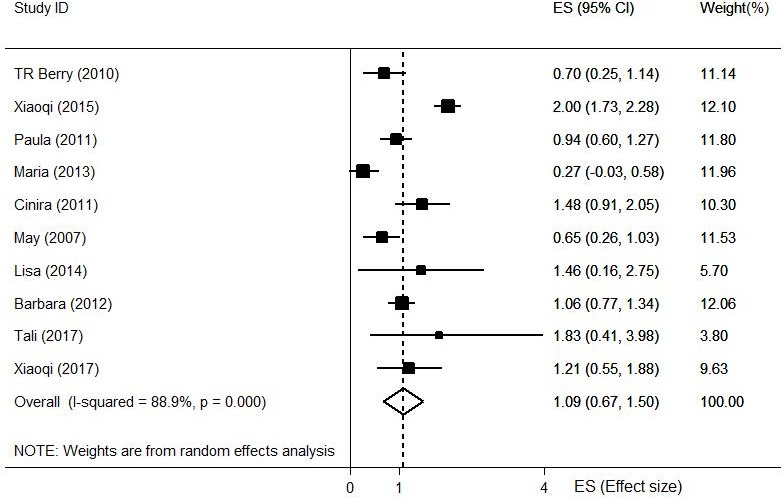
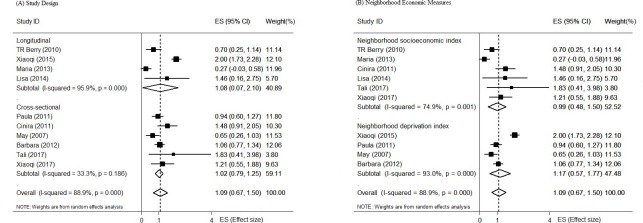
A total of 21 observational studies, covering 1 244 438 individuals, were included in this meta-analysis. Low NSES, compared with high NSES, was found to be associated with a 31% higher odds of overweight (pooled OR 1.31, 95% CI 1.16 to 1.47, p<0.001), a 45% higher odds of obesity (pooled OR 1.45, 95% CI 1.21 to 1.74, p<0.001) and a 1.09 kg/m increase in mean BMI (pooled beta=1.09, 95% CI 0.67 to 1.50, p<0.001).
NSES disparity might be contributing to the burden of overweight/obesity. Further studies are warranted, including whether addressing NSES disparity could reduce the risk of overweight/obesity.
CRD42017063889.
邻里社会经济地位(NSES)较低与超重/肥胖风险较高相关,无论个体自身的社会经济地位如何。尚未对这种关联进行荟萃分析研究。因此,本研究旨在综合关于NSES与超重、肥胖及体重指数(BMI)之间关联的现有证据。
系统评价和荟萃分析。
检索了PubMed、Embase、Scopus、Cochrane图书馆、科学网和谷歌学术数据库,以获取截至2019年9月25日发表的文章。
纳入研究NSES与超重、肥胖或BMI之间关联的纵向和横断面流行病学研究。
由两名独立工作的审阅者进行数据提取。使用纽卡斯尔-渥太华量表对纳入研究的方法学质量进行评估。采用随机效应荟萃分析模型计算NSES与超重、肥胖及BMI状态之间关系的汇总估计值。通过Cochran's Q和I统计量评估异质性。按年龄类别(组)、大洲、研究设计和NSES测量方法进行亚组分析。通过漏斗图的直观检查和Egger回归检验评估发表偏倚。
本荟萃分析共纳入21项观察性研究,涉及1244438人。与高NSES相比,低NSES与超重几率高31%(合并比值比1.31,95%置信区间1.16至1.47,p<0.001)、肥胖几率高45%(合并比值比1.45,%置信区间1.21至1.74,p<0.001)以及平均BMI增加1.09kg/m²(合并β=1.09,95%置信区间0.67至1.50,p<0.001)相关。
NSES差异可能是超重/肥胖负担的一个因素。有必要进行进一步研究,包括解决NSES差异是否可以降低超重/肥胖风险。
PROSPERO注册号:CRD42017063889。