Department of Computer Science, British Heart Foundation Centre of Research Excellence, University of Oxford, Parks Rd., OX13QD, Oxford, UK.
Sci Rep. 2019 Nov 14;9(1):16803. doi: 10.1038/s41598-019-53221-2.
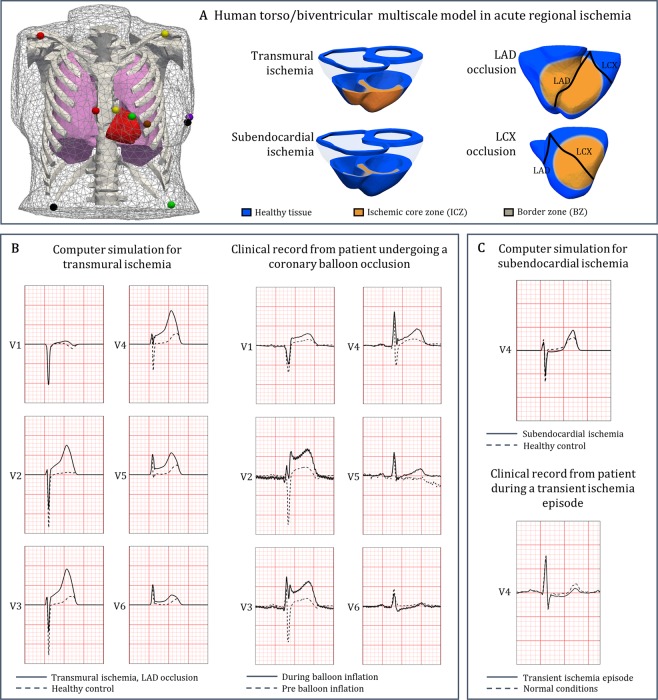
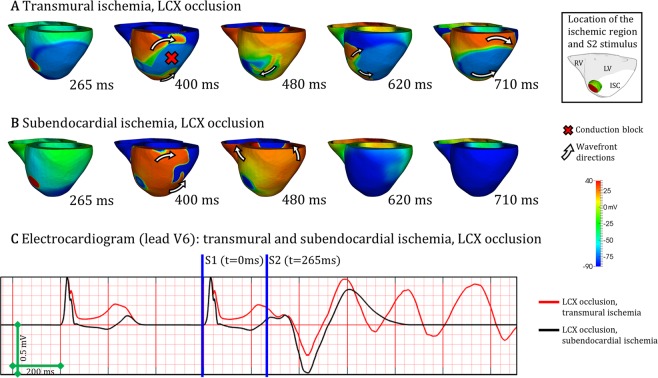
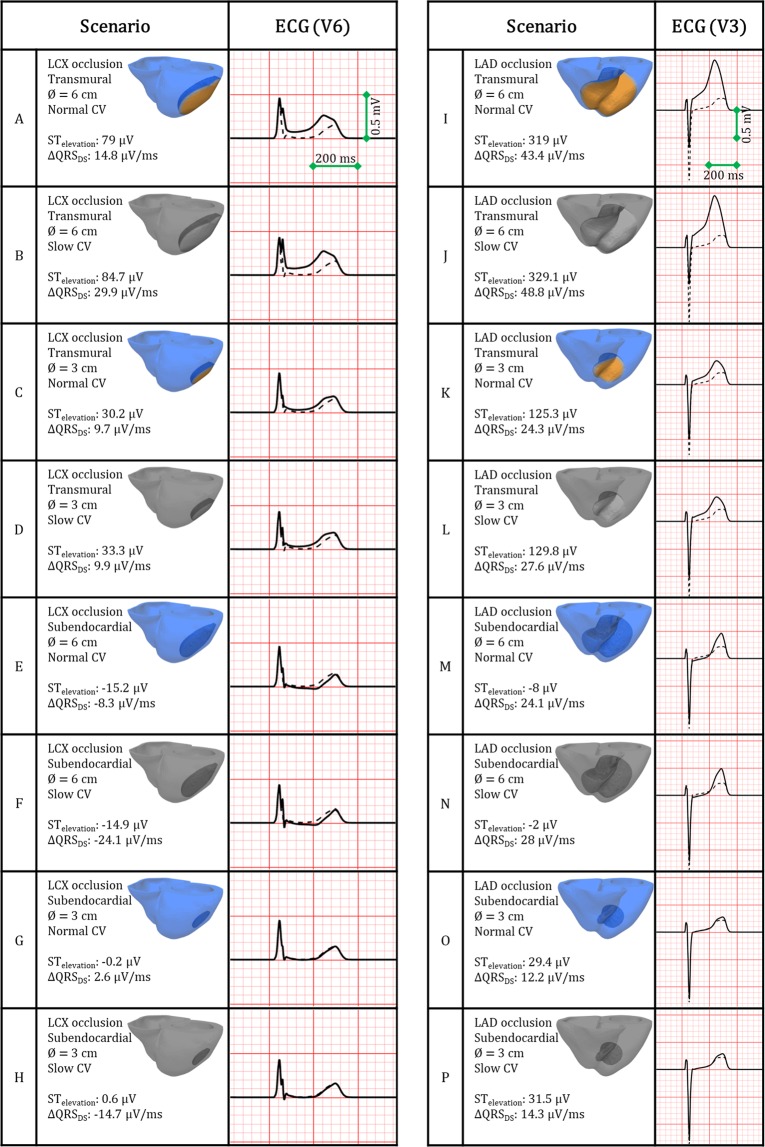
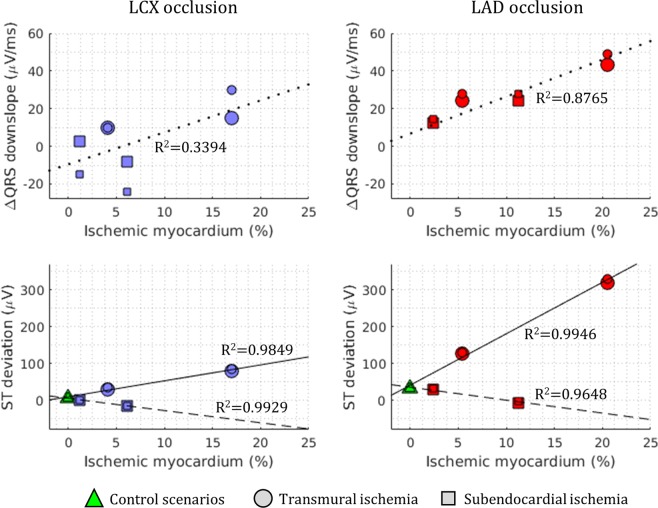
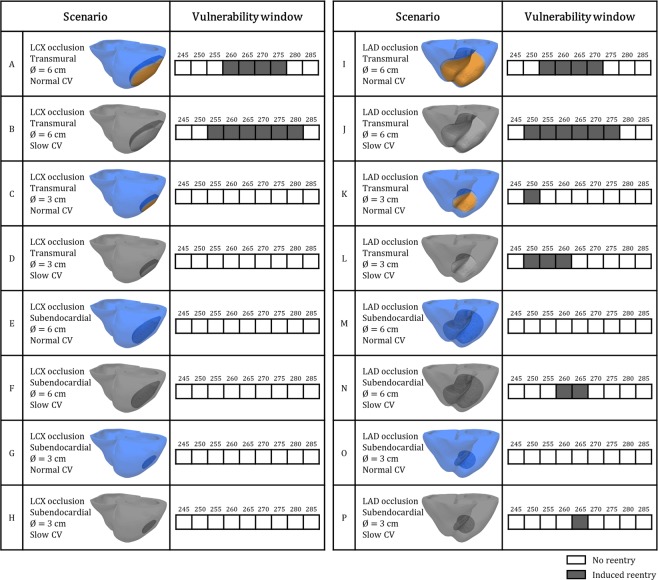
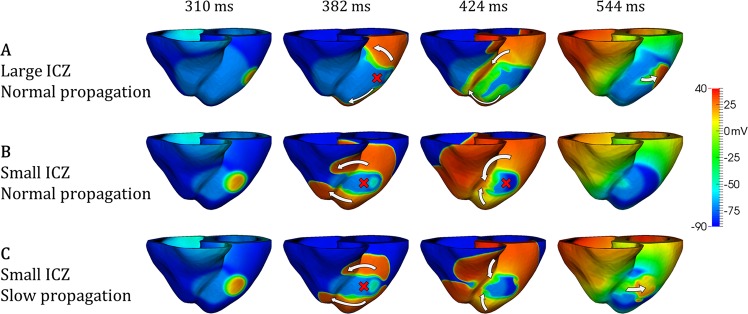
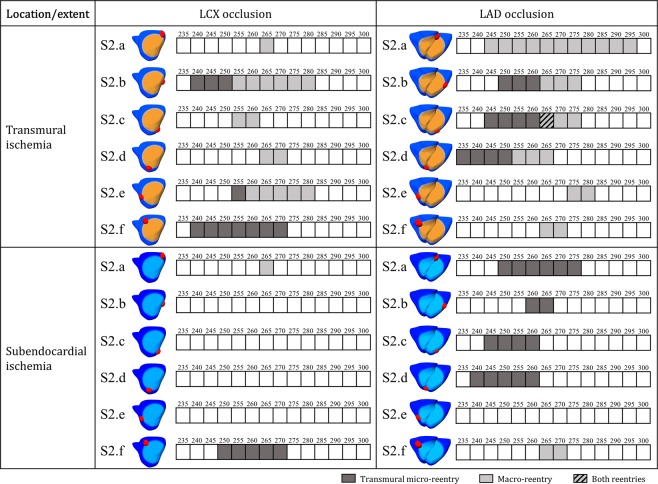
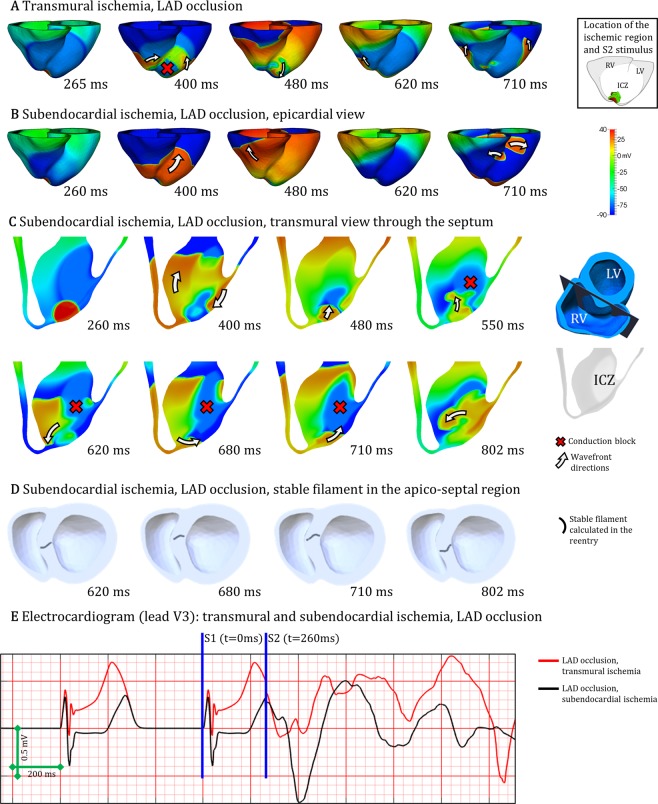
Acute myocardial ischemia is a precursor of sudden arrhythmic death. Variability in its manifestation hampers understanding of arrhythmia mechanisms and challenges risk stratification. Our aim is to unravel the mechanisms underlying how size, transmural extent and location of ischemia determine arrhythmia vulnerability and ECG alterations. High performance computing simulations using a human torso/biventricular biophysically-detailed model were conducted to quantify the impact of varying ischemic region properties, including location (LAD/LCX occlusion), transmural/subendocardial ischemia, size, and normal/slow myocardial propagation. ECG biomarkers and vulnerability window for reentry were computed in over 400 simulations for 18 cases evaluated. Two distinct mechanisms explained larger vulnerability to reentry in transmural versus subendocardial ischemia. Macro-reentry around the ischemic region was the primary mechanism increasing arrhythmic risk in transmural versus subendocardial ischemia, for both LAD and LCX occlusion. Transmural micro-reentry at the ischemic border zone explained arrhythmic vulnerability in subendocardial ischemia, especially in LAD occlusion, as reentries were favoured by the ischemic region intersecting the septo-apical region. ST elevation reflected ischemic extent in transmural ischemia for LCX and LAD occlusion but not in subendocardial ischemia (associated with mild ST depression). The technology and results presented can inform safety and efficacy evaluation of anti-arrhythmic therapy in acute myocardial ischemia.
急性心肌缺血是心律失常性猝死的前兆。其表现的可变性阻碍了对心律失常机制的理解,并对风险分层提出了挑战。我们的目的是揭示缺血的大小、透壁程度和位置如何决定心律失常易感性和心电图改变的机制。使用人体胸部/双心室生物物理详细模型进行了高性能计算模拟,以量化不同缺血区域特性(包括位置[左前降支/左旋支闭塞]、透壁/心内膜下缺血、大小和正常/缓慢心肌传播)的影响。对 18 种情况进行了超过 400 次模拟,计算了 ECG 生物标志物和折返易损窗口。
两种不同的机制解释了透壁缺血与心内膜下缺血相比,折返易感性更大。缺血区域周围的大折返是透壁缺血与心内膜下缺血中增加心律失常风险的主要机制,无论是左前降支还是左旋支闭塞。缺血边界区的透壁微折返解释了心内膜下缺血中的心律失常易感性,特别是在左前降支闭塞时,因为折返更容易被缺血区域与心尖间隔区域相交所促进。ST 段抬高反映了 LCX 和 LAD 闭塞时透壁缺血的缺血程度,但不反映心内膜下缺血的缺血程度(与轻度 ST 压低相关)。
所提出的技术和结果可以为急性心肌缺血中抗心律失常治疗的安全性和疗效评估提供信息。