Gladstone Institutes, San Francisco, CA, USA.
Medical Scientist Training Program, University of California, San Francisco, San Francisco, CA, USA.
Nat Neurosci. 2019 Jul;22(7):1061-1065. doi: 10.1038/s41593-019-0422-3. Epub 2019 Jun 17.
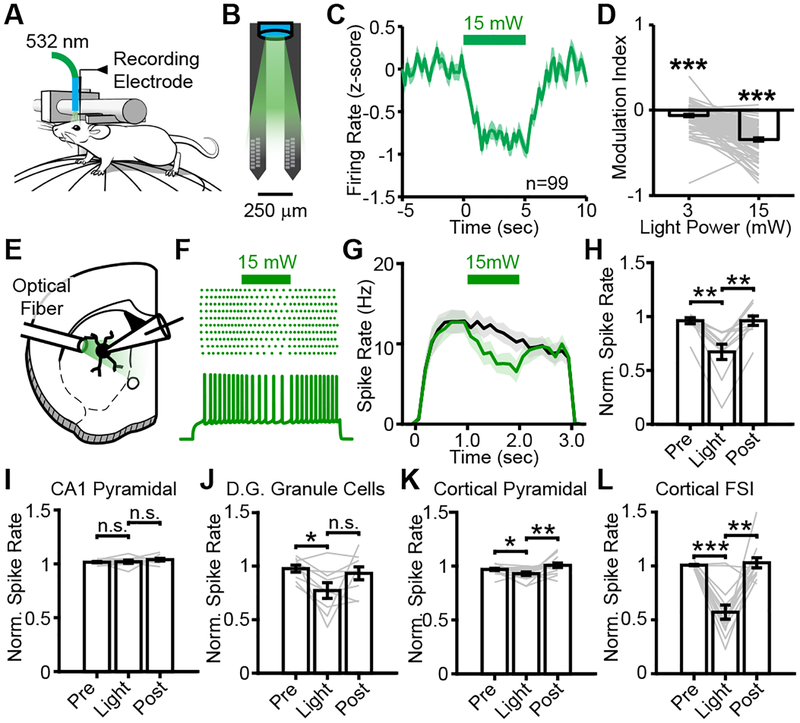
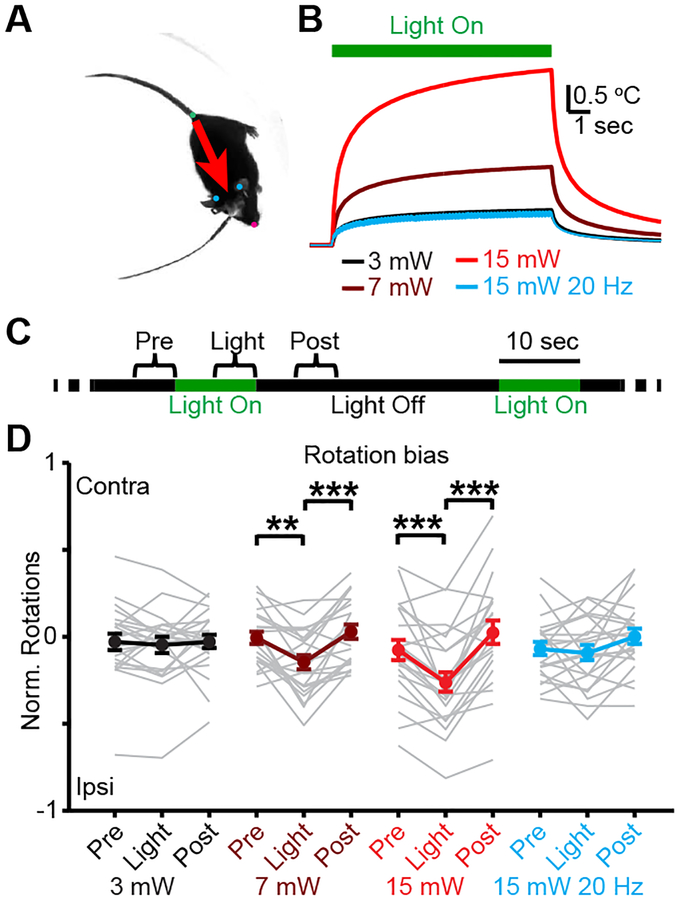
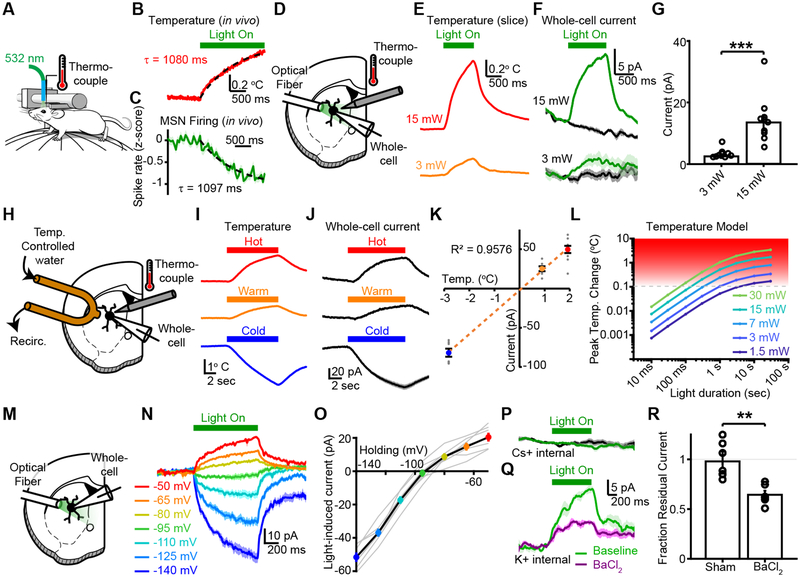
A key assumption of optogenetics is that light only affects opsin-expressing neurons. However, illumination invariably heats tissue, and many physiological processes are temperature-sensitive. Commonly used illumination protocols increased the temperature by 0.2-2 °C and suppressed spiking in multiple brain regions. In the striatum, light delivery activated an inwardly rectifying potassium conductance and biased rotational behavior. Thus, careful consideration of light-delivery parameters is required, as even modest intracranial heating can confound interpretation of optogenetic experiments.
光遗传学的一个关键假设是光仅影响表达视蛋白的神经元。然而,光照不可避免地会加热组织,而许多生理过程对温度敏感。常用的光照方案会使温度升高 0.2-2°C,并抑制多个脑区的尖峰活动。在纹状体中,光传递会激活内向整流钾电流,并使旋转行为偏向。因此,需要仔细考虑光传递参数,因为即使是适度的颅内加热也会混淆对光遗传学实验的解释。