Department of Physiology, Anatomy and Genetics, Parks Road, Oxford OX1 3PT, UK.
Division of Cardiovascular Medicine, Radcliffe Department of Medicine, British Heart Foundation Centre for Research Excellence, John Radcliffe Hospital, Oxford OX3 9DU, UK.
Cardiovasc Res. 2020 Oct 1;116(12):1958-1971. doi: 10.1093/cvr/cvz311.
When activated, Na+/H+ exchanger-1 (NHE1) produces some of the largest ionic fluxes in the heart. NHE1-dependent H+ extrusion and Na+ entry strongly modulate cardiac physiology through the direct effects of pH on proteins and by influencing intracellular Ca2+ handling. To attain an appropriate level of activation, cardiac NHE1 must respond to myocyte-derived cues. Among physiologically important cues is nitric oxide (NO), which regulates a myriad of cardiac functions, but its actions on NHE1 are unclear.
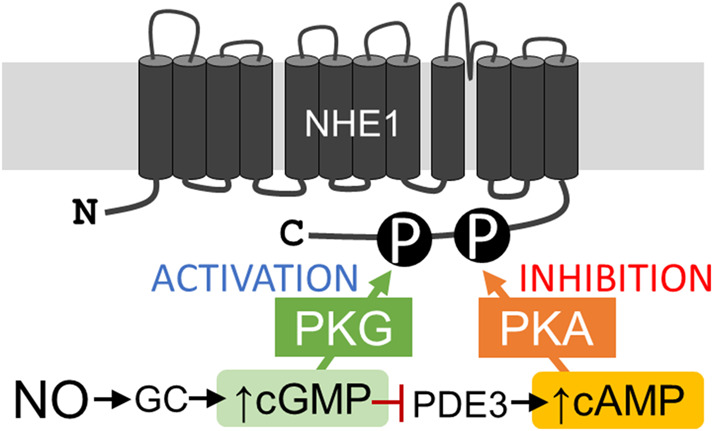
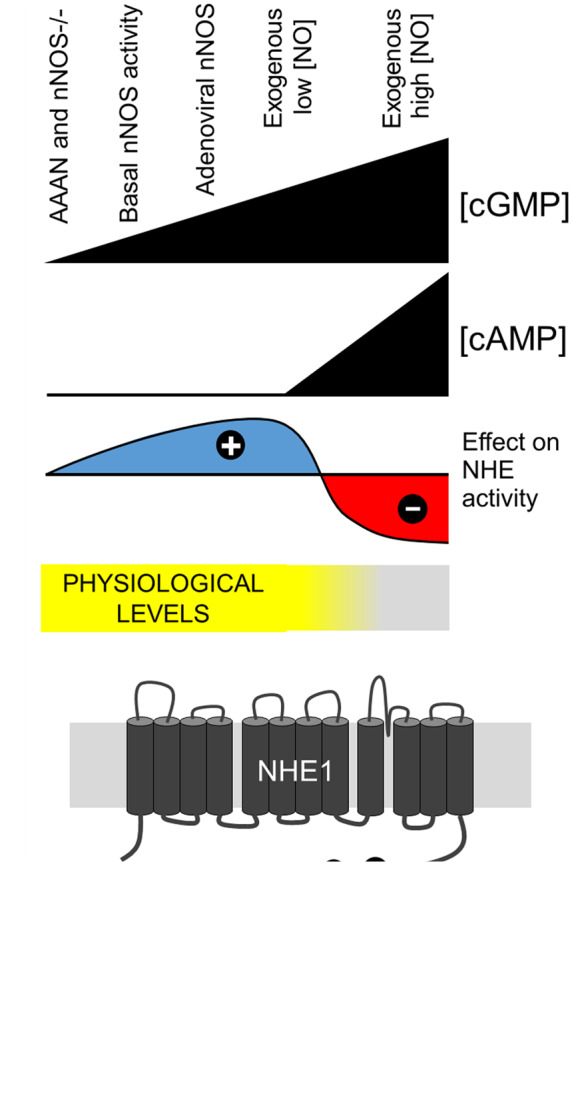
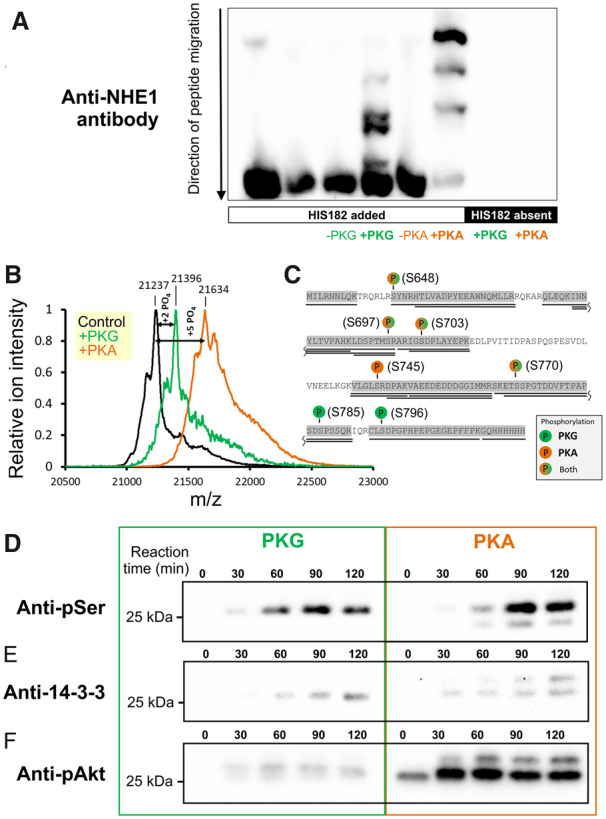
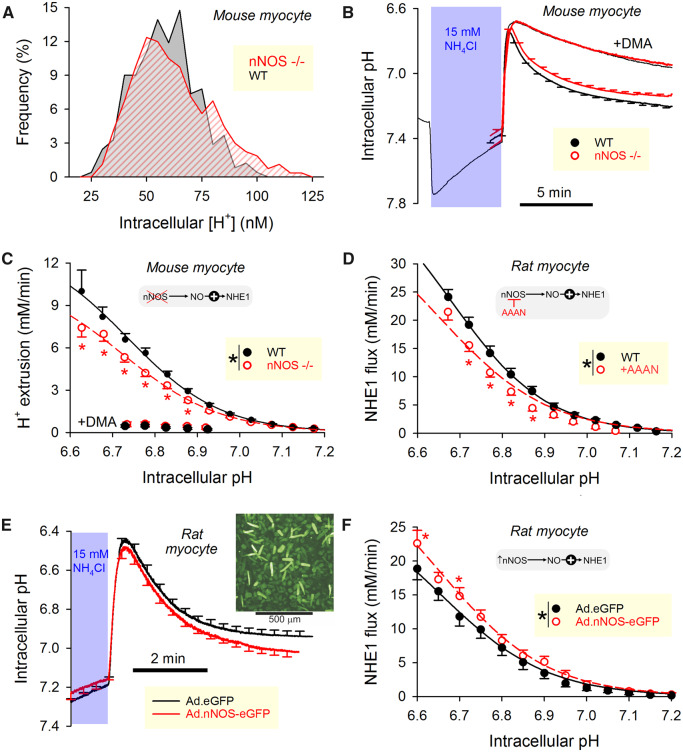
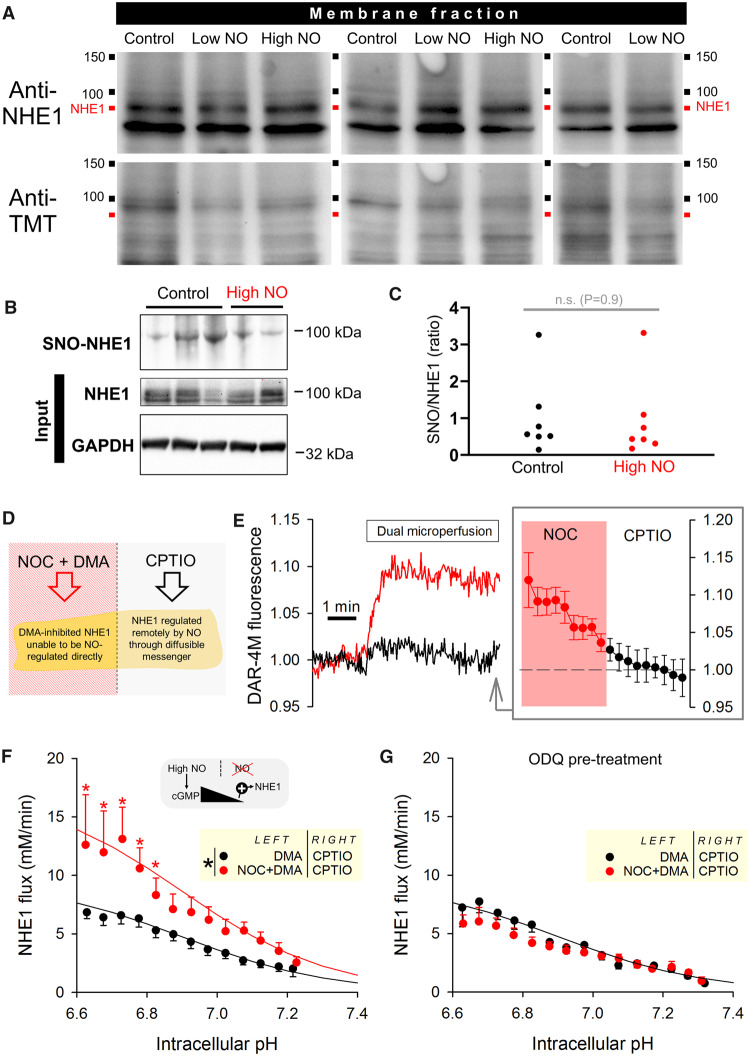
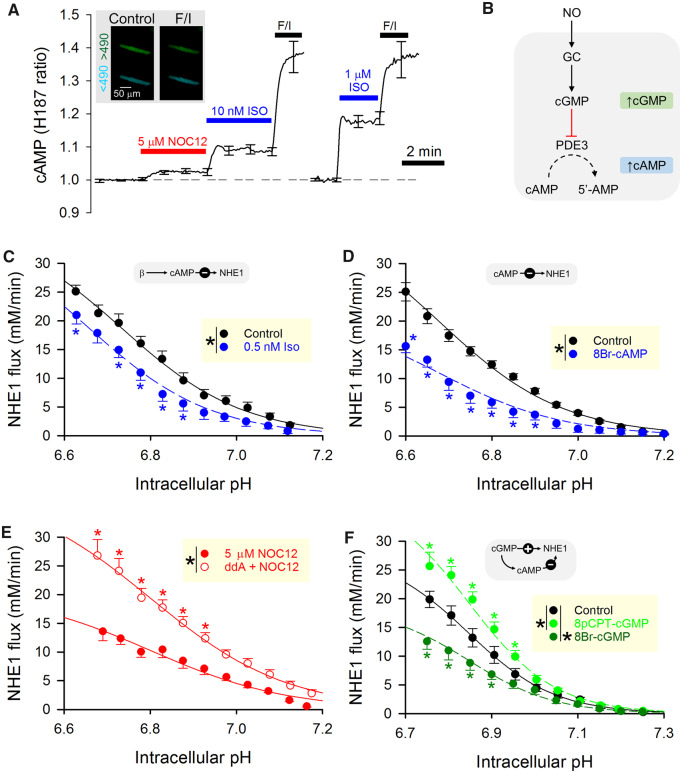
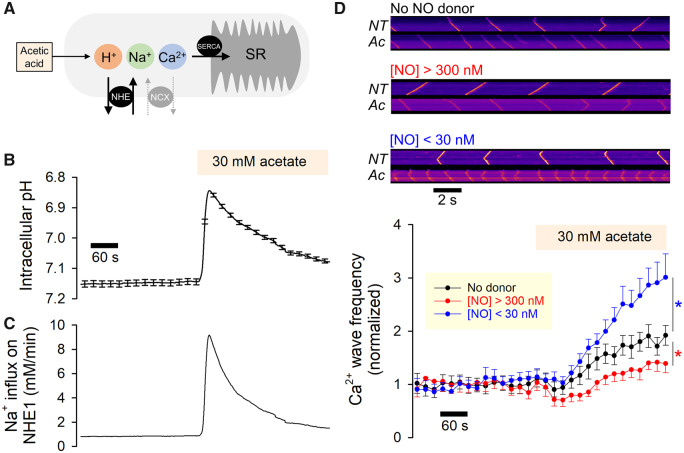
NHE1 activity was measured using pH-sensitive cSNARF1 fluorescence after acid-loading adult ventricular myocytes by an ammonium prepulse solution manoeuvre. NO signalling was manipulated by knockout of its major constitutive synthase nNOS, adenoviral nNOS gene delivery, nNOS inhibition, and application of NO-donors. NHE1 flux was found to be activated by low [NO], but inhibited at high [NO]. These responses involved cGMP-dependent signalling, rather than S-nitros(yl)ation. Stronger cGMP signals, that can inhibit phosphodiesterase enzymes, allowed [cAMP] to rise, as demonstrated by a FRET-based sensor. Inferring from the actions of membrane-permeant analogues, cGMP was determined to activate NHE1, whereas cAMP was inhibitory, which explains the biphasic regulation by NO. Activation of NHE1-dependent Na+ influx by low [NO] also increased the frequency of spontaneous Ca2+ waves, whereas high [NO] suppressed these aberrant forms of Ca2+ signalling.
Physiological levels of NO stimulation increase NHE1 activity, which boosts pH control during acid-disturbances and results in Na+-driven cellular Ca2+ loading. These responses are positively inotropic but also increase the likelihood of aberrant Ca2+ signals, and hence arrhythmia. Stronger NO signals inhibit NHE1, leading to a reversal of the aforementioned effects, ostensibly as a potential cardioprotective intervention to curtail NHE1 overdrive.
当钠氢交换蛋白-1(NHE1)被激活时,会产生心脏中最大的离子流之一。NHE1 依赖性的 H+外排和 Na+内流通过直接影响蛋白质的 pH 值以及影响细胞内 Ca2+处理,强烈调节心脏生理学。为了达到适当的激活水平,心脏 NHE1 必须对心肌细胞衍生的信号做出反应。在生理上重要的信号中,有一种是一氧化氮(NO),它调节着无数的心脏功能,但它对 NHE1 的作用尚不清楚。
通过使用 pH 敏感的 cSNARF1 荧光在氨脉冲溶液操作后测量成年心室肌细胞的酸加载后 NHE1 的活性。通过敲除其主要组成型合酶 nNOS、腺病毒 nNOS 基因传递、nNOS 抑制和应用 NO 供体来操纵 NO 信号。发现 NHE1 通量被低 [NO] 激活,但被高 [NO] 抑制。这些反应涉及 cGMP 依赖性信号,而不是 S-亚硝基(yl)化。更强的 cGMP 信号(可以抑制磷酸二酯酶酶)使 [cAMP] 升高,这可以通过基于 FRET 的传感器来证明。根据膜通透类似物的作用推断,cGMP 被确定为激活 NHE1,而 cAMP 是抑制性的,这解释了 NO 的双相调节。低 [NO] 激活 NHE1 依赖性 Na+内流也增加了自发 Ca2+波的频率,而高 [NO] 则抑制了这些异常的 Ca2+信号。
生理水平的 NO 刺激增加了 NHE1 的活性,这在酸扰动期间增强了 pH 控制,并导致 Na+驱动的细胞 Ca2+加载。这些反应具有正性变力作用,但也增加了异常 Ca2+信号的可能性,从而导致心律失常。更强的 NO 信号抑制 NHE1,导致上述效应的逆转,显然作为一种潜在的心脏保护干预措施,以遏制 NHE1 过度驱动。