Di Palma Francesco, Daino Gian Luca, Ramaswamy Venkata Krishnan, Corona Angela, Frau Aldo, Fanunza Elisa, Vargiu Attilio V, Tramontano Enzo, Ruggerone Paolo
Department of Physics, University of Cagliari, Cittadella Universitaria, Monserrato, Italy.
Department of Life and Environmental Sciences, University of Cagliari, Cittadella Universitaria, Monserrato, Italy.
Antivir Chem Chemother. 2019 Jan-Dec;27:2040206619889220. doi: 10.1177/2040206619889220.
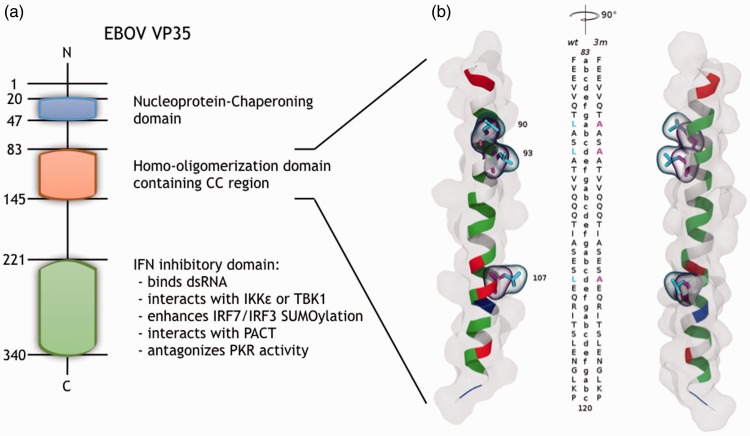
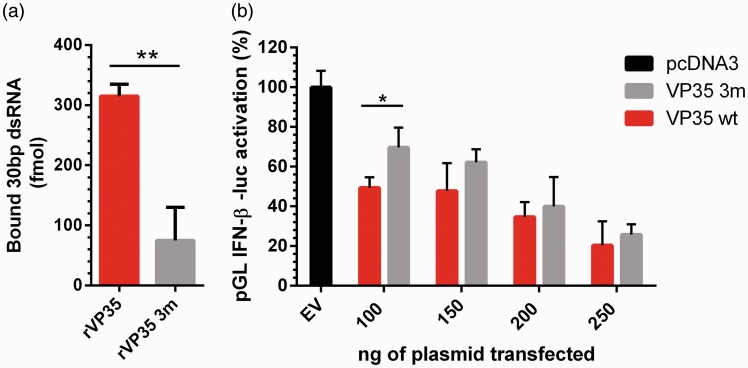
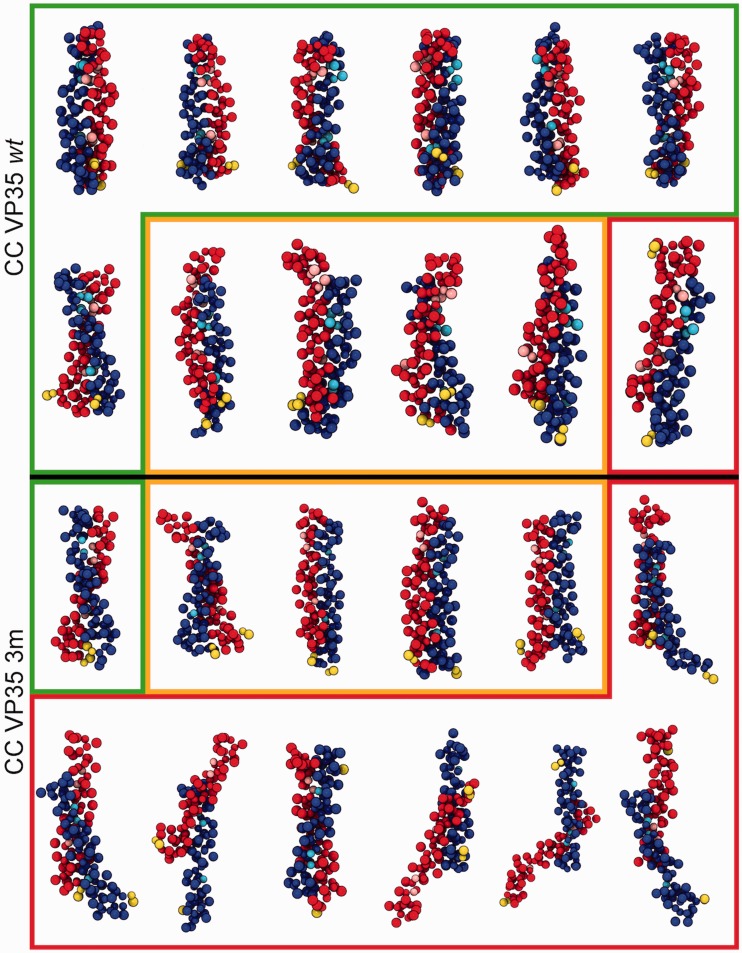
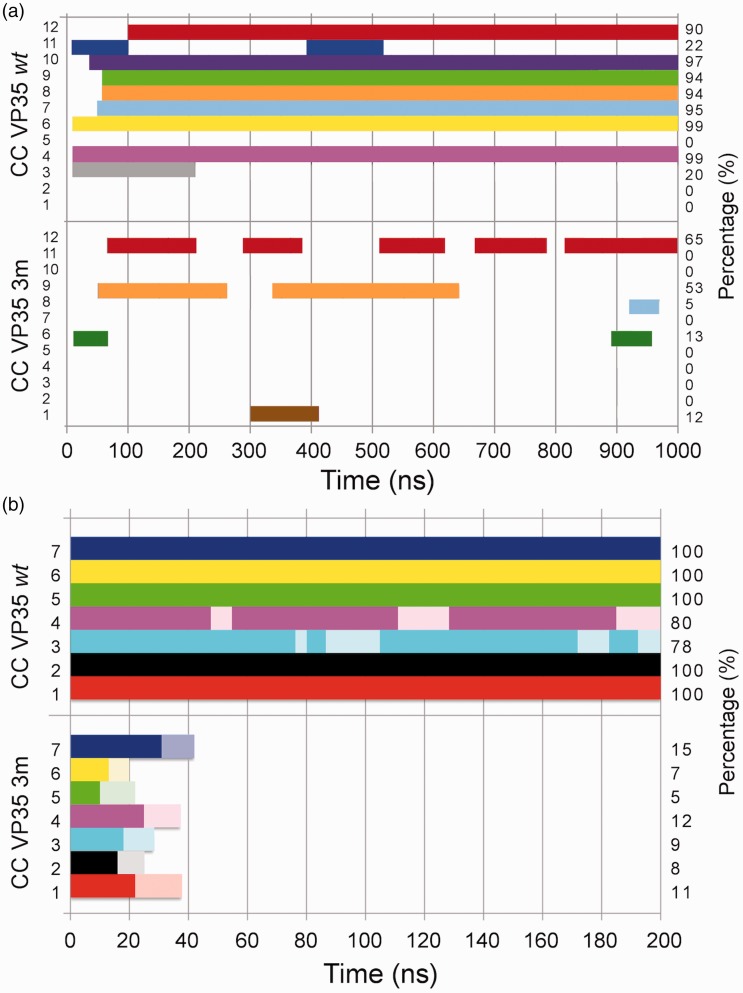
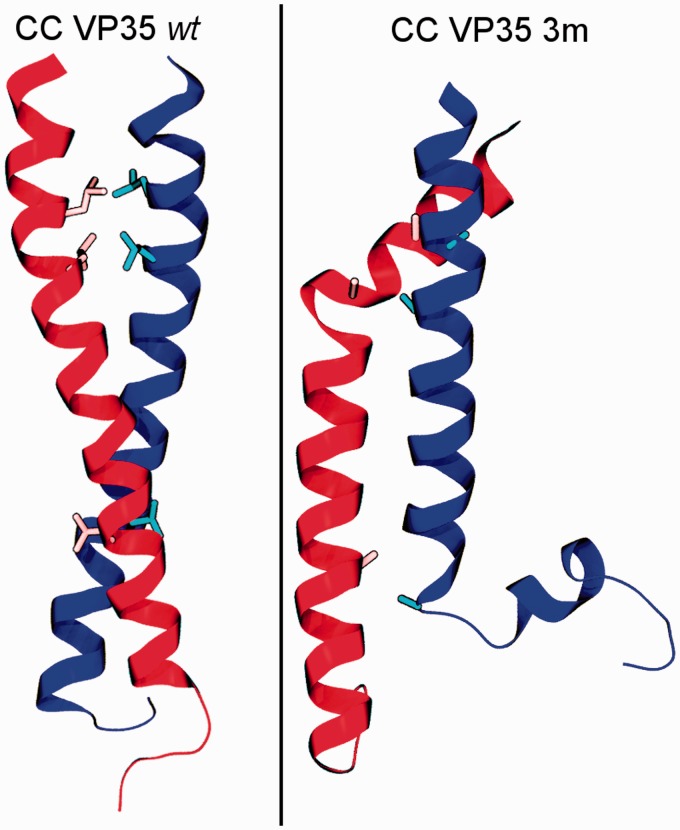
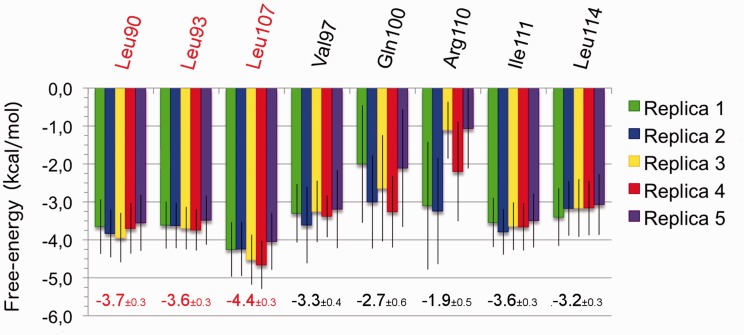
Ebola virus high lethality relies on its ability to efficiently bypass the host innate antiviral response, which senses the viral dsRNA through the RIG-I receptor and induces type I interferon α/β production. In the bypassing action, the Ebola virus protein VP35 plays a pivotal role at multiple levels of the RIG-I cascade, masking the viral 5′-triphosphorylated dsRNA from RIG-I, and interacting with other cascade components. The VP35 type I interferon inhibition is exerted by the C-terminal domain, while the N-terminal domain, containing a coiled-coil region, is primarily required for oligomerization. However, mutations at key VP35 residues L90/93/107A (VP35-3m) in the coiled-coil region were reported to affect oligomerization and reduce type I interferon antagonism, indicating a possible but unclear role of homo-oligomerization on VP35 interaction with the RIG-I pathway components. In this work, we investigated the VP35 dimerization thermodynamics and its contribution to type I interferon antagonism by computational and biological methods. Focusing on the coiled-coil region, we combined coarse-grained and all-atom simulations on VP35 and VP35-3m homo-dimerization. According to our results, VP35 coiled-coil is able to self-assemble into dimers, while VP35-3m coiled-coil shows poor propensity to even dimerize. Free-energy calculations confirmed the key role of L90, L93 and L107 in stabilizing the coiled-coil homo-dimeric structure. In vitro type I interferon antagonism studies, using full-length VP35 and VP35-3m, revealed that VP35 homo-dimerization is an essential preliminary step for dsRNA binding, which appears to be the main factor of the VP35 RIG-I cascade inhibition, while it is not essential to block the other steps.
埃博拉病毒的高致死率依赖于其有效规避宿主先天性抗病毒反应的能力,该反应通过维甲酸诱导基因I(RIG-I)受体感知病毒双链RNA(dsRNA)并诱导I型干扰素α/β的产生。在这一规避过程中,埃博拉病毒蛋白VP35在RIG-I级联反应的多个层面发挥关键作用,它将病毒5′-三磷酸化dsRNA掩盖起来,使其不被RIG-I识别,并与级联反应的其他成分相互作用。VP35对I型干扰素的抑制作用由其C末端结构域发挥,而包含卷曲螺旋区域的N末端结构域主要参与寡聚化过程。然而,据报道,卷曲螺旋区域关键VP35残基L90/93/107A(VP35-3m)处的突变会影响寡聚化并降低I型干扰素拮抗作用,这表明同型寡聚化在VP35与RIG-I信号通路成分相互作用中可能发挥作用,但作用尚不明确。在本研究中,我们通过计算和生物学方法研究了VP35二聚化的热力学及其对I型干扰素拮抗作用的贡献。聚焦于卷曲螺旋区域,我们对VP35和VP35-3m的同型二聚化进行了粗粒度和全原子模拟。根据我们的结果,VP35卷曲螺旋能够自组装成二聚体,而VP35-3m卷曲螺旋甚至显示出很差的二聚化倾向。自由能计算证实了L90、L93和L107在稳定卷曲螺旋同型二聚体结构中的关键作用。使用全长VP35和VP35-3m进行的体外I型干扰素拮抗作用研究表明,VP35同型二聚化是dsRNA结合的必要初步步骤,这似乎是VP35抑制RIG-I级联反应的主要因素,而对于阻断其他步骤并非必不可少。