Center for Social Medicine and Humanities, University of California, Los Angeles, CA, United States of America.
Harvard Medical School, Boston, MA, United States of America.
PLoS One. 2019 Nov 21;14(11):e0225376. doi: 10.1371/journal.pone.0225376. eCollection 2019.
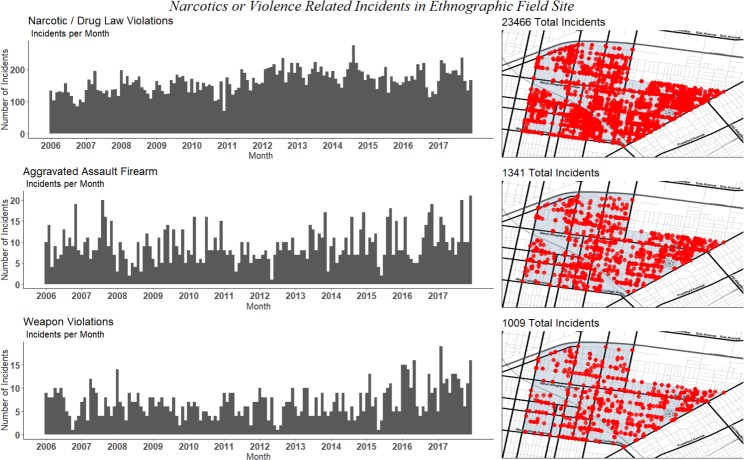
The United States is experiencing a continuing crisis of gun violence, and economically marginalized and racially segregated inner-city areas are among the most affected. To decrease this violence, public health interventions must engage with the complex social factors and structural drivers-especially with regard to the clandestine sale of narcotics-that have turned the neighborhood streets of specific vulnerable subgroups into concrete killing fields. Here we present a mixed-methods ethnographic and epidemiological assessment of narcotics-driven firearm violence in Philadelphia's impoverished, majority Puerto Rican neighborhoods.
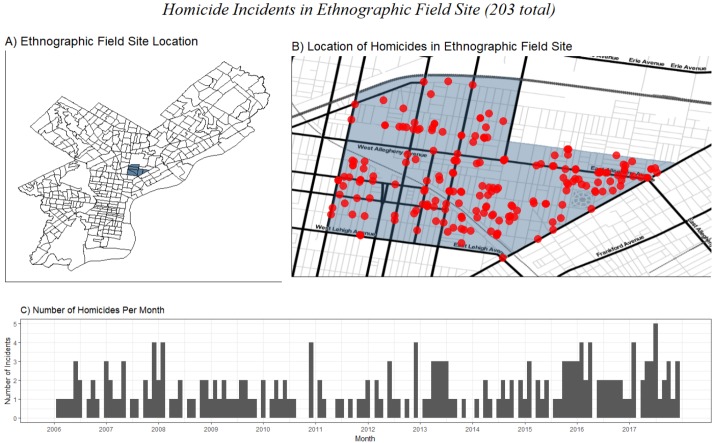
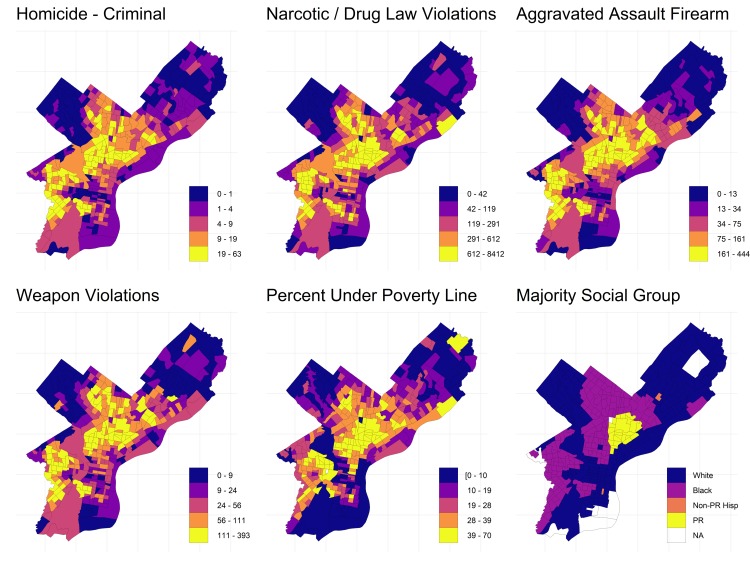
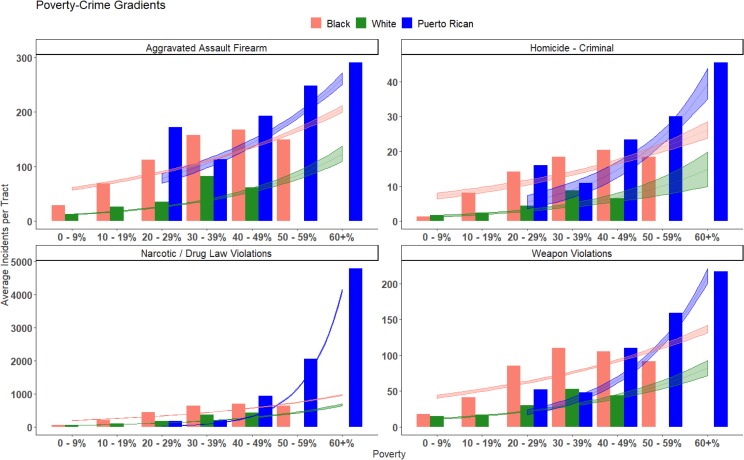
Using an exploratory sequential study design, we formulated hypotheses about ethnic/racial vulnerability to violence, based on half a dozen years of intensive participant-observation ethnographic fieldwork. We subsequently tested them statistically, by combining geo-referenced incidents of narcotics- and firearm-related crime from the Philadelphia police department with census information representing race and poverty levels. We explored the racialized relationships between poverty, narcotics, and violence, melding ethnography, graphing, and Poisson regression.
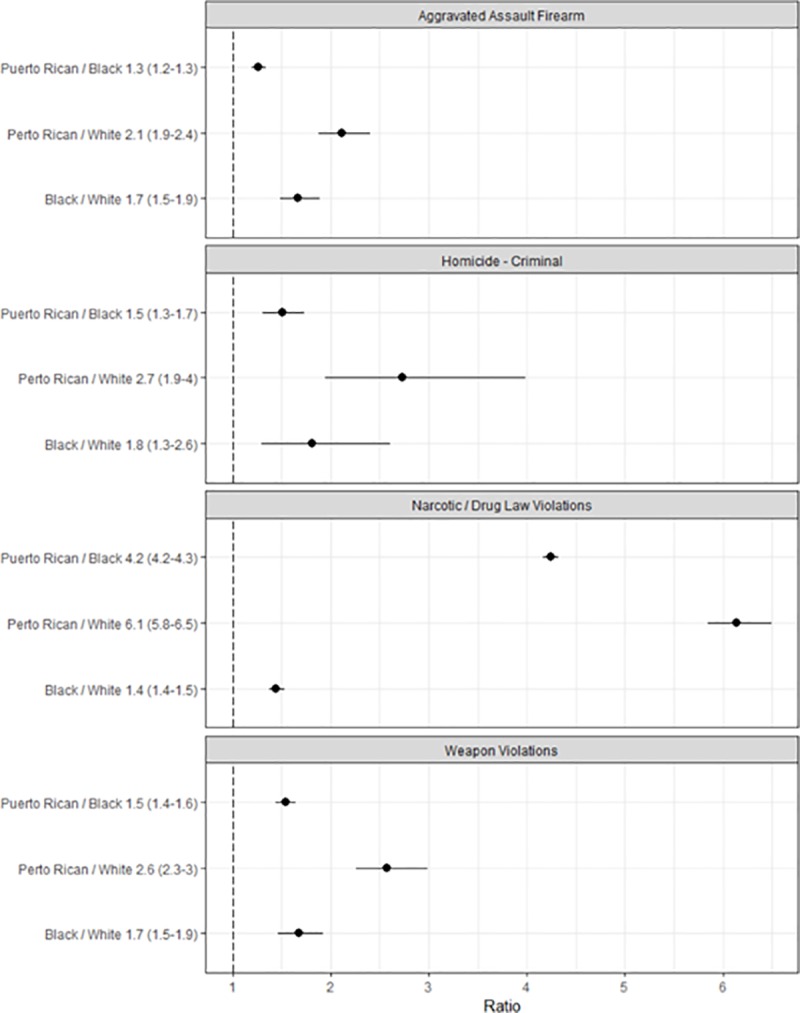
Even controlling for poverty levels, impoverished majority-Puerto Rican areas in Philadelphia are exposed to significantly higher levels of gun violence than majority-white or black neighborhoods. Our mixed methods data suggest that this reflects the unique social position of these neighborhoods as a racial meeting ground in deeply segregated Philadelphia, which has converted them into a retail endpoint for the sale of astronomical levels of narcotics.
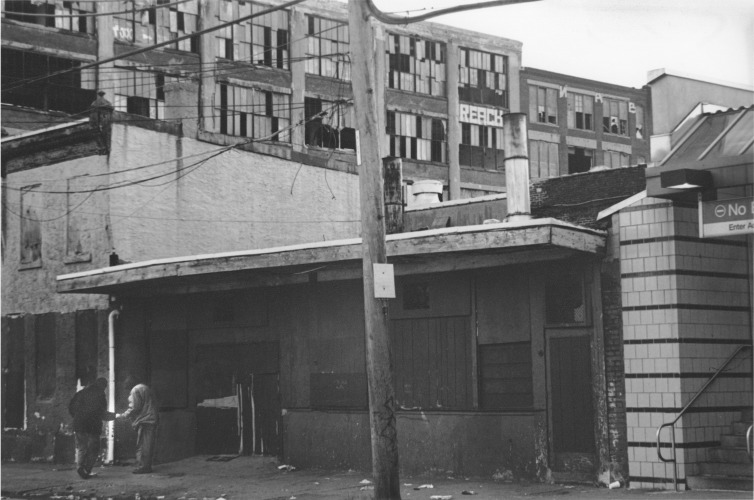
We document racial/ethnic and economic disparities in exposure to firearm violence and contextualize them ethnographically in the lived experience of community members. The exceptionally concentrated and high-volume retail narcotics trade, and the violence it generates in Philadelphia's poor Puerto Rican neighborhoods, reflect unique structural vulnerability and cultural factors. For most young people in these areas, the narcotics economy is the most readily accessible form of employment and social mobility. The performance of violence is an implicit part of survival in these lucrative, illegal narcotics markets, as well as in the overcrowded jails and prisons through which entry-level sellers cycle chronically. To address the structural drivers of violence, an inner-city Marshall Plan is needed that should include well-funded formal employment programs, gun control, re-training police officers to curb the routinization of brutality, reform of criminal justice to prioritize rehabilitation over punishment, and decriminalization of narcotics possession and low-level sales.
美国正经历一场持续的枪支暴力危机,而经济边缘化和种族隔离的市中心内城区是受影响最严重的地区之一。为了减少这种暴力,公共卫生干预措施必须应对复杂的社会因素和结构性驱动因素——特别是与秘密贩卖麻醉品有关的因素,这些因素已经使特定弱势群体所在的邻里街道变成了真正的杀戮场。在这里,我们呈现了对费城贫困的波多黎各多数族裔社区中由麻醉品驱动的枪支暴力的混合方法民族志和流行病学评估。
我们使用探索性序贯研究设计,根据六年多的密集参与式观察民族志实地工作,形成了关于种族/民族易受暴力影响的假设。随后,我们通过将费城警察局的与麻醉品和枪支犯罪相关的地理参考事件与代表种族和贫困水平的人口普查信息相结合,从统计学上对这些假设进行了测试。我们探索了贫困、麻醉品和暴力之间的种族关系,融合了民族志、绘图和泊松回归。
即使控制了贫困水平,费城的贫困波多黎各多数族裔社区也面临着比白人或黑人社区更高水平的枪支暴力。我们的混合方法数据表明,这反映了这些社区作为费城深度隔离的种族交汇点的独特社会地位,这使它们成为销售天文数字级麻醉品的零售终点。
我们记录了枪支暴力暴露方面的种族/民族和经济差距,并在社区成员的生活经历中从民族志角度对其进行了说明。在费城贫困的波多黎各社区中,异常集中和高容量的零售麻醉品交易及其产生的暴力反映了独特的结构性脆弱性和文化因素。对于这些地区的大多数年轻人来说,麻醉品经济是最容易获得的就业和社会流动形式。在这些利润丰厚的非法麻醉品市场中,以及在人员过剩的监狱和监狱中,暴力行为是生存的隐含部分,而这些监狱和监狱中的入门级卖家经常进出。为了解决暴力的结构性驱动因素,需要实施一项市中心马歇尔计划,其中应包括资金充足的正规就业方案、枪支管制、培训警察以遏制暴行的常规化、改革刑事司法系统,将康复置于惩罚之上,以及使麻醉品持有和低级别销售非刑罪化。