Department of Family and Preventive Medicine, University of California, San Diego (UCSD), San Diego, CA, USA; Graduate School of Public Health, San Diego State University (SDSU), San Diego, CA, USA.
Pomona College, Claremont, CA, USA; Epigenetics Programme, Babraham Institute, Cambridge, UK.
Soc Sci Med. 2022 Jul;305:115044. doi: 10.1016/j.socscimed.2022.115044. Epub 2022 May 18.
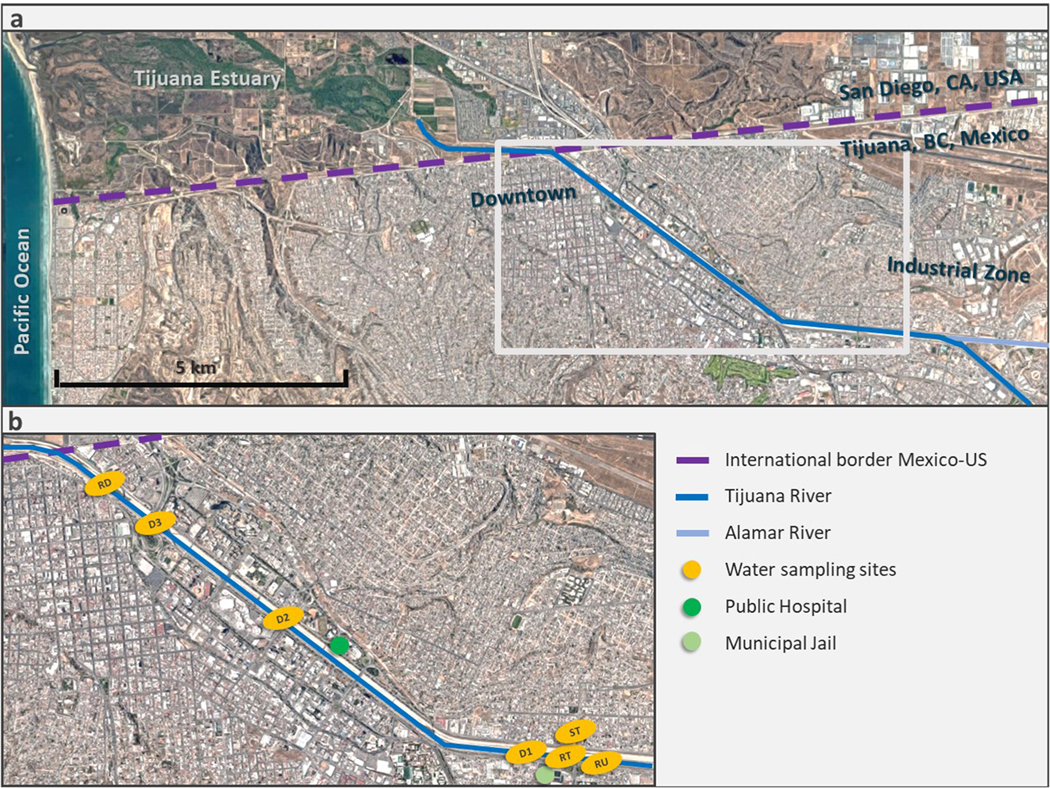
The US deports more Mexicans to Tijuana than any other borderland city. Returning involuntarily as members of a stigmatized underclass, many find themselves homeless and de-facto stateless. Subject to routinized police victimization, many take refuge in the Tijuana River Canal (El Bordo). Previous reports suggest Tijuana River water may be contaminated but prior studies have not accessed the health effects or contamination of the water closest to the river residents.
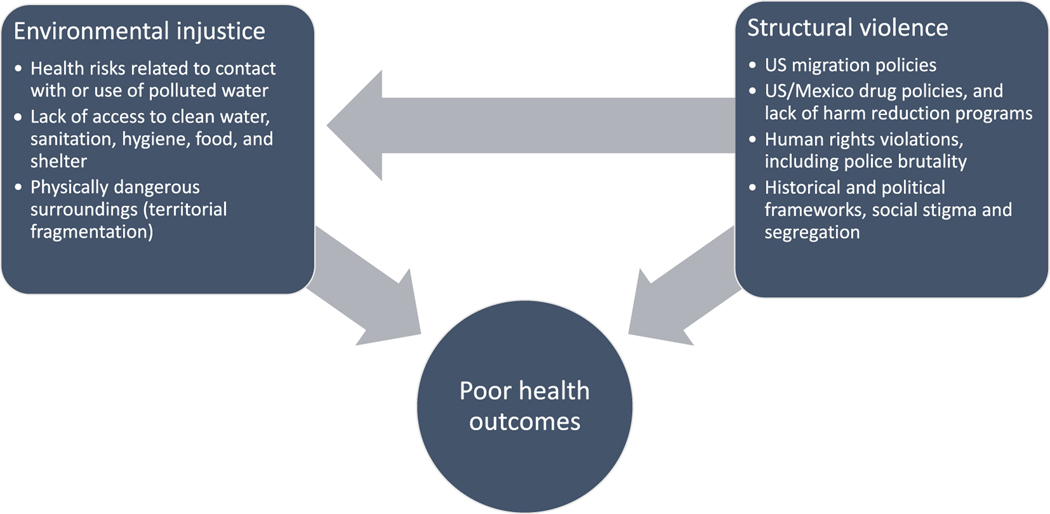
A binational, transdisciplinary team undertook a socio-environmental, mixed methods assessment to simultaneously characterize Tijuana River water quality with chemical testing, assess the frequency of El Bordo residents' water-related diseases, and trace water contacts with epidemiological survey methods (n = 85 adults, 18+) in 2019, and ethnographic methods in 2019-2021. Our analysis brings the structural violence framework into conversation with an environmental injustice perspective to documented how social forces drive poor health outcomes enacted through the environment.
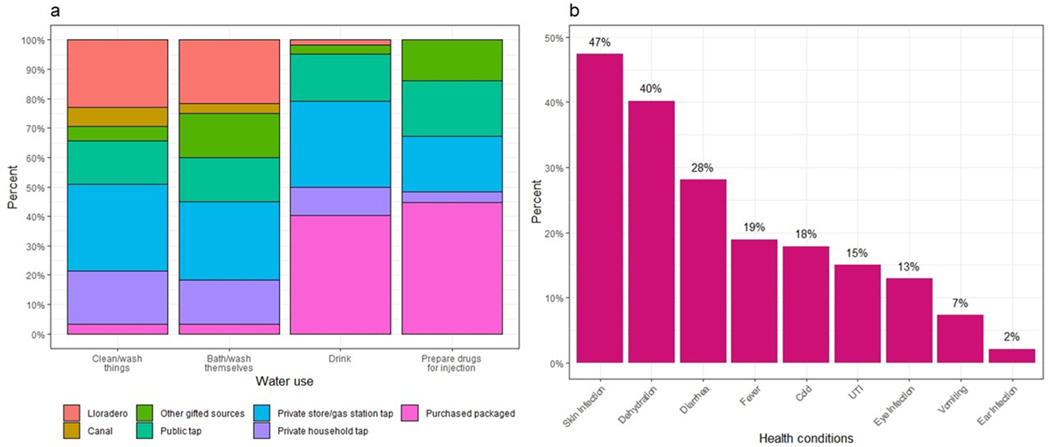
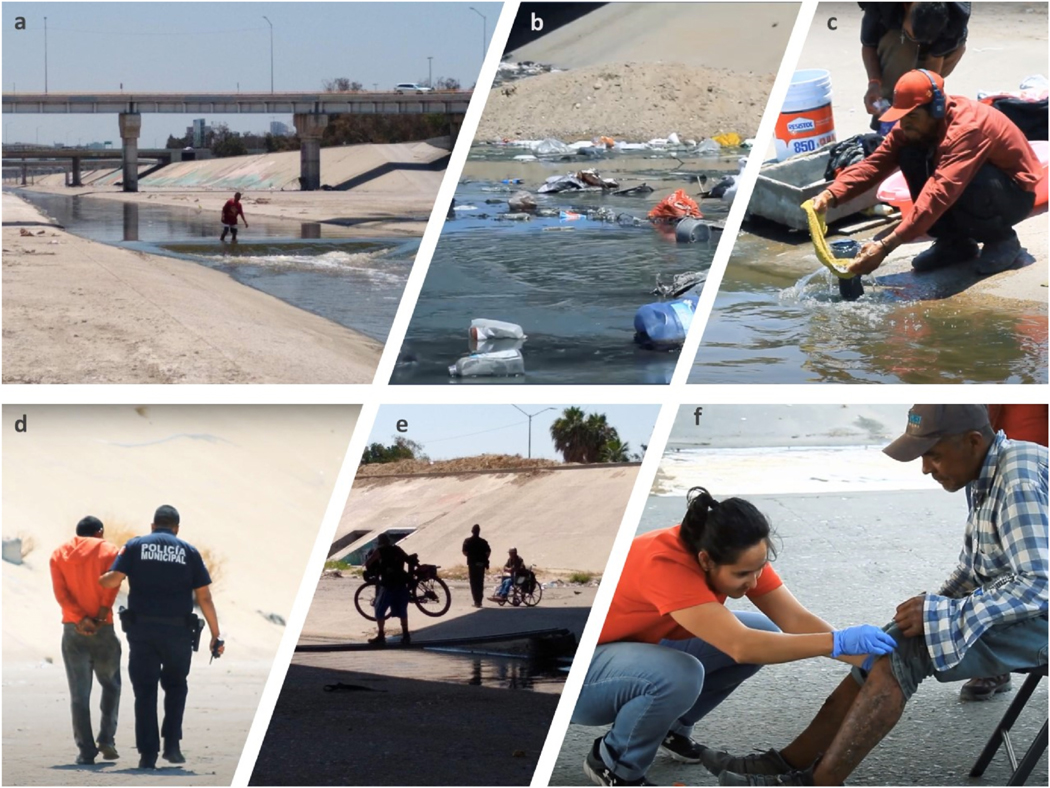
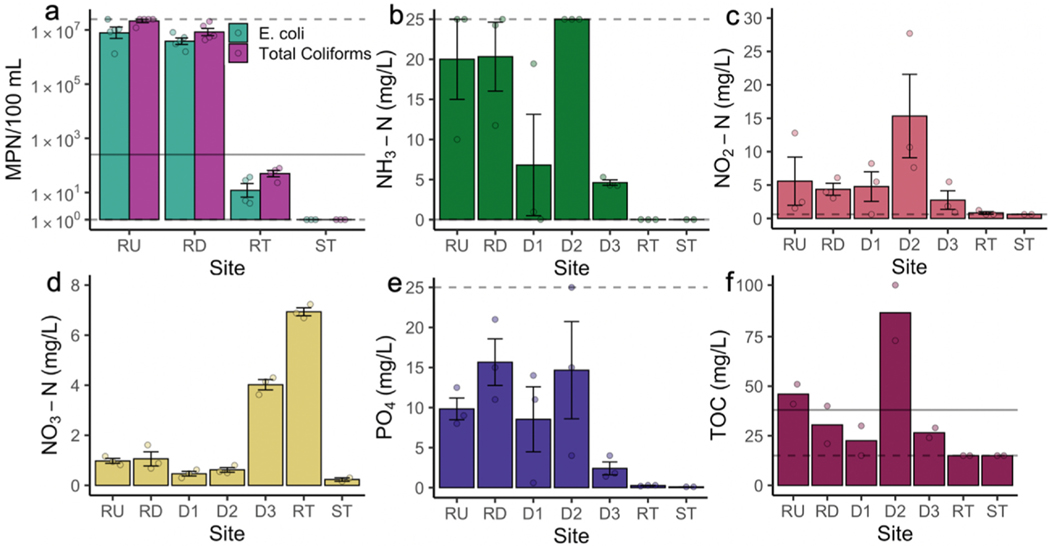
The Tijuana River water most proximate to its human inhabitants fails numerous water-quality standards, posing acute health risks. Escherichia coli values were ∼40,000 times the Mexican regulatory standard for directly contacted water. Skin infections (47%), dehydration (40%) and diarrhea (28%) were commonly reported among El Bordo residents. Residents are aware the water is contaminated and strive to minimize harm to their health by differentially using local water sources. Their numerous survival constraints, however, are exacerbated by routine police violence which propels residents and other people who inject drugs into involuntary contact with contaminated water.
Human rights to drinking water, sanitation and hygiene are routinely violated among El Bordo inhabitants. This is exacerbated by violent policing practices that force unhoused deportees to seek refuge in waterways, and drive water contacts. Furthermore, US-Mexico 'free-trade' agreements drive rapid growth in Tijuana, restrict Mexican environmental regulation enforcement, and drive underinvestment in sewage systems and infrastructure.
美国将比任何其他边境城市更多的墨西哥人驱逐回蒂华纳。作为一个受歧视的下层阶级的非自愿成员返回,许多人无家可归,事实上成为无国籍人士。由于经常受到警察的迫害,许多人在蒂华纳河运河(El Bordo)避难。先前的报告表明,蒂华纳河水可能受到污染,但之前的研究并未评估最接近河流居民的水的健康影响或污染情况。
一个由美墨两国组成的跨学科团队进行了一项社会环境的、跨学科的评估,以同时用化学测试来描述蒂华纳河水的质量,评估 El Bordo 居民水相关疾病的频率,并通过流行病学调查方法(2019 年共 85 名成年人,年龄在 18 岁以上)和民族志方法(2019-2021 年)追踪与水的接触情况。我们的分析将结构性暴力框架与环境不公正视角结合起来,记录了社会力量如何通过环境驱动不良健康结果。
最接近其人类居民的蒂华纳河水水质未能达到多项水质标准,构成了严重的健康风险。大肠杆菌值是墨西哥直接接触水监管标准的约 40000 倍。 El Bordo 居民中常见的皮肤感染(47%)、脱水(40%)和腹泻(28%)。居民知道水被污染了,并通过不同地使用当地水源来尽量减少对健康的危害。然而,他们的许多生存限制因例行的警察暴力而加剧,这种暴力迫使居民和其他注射毒品的人被迫接触受污染的水。
El Bordo 居民的饮用水、卫生和个人卫生人权经常受到侵犯。这因暴力执法行为而加剧,这些行为迫使无家可归的被驱逐者在水道中寻求避难所,并导致与水接触。此外,美墨“自由贸易”协定推动了蒂华纳的快速增长,限制了墨西哥的环境监管执法,并导致污水处理系统和基础设施投资不足。