National Key Laboratory of Wheat and Maize Crop Science, Henan Agricultural University, College of Agronomy, Zhengzhou 450046, China.
Genes (Basel). 2019 Nov 19;10(11):944. doi: 10.3390/genes10110944.
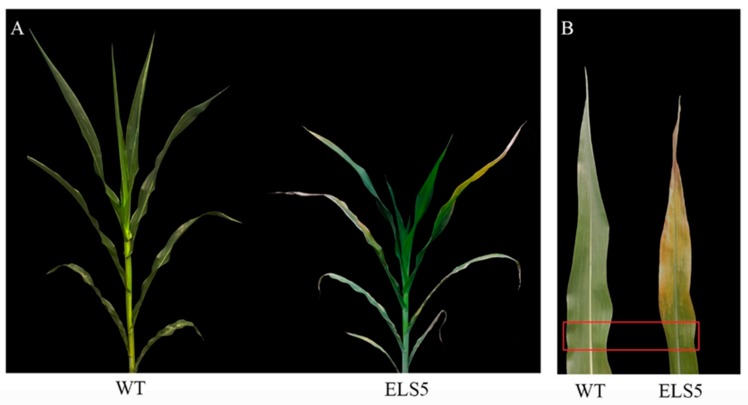
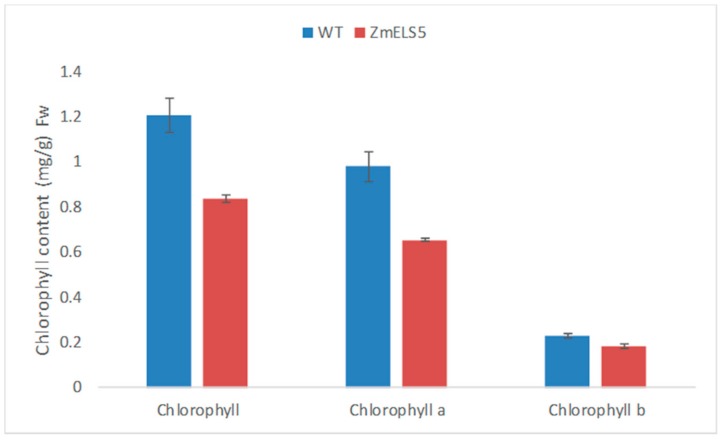
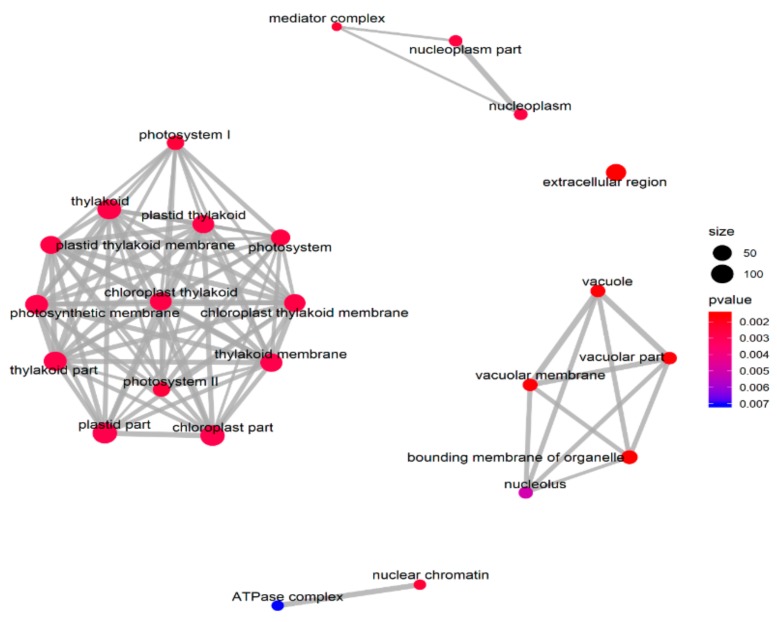
Leaf premature senescence largely determines maize ( L.) grain yield and quality. A natural recessive premature-senescence mutant was selected from the breeding population, and near-isogenic lines were constructed using Jing24 as the recurrent parent. In the near-isogenic lines, the dominant homozygous material was wild-type (WT), and the recessive material of early leaf senescence was the premature-senescence-type . To identify major genes and regulatory mechanisms involved in leaf senescence, a transcriptome analysis of the and WT near-isogenic lines (NILs) was performed. A total of 8,796 differentially expressed transcripts were identified between and WT, including 3,811 up-regulated and 4,985 down-regulated transcripts. By combining gene ontology, Kyoto Encyclopedia of Genes and Genomes, gene set, and transcription factor enrichment analyses, key differentially expressed genes were screened. The senescence regulatory network was predicted based on these key differentially expressed genes, which indicated that the senescence process is mainly regulated by bHLH, WRKY, and AP2/EREBP family transcription factors, leading to the accumulations of jasmonic acid and ethylene. This causes stress responses and reductions in the chlorophyll a/b-binding protein activity level. Then, decreased ATP synthase activity leads to increased photosystem II photodamage, ultimately leading to leaf senescence.
叶片早衰在很大程度上决定了玉米(L.)的籽粒产量和品质。本研究从自交系群体中选择了一个自然隐性的早衰突变体,利用京 24 作为轮回亲本构建了近等基因系。在近等基因系中,显性纯合材料为野生型(WT),隐性早衰老材料为早衰型。为了鉴定叶片衰老过程中涉及的主要基因和调控机制,对和 WT 近等基因系(NILs)进行了转录组分析。共鉴定到 8796 个差异表达转录本,包括 3811 个上调和 4985 个下调转录本。通过结合基因本体、京都基因与基因组百科全书、基因集和转录因子富集分析,筛选出关键差异表达基因。基于这些关键差异表达基因预测了衰老调控网络,表明衰老过程主要受 bHLH、WRKY 和 AP2/EREBP 家族转录因子调控,导致茉莉酸和乙烯的积累。这引起了胁迫反应和叶绿素 a/b 结合蛋白活性水平的降低。然后,ATP 合酶活性的降低导致光系统 II 光损伤的增加,最终导致叶片衰老。