Yang Haejo, Kim Young-Jun, Shin Youngjae
Department of Environmental Horticulture, Dankook University, Cheonan, Chungnam 31116, Korea.
Department of Food Science and Technology, Seoul National University of Science and Technology, Seoul 01811, Korea.
Foods. 2019 Nov 20;8(12):598. doi: 10.3390/foods8120598.
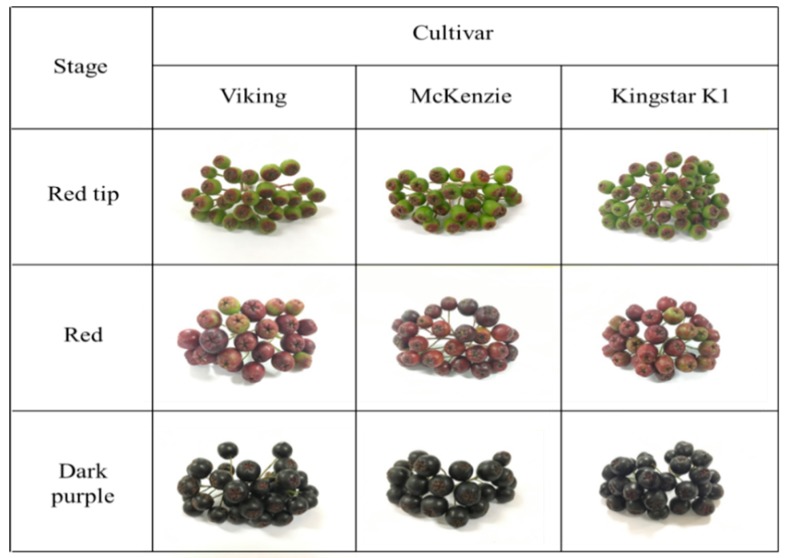
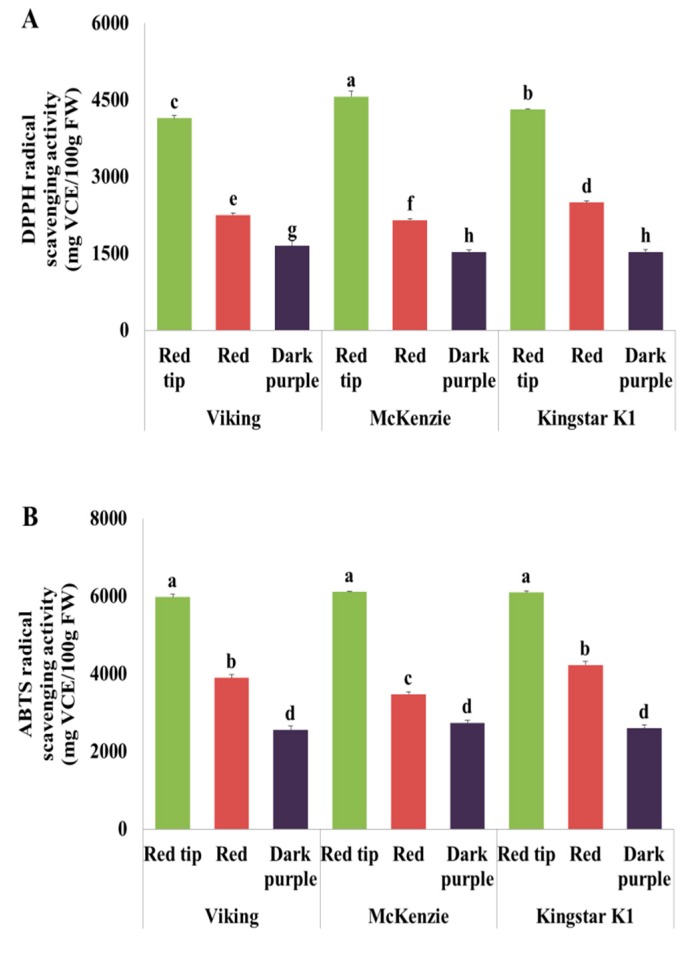
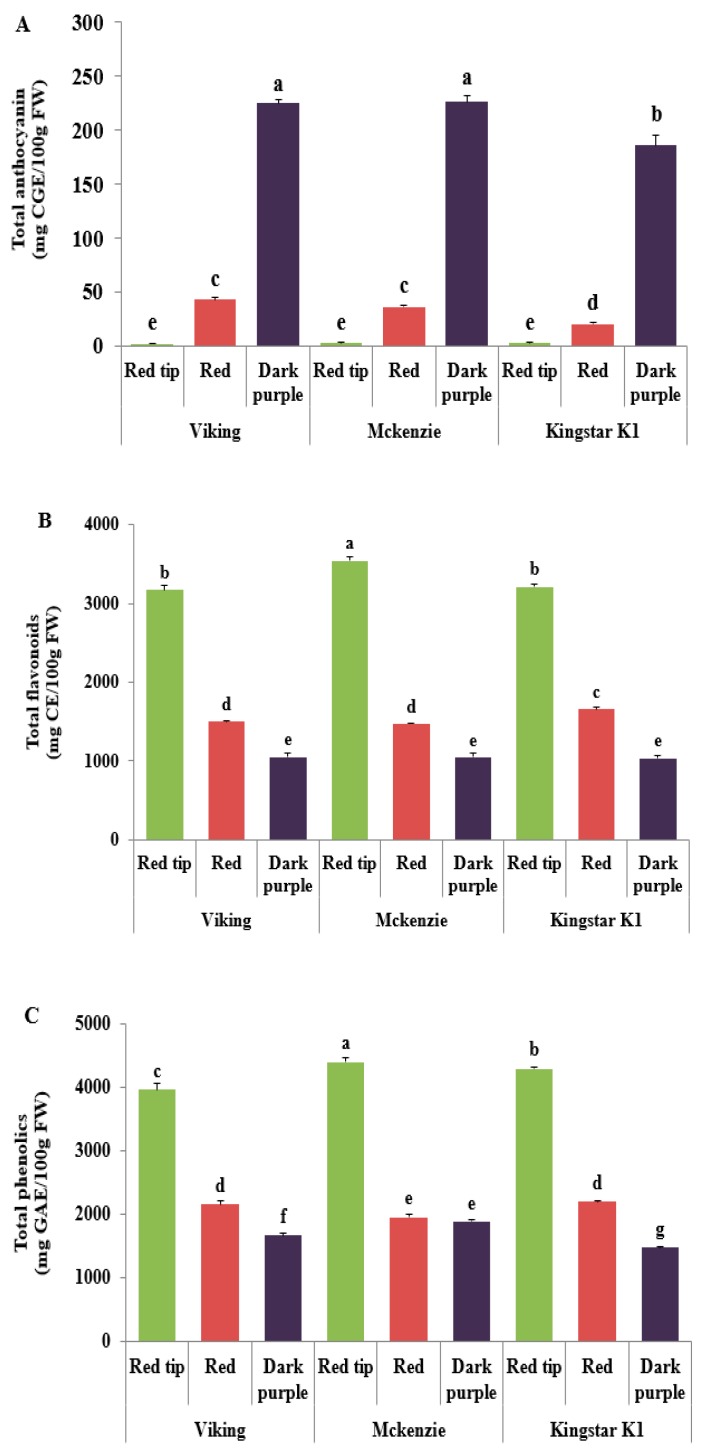
The present study investigated the fruits of aronia () across different stages of maturity and analyzed their physicochemical properties, antioxidant compositions, and activities. The selected aronia cultivars ('Viking', 'McKenzie', and 'Kingstar K1' were categorized based on maturity into the immature stage (red tip), intermediary stage (red), and mature stage (dark purple). The key sugar components of aronia fruits were fructose, glucose, and sorbitol, while the main organic acid was found to be malic acid. The antioxidant content and activity of all three aronia cultivars showed significantly higher values for the red tip stage than the red or dark purple stages. However, the total anthocyanin content of aronia was the highest at the dark purple stage in three cultivars. The main polyphenols in aronia fruits were found to be catechol and chlorogenic acid, with a decreasing tendency as maturation progressed. As a result, the red tip stage of aronia fruits contains comparatively more abundant flavonoids, phenolic compounds and polyphenols than the dark purple stage, with higher antioxidant activity.
本研究调查了不同成熟阶段的黑果腺肋花楸果实,并分析了其理化性质、抗氧化成分及活性。所选黑果腺肋花楸品种(‘维京’、‘麦肯齐’和‘金星K1’)根据成熟度分为未成熟阶段(微红尖)、中间阶段(红色)和成熟阶段(深紫色)。黑果腺肋花楸果实的主要糖类成分是果糖、葡萄糖和山梨醇,而主要有机酸为苹果酸。所有三个黑果腺肋花楸品种的抗氧化剂含量和活性在微红尖阶段均显著高于红色或深紫色阶段。然而,三个品种的黑果腺肋花楸在深紫色阶段的总花青素含量最高。黑果腺肋花楸果实中的主要多酚类物质为儿茶酚和绿原酸,随着成熟度的增加呈下降趋势。因此,黑果腺肋花楸果实的微红尖阶段比深紫色阶段含有相对更丰富的黄酮类化合物、酚类化合物和多酚类物质,抗氧化活性更高。