Thi Nhuan Do, Hwang Eun-Sun
Department of Nutrition and Culinary Science, Hankyong National University, Gyeonggi 456-749, Korea.
Department of Nutrition and Culinary Science, Hankyong National University, Gyeonggi 456-749, Korea ; Korean Foods Global Center, Hankyong National University, Gyeonggi 456-749, Korea.
Prev Nutr Food Sci. 2014 Sep;19(3):204-12. doi: 10.3746/pnf.2014.19.3.204.
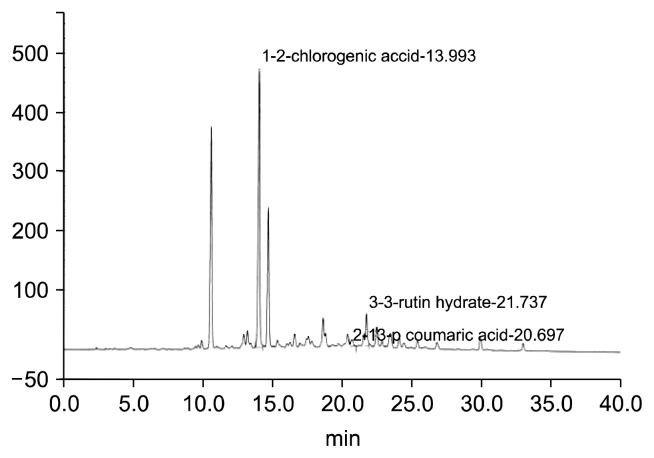
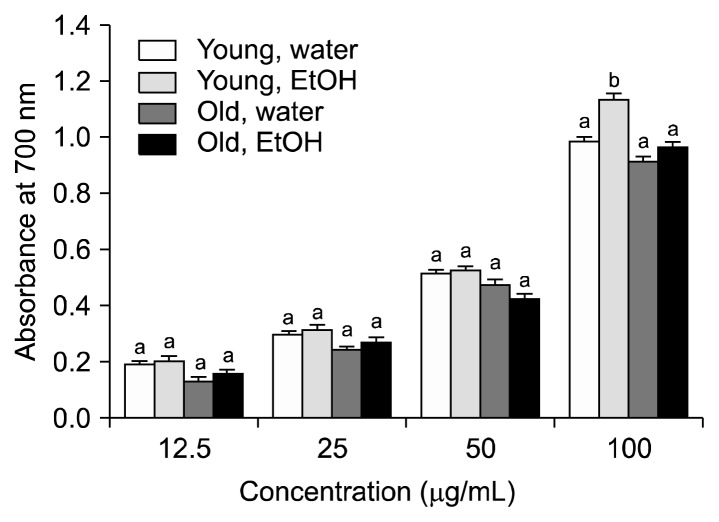
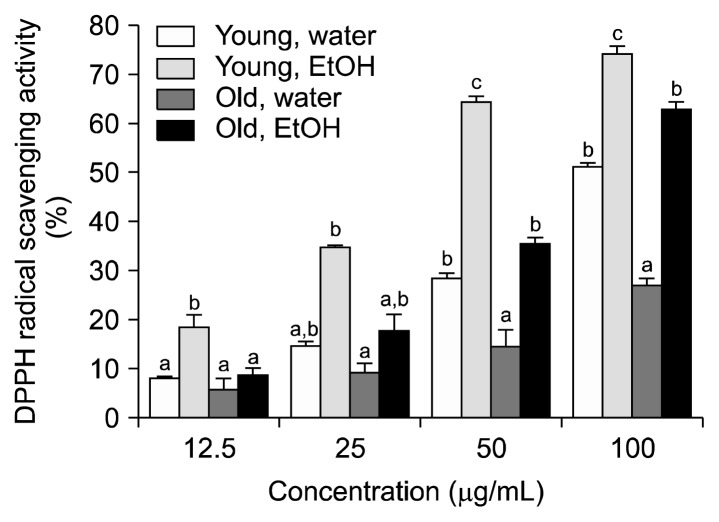
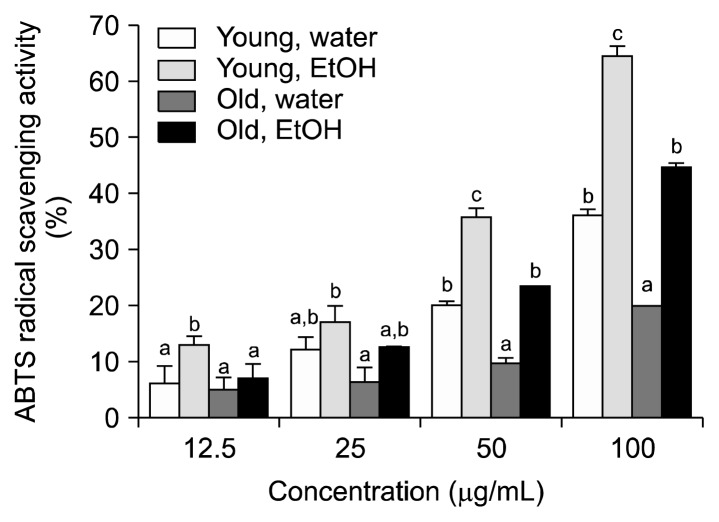
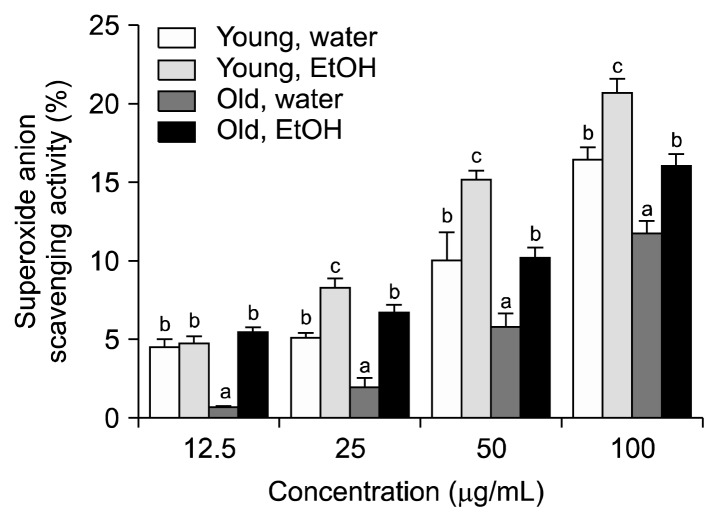
The bioactive compounds and antioxidant activity of aronia leaves at different stages of maturity were identified and evaluated. Young and old leaves were approximately 2 months of age and 4 months of age, respectively. The young leaves contained more polyphenols and flavonoids than the old leaves. Three phenolic compounds (i.e., chlorogenic acid, p-coumaric acid, and rutin) were detected by HPLC. Antioxidant activity was measured using 2,2-di-phenyl-1-picrylhydrazyl (DPPH) radical, 2,2'-azino-bis(3-ethylbenzothiazoline-6-sulphonic acid) (ABTS) radical, and superoxide anion radical scavenging assays. The reducing power of aronia leaf extracts increased in a concentration-dependent manner (0~100 μg/mL). The antioxidant activity of the 80% ethanol extract was greater than that of distilled water extract. The high phenolic compound content indicated that these compounds contribute to antioxidant activity. The overall results indicate that aronia leaves contain bioactive compounds, and that younger aronia leaves may be more favorable for extracting antioxidative ingredients because they contain more polyphenols.
对不同成熟阶段的黑果腺肋花楸叶片的生物活性化合物和抗氧化活性进行了鉴定和评估。幼叶和老叶分别约为2月龄和4月龄。幼叶比老叶含有更多的多酚和黄酮类化合物。通过高效液相色谱法检测到三种酚类化合物(即绿原酸、对香豆酸和芦丁)。使用2,2-二苯基-1-苦基肼(DPPH)自由基、2,2'-联氮-双-(3-乙基苯并噻唑啉-6-磺酸)(ABTS)自由基和超氧阴离子自由基清除试验来测定抗氧化活性。黑果腺肋花楸叶提取物的还原能力呈浓度依赖性增加(0~100μg/mL)。80%乙醇提取物的抗氧化活性大于蒸馏水提取物。高酚类化合物含量表明这些化合物有助于抗氧化活性。总体结果表明,黑果腺肋花楸叶含有生物活性化合物,并且较嫩的黑果腺肋花楸叶可能更有利于提取抗氧化成分,因为它们含有更多的多酚。