3780 Pelham Drive, Mobile, AL 36619, USA.
Int J Mol Sci. 2019 Nov 20;20(23):5824. doi: 10.3390/ijms20235824.
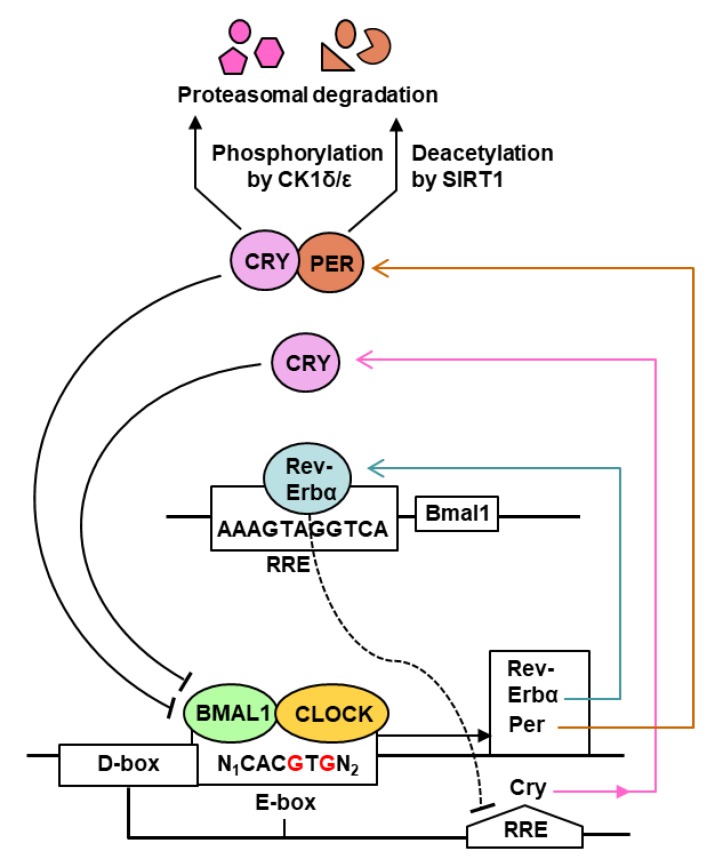
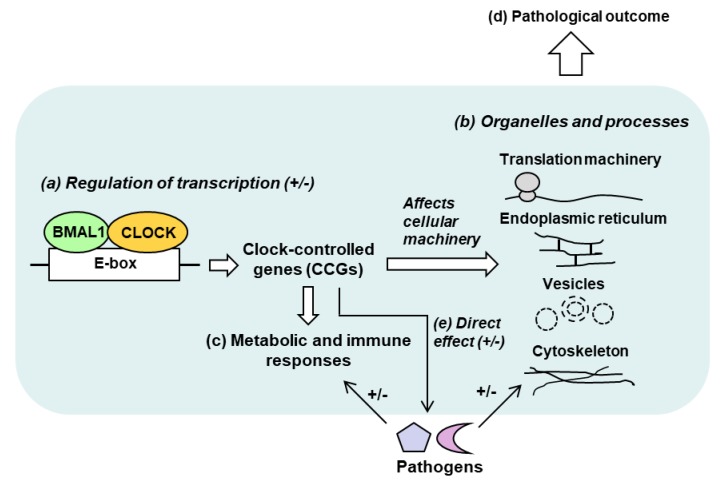
The daily periodicity of the Earth's rotation around the Sun, referred to as circadian (Latin "circa" = about, and "diem" = day), is also mirrored in the behavior and metabolism of living beings. The discovery that dedicated cellular genes control various aspects of this periodicity has led to studies of the molecular mechanism of the circadian response at the cellular level. It is now established that the circadian genes impact on a large network of hormonal, metabolic, and immunological pathways, affecting multiple aspects of biology. Recent studies have extended the role of the circadian system to the regulation of infection, host-pathogen interaction, and the resultant disease outcome. This critical review summarizes our current knowledge of circadian-pathogen interaction at both systemic and cellular levels, but with emphasis on the molecular aspects of the regulation. Wherever applicable, the potential of a direct interaction between circadian factors and pathogenic macromolecules is also explored. Finally, this review offers new directions and guidelines for future research in this area, which should facilitate progress.
地球绕太阳自转的日周期性,被称为昼夜节律(拉丁语“circum”意为大约,“dies”意为天),也反映在生物的行为和新陈代谢中。专门的细胞基因控制这种周期性的各个方面的发现,导致了对细胞水平昼夜节律反应的分子机制的研究。现在已经确定,昼夜节律基因影响着一个庞大的激素、代谢和免疫途径网络,影响着生物学的多个方面。最近的研究将昼夜节律系统的作用扩展到了感染的调节、宿主-病原体相互作用以及由此产生的疾病结果。这篇重要的综述总结了我们目前在系统和细胞水平上对昼夜节律-病原体相互作用的认识,但重点是调节的分子方面。只要适用,还探讨了昼夜节律因子与致病性大分子之间直接相互作用的可能性。最后,这篇综述为该领域的未来研究提供了新的方向和指导,这将有助于该领域的进展。