Department of Applied Mathematics, University of Waterloo, Waterloo, Ontario, Canada.
Department of Biology, Cheriton School of Computer Science, and School of Pharmacology, University of Waterloo, Waterloo, Ontario, Canada.
PLoS Comput Biol. 2021 Mar 31;17(3):e1008514. doi: 10.1371/journal.pcbi.1008514. eCollection 2021 Mar.
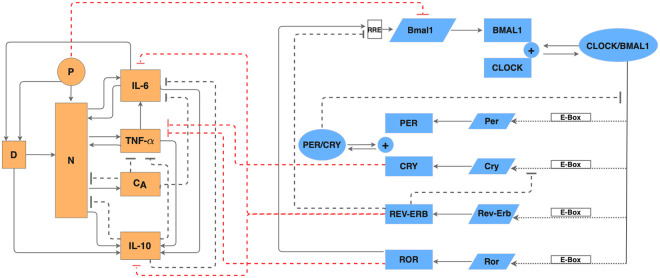
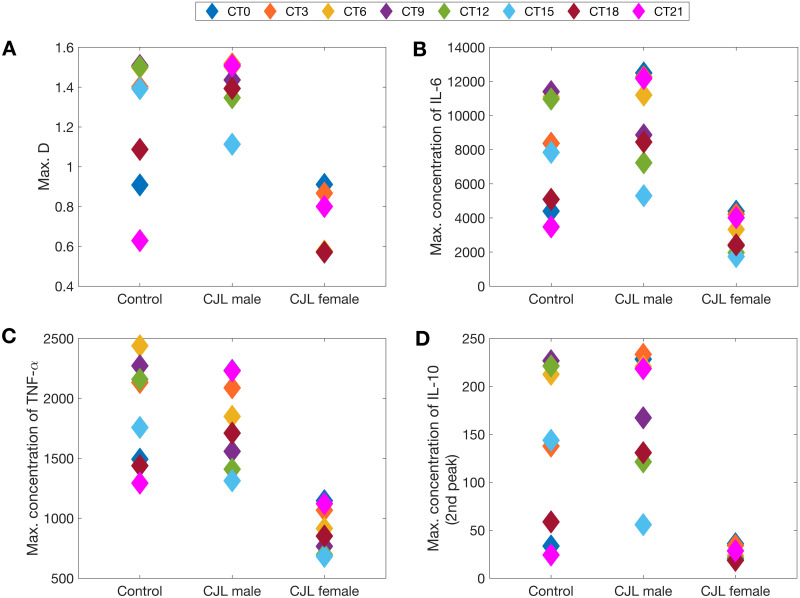
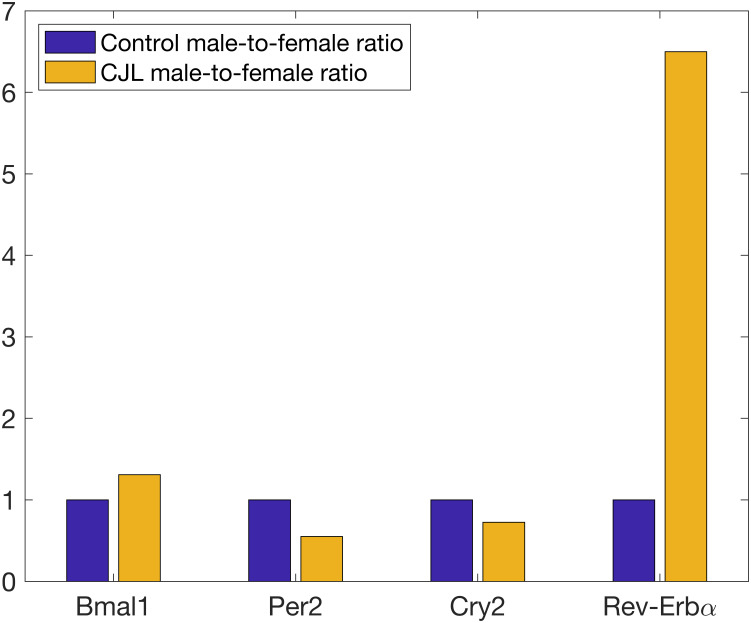
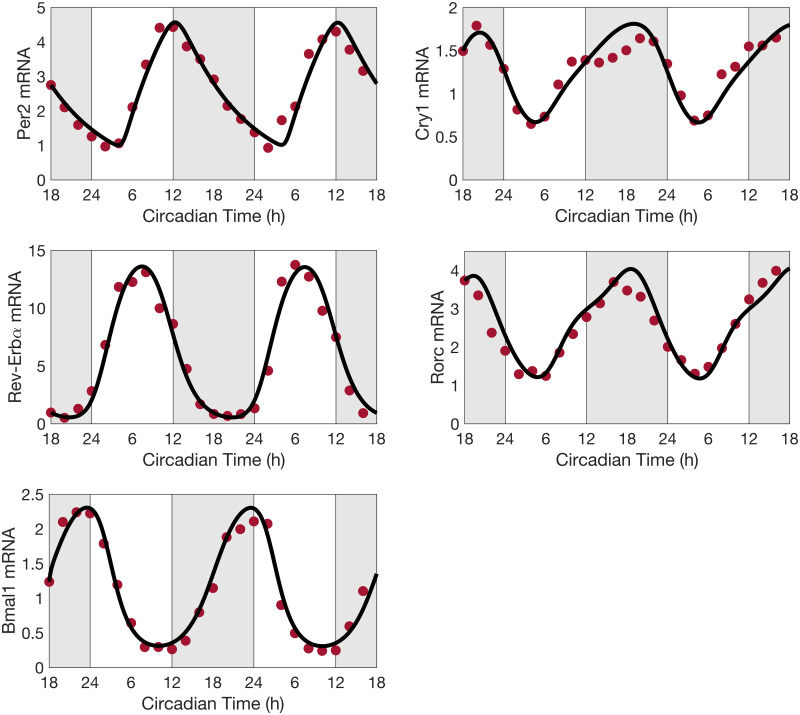
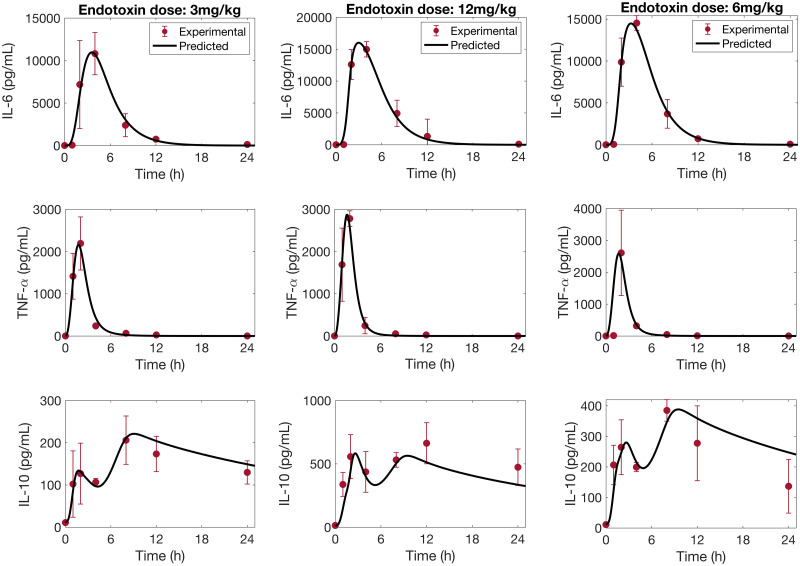
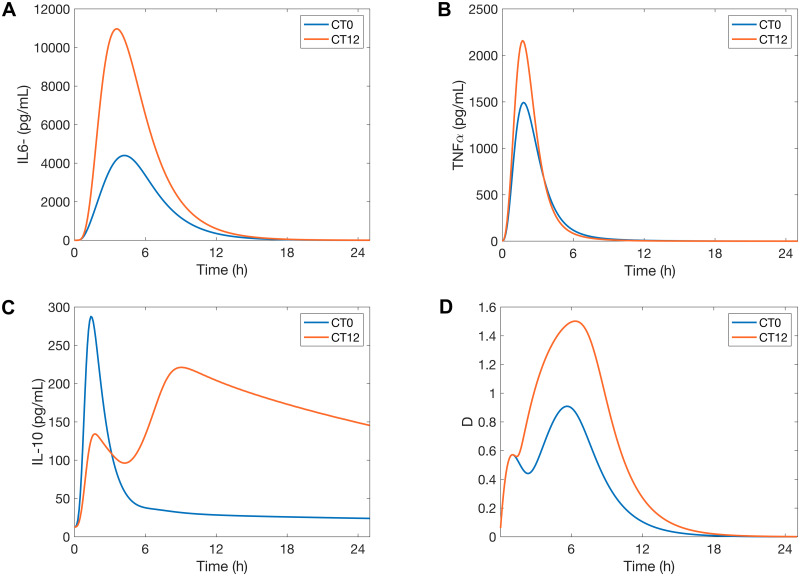
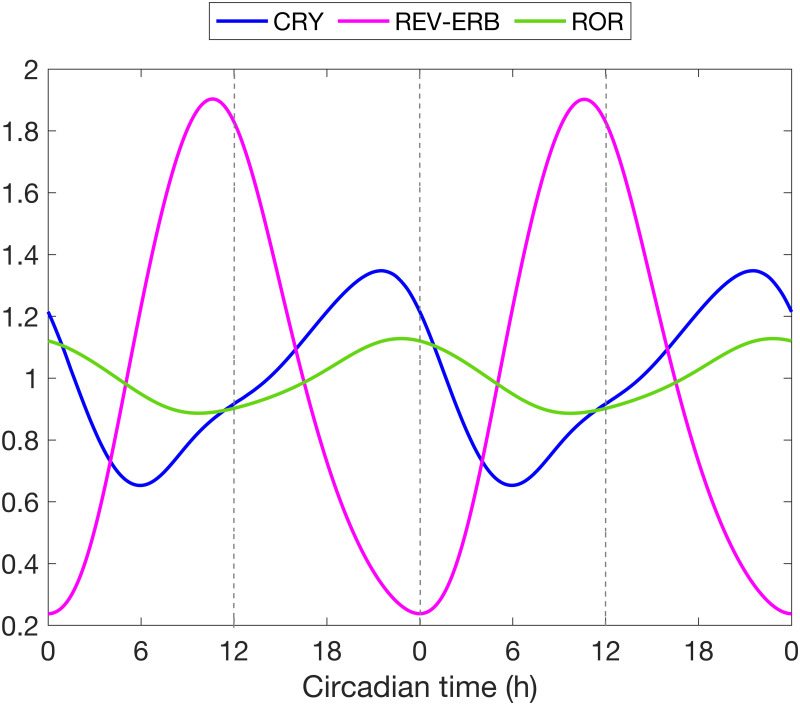
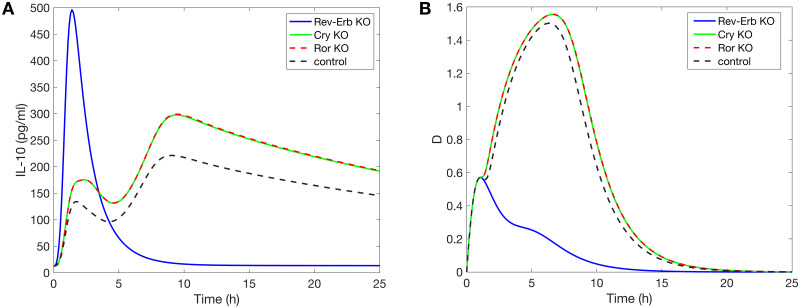
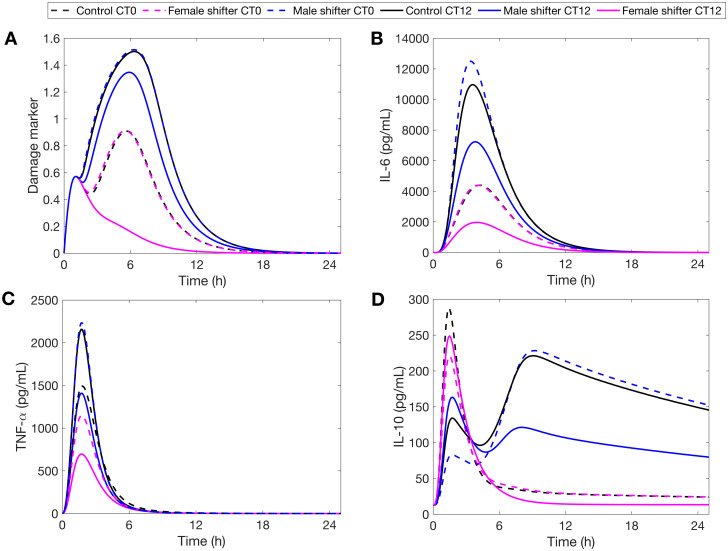
The circadian clock exerts significance influence on the immune system and disruption of circadian rhythms has been linked to inflammatory pathologies. Shift workers often experience circadian misalignment as their irregular work schedules disrupt the natural light-dark cycle, which in turn can cause serious health problems associated with alterations in genetic expressions of clock genes. In particular, shift work is associated with impairment in immune function, and those alterations are sex-specific. The goal of this study is to better understand the mechanisms that explain the weakened immune system in shift workers. To achieve that goal, we have constructed a mathematical model of the mammalian pulmonary circadian clock coupled to an acute inflammation model in the male and female rats. Shift work was simulated by an 8h-phase advance of the circadian system with sex-specific modulation of clock genes. The model reproduces the clock gene expression in the lung and the immune response to various doses of lipopolysaccharide (LPS). Under normal conditions, our model predicts that a host is more sensitive to LPS at circadian time (CT) CT12 versus CT0 due to a dynamic change of Interleukin 10 (IL-10), an anti-inflammatory cytokine. We identify REV-ERB as a key modulator of IL-10 activity throughout the circadian day. The model also predicts a reversal of the times of lowest and highest sensitivity to LPS, with males and females exhibiting an exaggerated response to LPS at CT0, which is countered by a blunted immune response at CT12. Overall, females produce fewer pro-inflammatory cytokines than males, but the extent of sequelae experienced by males and females varies across the circadian day. This model can serve as an essential component in an integrative model that will yield mechanistic understanding of how shift work-mediated circadian disruptions affect the inflammatory and other physiological responses.
生物钟对免疫系统有重要影响,昼夜节律紊乱与炎症性病理有关。轮班工作者经常经历昼夜节律失调,因为他们不规律的工作时间表打乱了自然的明暗周期,这反过来又会导致与生物钟基因的遗传表达改变相关的严重健康问题。特别是,轮班工作与免疫功能受损有关,而这些改变是性别特异性的。本研究的目的是更好地理解解释轮班工作者免疫系统减弱的机制。为了实现这一目标,我们构建了一个哺乳动物肺部生物钟与雄性和雌性大鼠急性炎症模型耦合的数学模型。通过对生物钟进行 8 小时的相位提前,模拟轮班工作,同时对时钟基因进行性别特异性调节。该模型再现了肺部的时钟基因表达和对各种剂量脂多糖 (LPS) 的免疫反应。在正常情况下,我们的模型预测由于抗炎细胞因子白细胞介素 10 (IL-10) 的动态变化,宿主在生物钟时间 (CT) CT12 比 CT0 对 LPS 更敏感。我们确定 REV-ERB 是整个昼夜周期中 IL-10 活性的关键调节剂。该模型还预测了对 LPS 最低和最高敏感性的时间的逆转,雄性和雌性在 CT0 时对 LPS 表现出过度反应,而在 CT12 时免疫反应减弱。总体而言,女性产生的促炎细胞因子比男性少,但男性和女性在整个昼夜周期中经历的后遗症程度不同。该模型可以作为综合模型的一个重要组成部分,该模型将产生对轮班工作介导的昼夜节律紊乱如何影响炎症和其他生理反应的机制理解。