Decorosi Francesca, Exana Maria Luna, Pini Francesco, Adessi Alessandra, Messini Anna, Giovannetti Luciana, Viti Carlo
Department of Agriculture, Food, Environment and Forestry (DAGRI)-University of Florence, Piazzale delle Cascine 18, I50144 Florence, Italy.
Genexpress laboratory, Department of Agriculture, Food, Environment and Forestry (DAGRI)-University of Florence, Via della Lastruccia 14, I50019 Sesto Fiorentino, Italy.
Microorganisms. 2019 Nov 20;7(12):590. doi: 10.3390/microorganisms7120590.
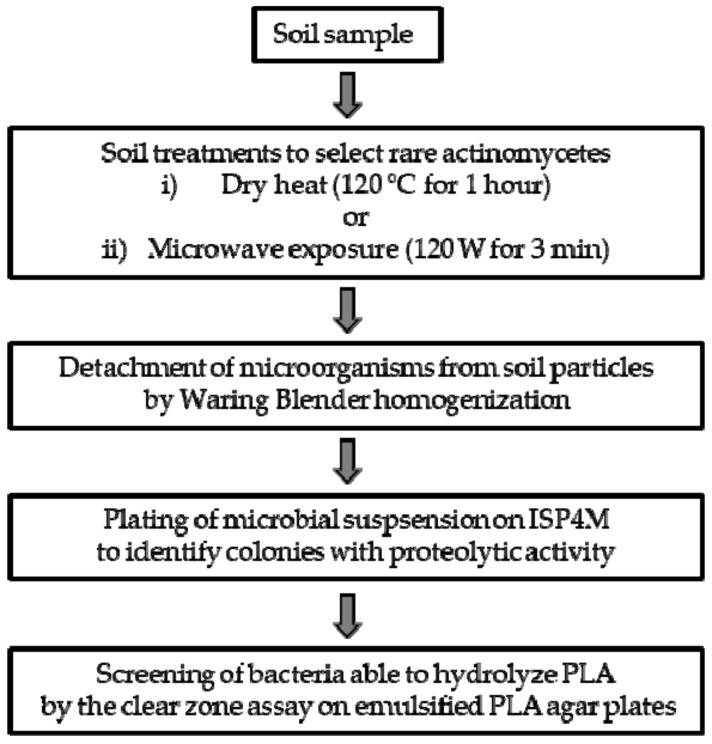
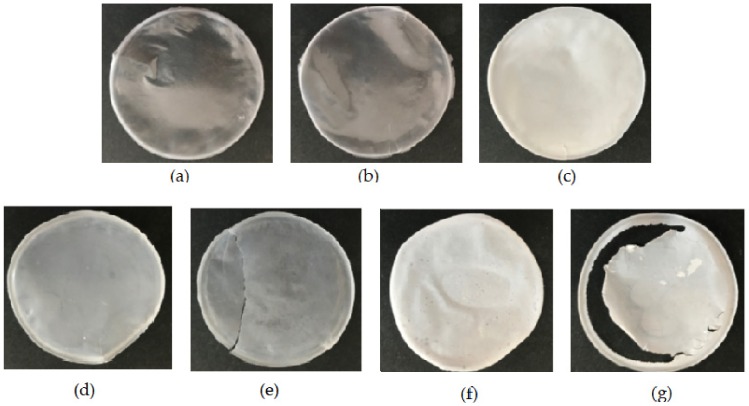
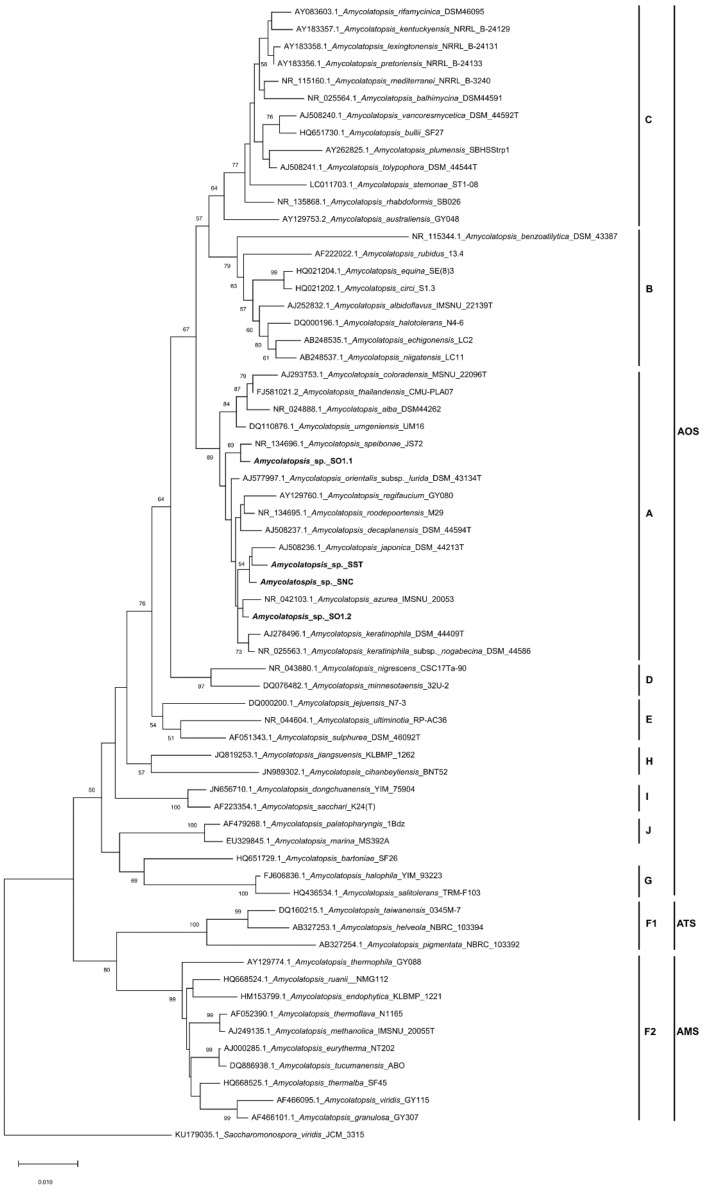
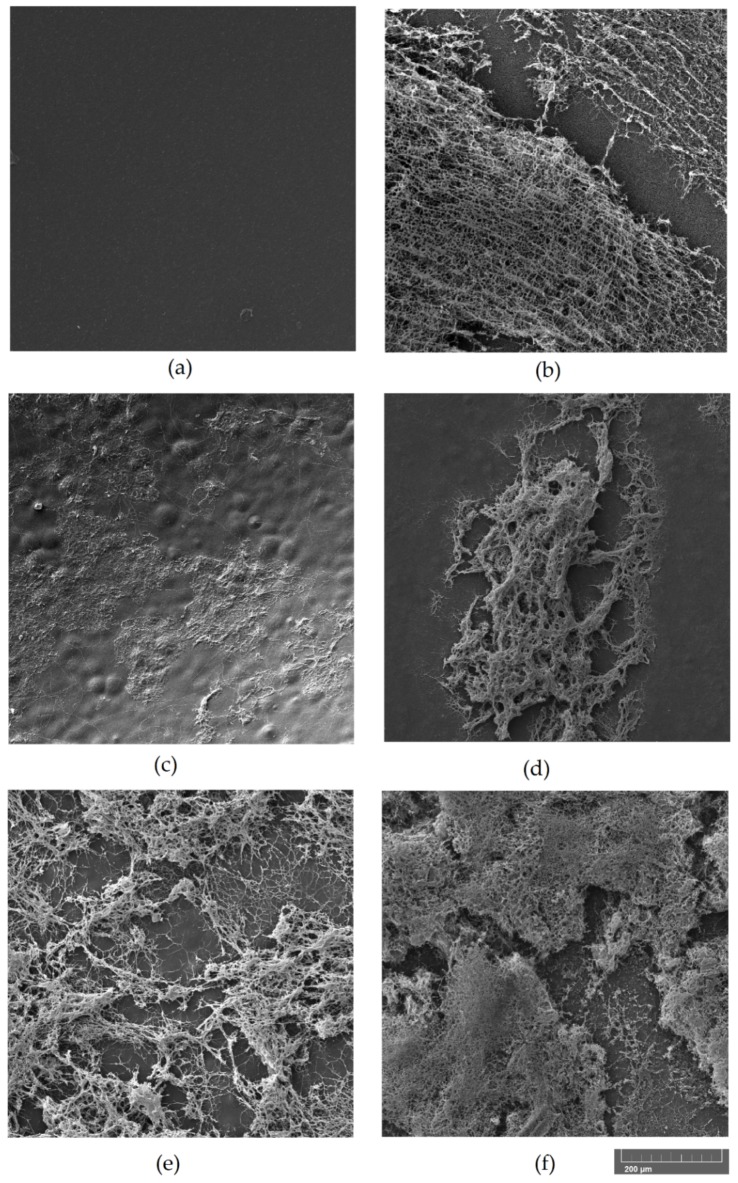
Polylactic acid (PLA), a bioplastic synthesized from lactic acid, has a broad range of applications owing to its excellent proprieties such as a high melting point, good mechanical strength, transparency, and ease of fabrication. However, the safe disposal of PLA is an emerging environmental problem: it resists microbial attack in environmental conditions, and the frequency of PLA-degrading microorganisms in soil is very low. To date, a limited number of PLA-degrading bacteria have been isolated, and most are actinomycetes. In this work, a method for the selection of rare actinomycetes with extracellular proteolytic activity was established, and the technique was used to isolate four mesophilic actinomycetes with the ability to degrade emulsified PLA in agar plates. All four strains-designated SO1.1, SO1.2, SNC, and SST-belong to the genus . The PLA-degrading capability of the four strains was investigated by testing their ability to assimilate lactic acid, fragment PLA polymers, and deteriorate PLA films. The strain SNC was the best PLA degrader-it was able to assimilate lactic acid, constitutively cleave PLA, and form a thick and widespread biofilm on PLA film. The activity of this strain extensively eroded the polymer, leading to a weight loss of 36% in one month in mesophilic conditions.
聚乳酸(PLA)是一种由乳酸合成的生物塑料,因其具有诸如高熔点、良好的机械强度、透明度和易于加工等优异特性而具有广泛的应用。然而,PLA的安全处置是一个新出现的环境问题:它在环境条件下能抵抗微生物攻击,且土壤中PLA降解微生物的频率非常低。迄今为止,已分离出数量有限的PLA降解细菌,其中大多数是放线菌。在这项工作中,建立了一种筛选具有胞外蛋白水解活性的稀有放线菌的方法,并利用该技术在琼脂平板上分离出四株具有降解乳化PLA能力的嗜温放线菌。所有四株菌株——命名为SO1.1、SO1.2、SNC和SST——均属于 属。通过测试它们同化乳酸、裂解PLA聚合物片段以及使PLA薄膜降解的能力,研究了这四株菌株的PLA降解能力。菌株SNC是最佳的PLA降解菌——它能够同化乳酸,组成型裂解PLA,并在PLA薄膜上形成一层厚且分布广泛的生物膜。该菌株的活性广泛侵蚀聚合物,在嗜温条件下一个月内导致聚合物重量损失36%。