Department of Pharmacology, Vanderbilt University, Nashville, TN, 37240-7933, USA; Vanderbilt Brain Institute, Vanderbilt University, Nashville, TN, 37240-7933, USA.
Department of Pharmacology, Vanderbilt University, Nashville, TN, 37240-7933, USA; Vanderbilt Brain Institute, Vanderbilt University, Nashville, TN, 37240-7933, USA.
Behav Brain Res. 2020 Feb 17;380:112378. doi: 10.1016/j.bbr.2019.112378. Epub 2019 Nov 21.
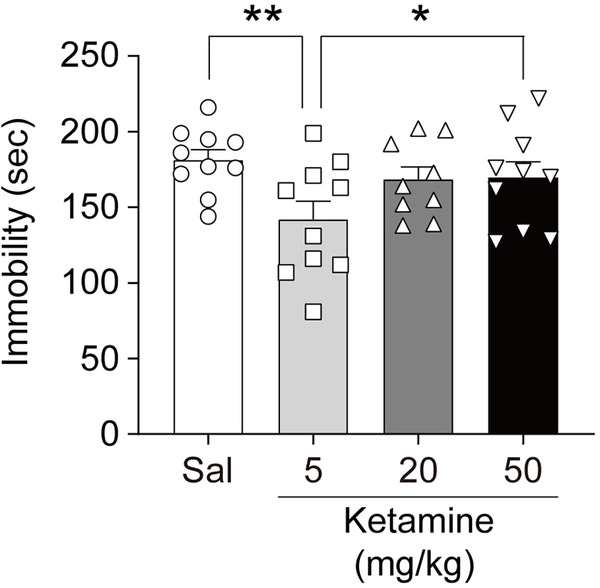
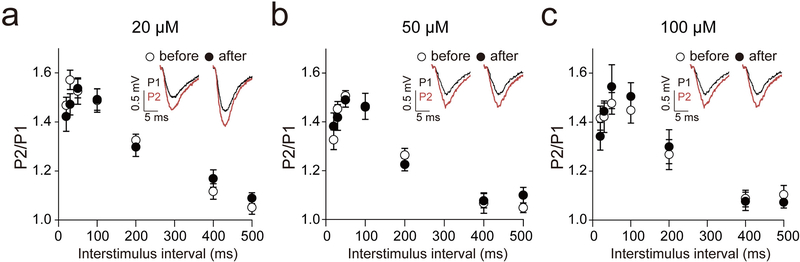
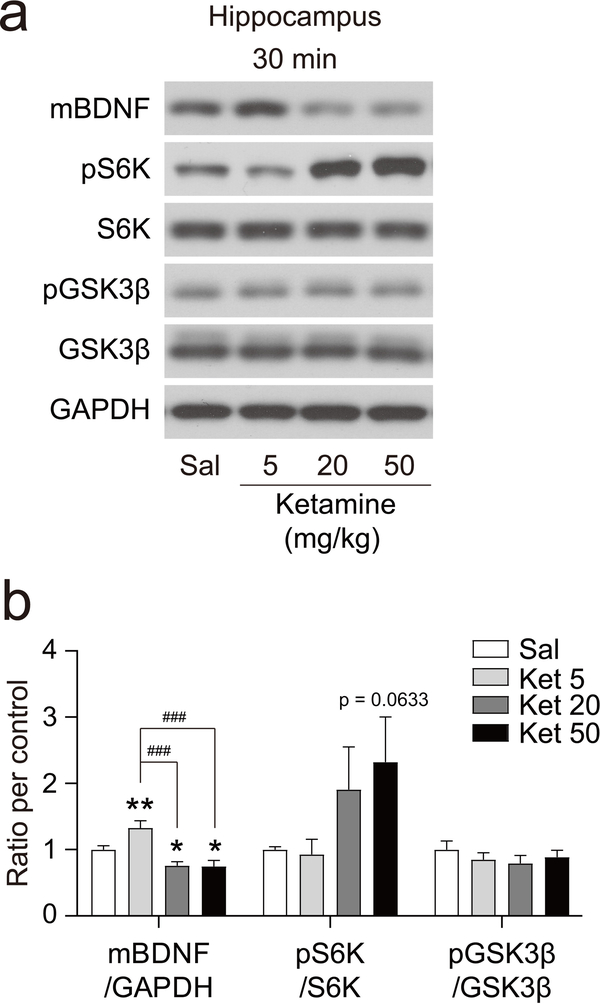
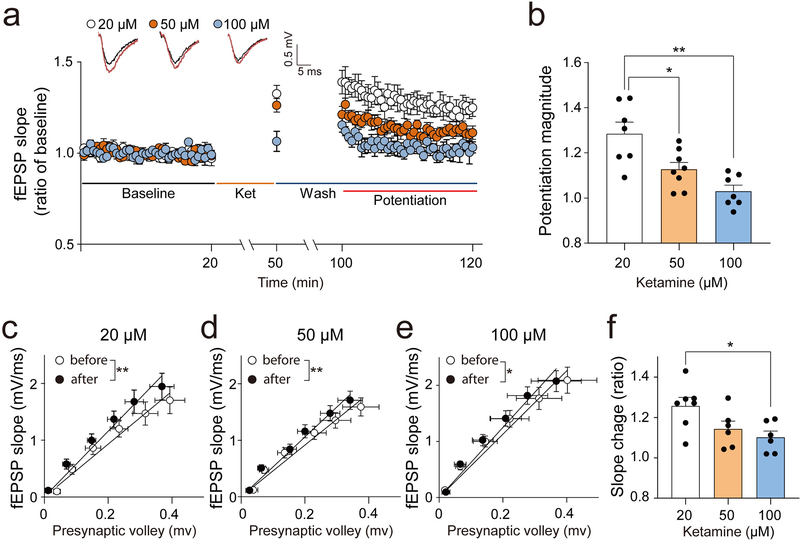
Clinical findings show that a single subanesthetic dose of ketamine elicits rapid antidepressant effects. Accumulating data suggests that ketamine blocks the N-methyl-D-aspartate receptor and results in specific effects on intracellular signaling including increased brain-derived neurotrophic factor (BDNF) protein expression, which augments synaptic responses required for rapid antidepressant effects. To further investigate this potential mechanism for ketamine's antidepressant action, we examined the effect of increasing ketamine doses on intracellular signaling, synaptic plasticity, and rapid antidepressant effects. Given that ketamine is often used at 2.5-10 mg/kg to examine antidepressant effects and 20-50 mg/kg to model schizophrenia, we compared effects at 5, 20 and 50 mg/kg. We found that intraperitoneal (i.p.) injection of low dose (5 mg/kg) ketamine produces rapid antidepressant effects, which were not observed at 20 or 50 mg/kg. At 5 mg/kg ketamine significantly increased the level of BDNF, a protein necessary for the rapid antidepressant effects, while 20 and 50 mg/kg ketamine did not alter BDNF levels in the hippocampus. Low concentration ketamine also evoked the highest synaptic potentiation in the hippocampal CA1, while higher concentrations significantly decreased the synaptic effects. Our results suggest low dose ketamine produces antidepressant effects and has independent behavioral and synaptic effects compared to higher doses of ketamine that are used to model schizophrenia. These findings strengthen our knowledge on specific signaling associated with ketamine's rapid antidepressant effects.
临床研究结果表明,单次亚麻醉剂量的氯胺酮可迅速产生抗抑郁作用。越来越多的证据表明,氯胺酮阻断 N-甲基-D-天冬氨酸受体,导致细胞内信号传导的特定效应,包括增加脑源性神经营养因子(BDNF)蛋白表达,从而增强了快速抗抑郁作用所需的突触反应。为了进一步研究氯胺酮抗抑郁作用的这种潜在机制,我们研究了增加氯胺酮剂量对细胞内信号传导、突触可塑性和快速抗抑郁作用的影响。鉴于氯胺酮通常以 2.5-10mg/kg 用于检查抗抑郁作用,以 20-50mg/kg 用于模拟精神分裂症,我们比较了 5mg/kg、20mg/kg 和 50mg/kg 的效果。我们发现,腹腔内(i.p.)注射低剂量(5mg/kg)氯胺酮可产生快速抗抑郁作用,而 20mg/kg 和 50mg/kg 则没有观察到这种作用。5mg/kg 氯胺酮可显著增加 BDNF 水平,BDNF 是快速抗抑郁作用所必需的蛋白,而 20mg/kg 和 50mg/kg 氯胺酮则不会改变海马体中的 BDNF 水平。低浓度氯胺酮还可在海马 CA1 中引发最大的突触增强作用,而较高浓度则会显著降低突触效应。我们的研究结果表明,低剂量氯胺酮可产生抗抑郁作用,与用于模拟精神分裂症的较高剂量氯胺酮相比,具有独立的行为和突触作用。这些发现加强了我们对与氯胺酮快速抗抑郁作用相关的特定信号的认识。