Carneiro Isa, Quintela-Vieira Filipa, Lobo João, Moreira-Barbosa Catarina, Menezes Francisco Duarte, Martins Ana Teresa, Oliveira Jorge, Silva Regina, Jerónimo Carmen, Henrique Rui
Cancer Biology and Epigenetics Group, Research Center of Portuguese Oncology Institute of Porto (GEBC CI-IPOP), R. Dr. António Bernardino de Almeida, 4200-072, Porto, Portugal.
Department of Pathology, Portuguese Oncology Institute of Porto (IPO Porto), R. Dr. António Bernardino de Almeida, 4200-072, Porto, Portugal.
J Cancer. 2019 Oct 15;10(24):5915-5925. doi: 10.7150/jca.34564. eCollection 2019.
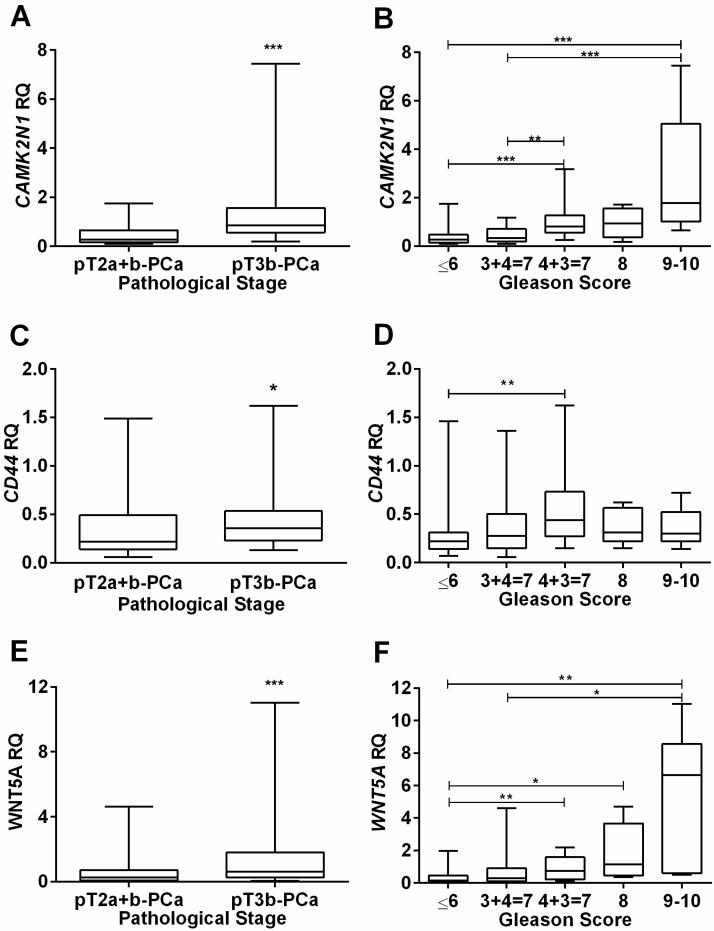
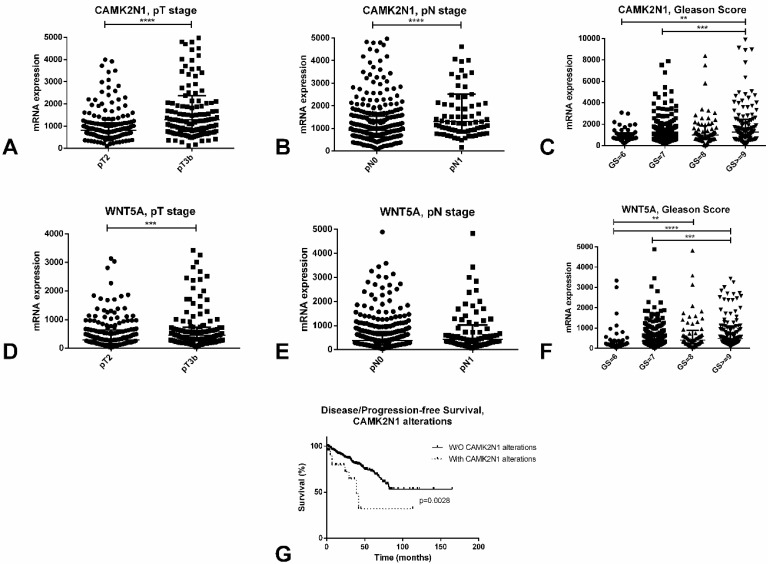
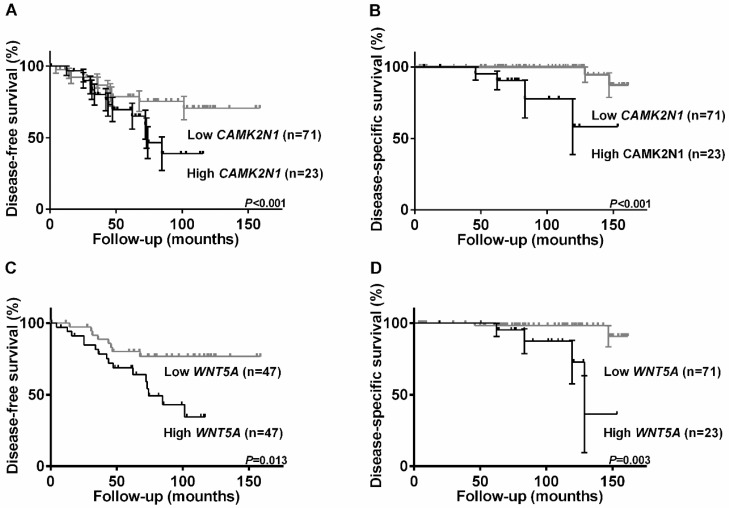
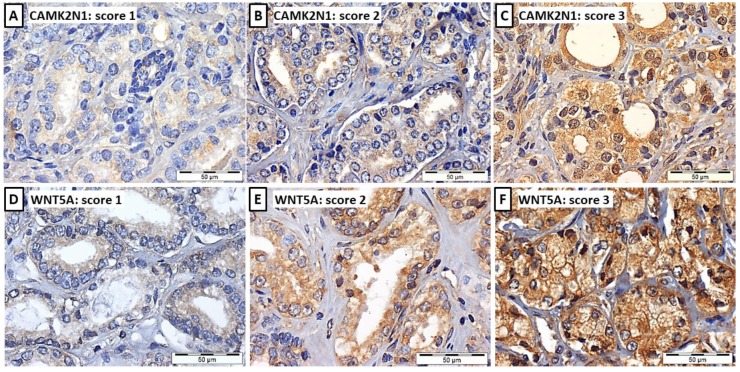
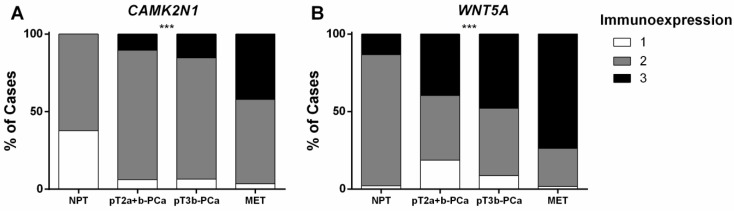
Prostate cancer (PCa) varies clinically from very indolent, not requiring therapeutic intervention, to highly aggressive, entailing radical treatment. Currently, stratification of PCa aggressiveness is mostly based on Gleason score, serum PSA and TNM stage, but outcome prediction in an individual basis is suboptimal. Thus, perfecting pre-therapeutic discrimination between indolent and aggressive PCa, avoiding overtreatment is a major challenge. Epithelial to mesenchymal transition (EMT) allows epithelial cells to acquire mesenchymal properties, constituting a critical step in tumor invasion and metastization. Thus, we hypothesized that EMT-related markers might allow for improved assessment of PCa aggressiveness. Using RealTime ready Custom Panel 384 assay, 93 EMT-related genes were assessed in normal prostate tissues (NPT, n=5), stage pT2a+b-PCa (n=5) and stage pT3b-PCa (n=5), from which , , , and genes emerged as the most significantly altered. Expression levels were then evaluated in a larger series (16 NPT and 94 PCa) of frozen tissues using quantitative RT-PCR. Globally, , and displayed higher expression levels at higher stages and less differentiated PCa. CAMK2N1 and WNT5A immunoexpression analysis disclosed significantly lower expression in NPT and increasing proportion of high-expression cases from pT2a+b to pT3b and metastatic PCa. Furthermore, higher and transcript levels associated with shorter disease-free and disease-specific survival. In multivariable analysis, a trend for expression levels to independently predict DFS was disclosed (p=0.056). Globally, our findings suggest an association between PCa aggressiveness and increased expression of and , reflecting the acquisition of effective EMT characteristics by PCa cells.
前列腺癌(PCa)在临床上差异很大,从非常惰性、无需治疗干预到极具侵袭性、需要根治性治疗。目前,PCa侵袭性的分层主要基于Gleason评分、血清PSA和TNM分期,但个体水平的预后预测并不理想。因此,完善惰性和侵袭性PCa的治疗前鉴别,避免过度治疗是一项重大挑战。上皮-间质转化(EMT)使上皮细胞获得间质特性,是肿瘤侵袭和转移的关键步骤。因此,我们假设EMT相关标志物可能有助于改善对PCa侵袭性的评估。使用实时定量定制384检测法,在正常前列腺组织(NPT,n = 5)、pT2a + b期PCa(n = 5)和pT3b期PCa(n = 5)中评估了93个EMT相关基因,从中发现 、 、 、 和 基因变化最为显著。然后使用定量RT-PCR在更大系列的冷冻组织(16个NPT和94个PCa)中评估表达水平。总体而言, 、 和 在更高分期和分化程度更低的PCa中表达水平更高。CAMK2N1和WNT5A免疫表达分析显示,在NPT中的表达显著降低,从pT2a + b期到pT3b期及转移性PCa中高表达病例的比例增加。此外,更高的 和 转录水平与无病生存期和疾病特异性生存期缩短相关。在多变量分析中,发现 表达水平有独立预测DFS的趋势(p = 0.056)。总体而言,我们的数据表明PCa侵袭性与 和 的表达增加之间存在关联,反映了PCa细胞获得了有效的EMT特征。