Tromsø Endocrine Research Group, Department of Clinical Medicine, UiT, The Arctic University of Norway, Tromsø, Norway.
Division of Internal Medicine, University Hospital of North Norway, Tromsø, Norway.
PLoS One. 2019 Nov 25;14(11):e0225539. doi: 10.1371/journal.pone.0225539. eCollection 2019.
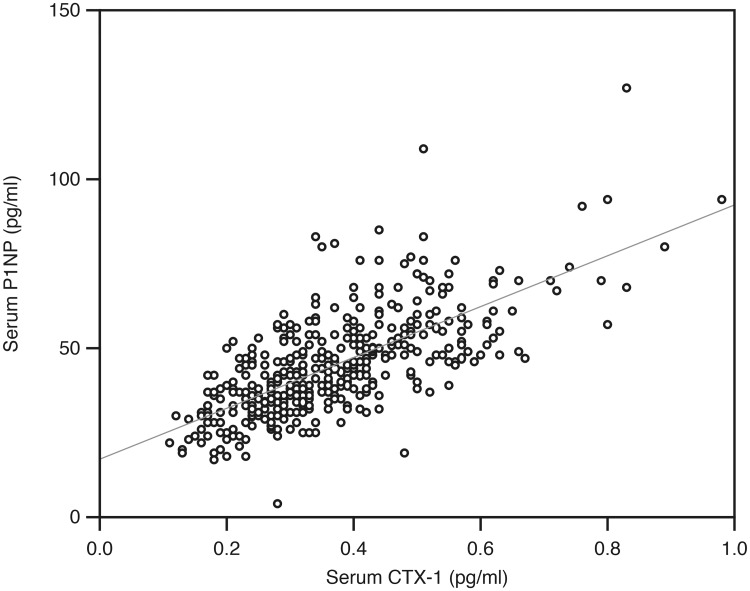
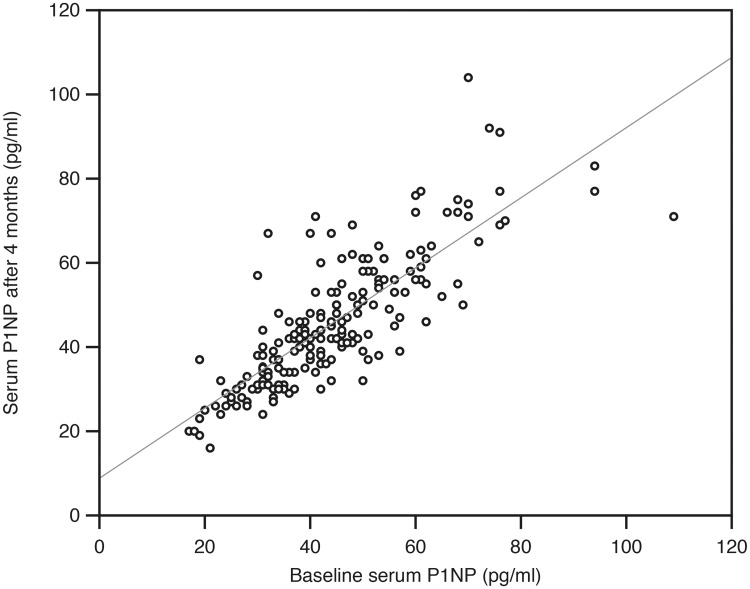
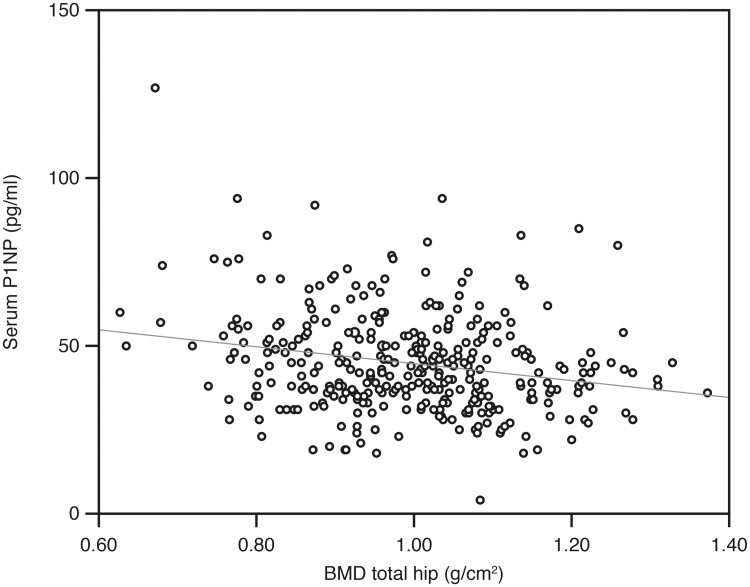
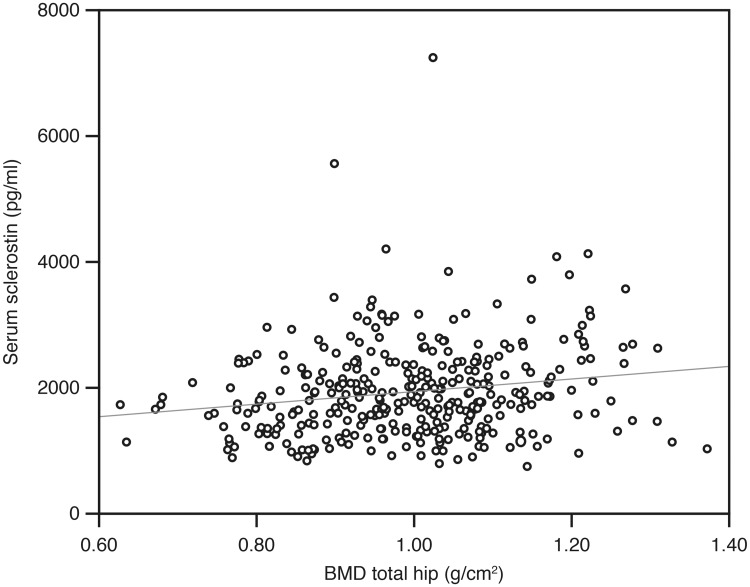
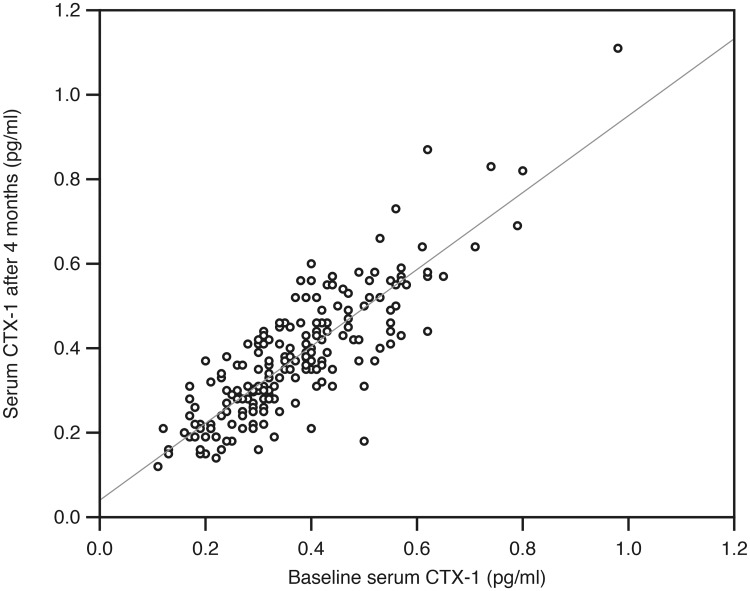
The balance between bone resorption and formation may be assessed by measurement of bone turnover markers (BTMs), like carboxyl-terminal cross-linked telopeptide of type 1 collagen (CTX-1) and procollagen type 1 amino-terminal propeptide (P1NP). Smoking has been shown to influence bone turnover and to reduce bone mass density (BMD), the exact mechanism for this is, however, not settled. In this post-hoc study including 406 subjects (mean age 51.9 years), we aimed to study the impact of smoking on bone turnover. Moreover, we wanted to assess the inter-correlation between substances regulating bone metabolism and BTMs, as well as tracking over time. BMD measurements and serum analyses of CTX-1, P1NP, osteoprotegerin (OPG), receptor activator of nuclear factor ĸB ligand (RANKL), Dickkopf-1 (DKK1), sclerostin, tumor necrosis factor-α (TNF-α), and leptin were performed. Repeated serum measurements were made in 195 subjects after four months. Adjustments were made for sex, age, body mass index (BMI), smoking status, insulin resistance, serum calcium, parathyroid hormone, 25-hydroxyvitamin D and creatinine. Smokers had higher levels of DKK1 and OPG, and lower levels of RANKL, as reflected in lower BTMs and BMD compared to non-smokers. There were strong and predominantly positive inter-correlations between BTMs and the other substances, and there was a high degree of tracking with Spearman's rho from 0.72 to 0.92 (P < 0.001) between measurements four months apart. In conclusion, smokers exhibited higher levels of DKK1 and OPG and a lower bone turnover than did non-smokers. The strong inter-correlations between the serum parameters illustrate the coupling between bone resorption and formation and crosstalk between cells.
骨吸收和形成之间的平衡可以通过测量骨转换标志物(BTMs)来评估,例如 1 型胶原羧基末端交联肽(CTX-1)和 1 型前胶原氨基末端前肽(P1NP)。吸烟已被证明会影响骨转换并降低骨密度(BMD),但其确切机制尚不清楚。在这项包括 406 名受试者(平均年龄 51.9 岁)的事后研究中,我们旨在研究吸烟对骨转换的影响。此外,我们还想评估调节骨代谢的物质与 BTMs 之间的相互关系,并随着时间的推移进行跟踪。测量 BMD 并分析 CTX-1、P1NP、骨保护素(OPG)、核因子 ĸB 配体受体激活剂(RANKL)、Dickkopf-1(DKK1)、硬化蛋白、肿瘤坏死因子-α(TNF-α)和瘦素。在 4 个月后对 195 名受试者进行了重复的血清测量。调整了性别、年龄、体重指数(BMI)、吸烟状况、胰岛素抵抗、血清钙、甲状旁腺激素、25-羟维生素 D 和肌酐。与非吸烟者相比,吸烟者的 DKK1 和 OPG 水平较高,而 RANKL 水平较低,这反映在较低的 BTMs 和 BMD 上。BTMs 与其他物质之间存在强烈且主要为正相关,在相隔 4 个月的测量之间,Spearman's rho 值高达 0.72 至 0.92(P<0.001),表明具有高度的跟踪性。总之,吸烟者的 DKK1 和 OPG 水平较高,骨转换率较低。血清参数之间的强烈相关性说明了骨吸收和形成之间的耦合以及细胞之间的串扰。