Graduate School of Agricultural Science, Tohoku University, 468-1 Aramaki-Aza-Aoba, Aoba-ku, Sendai 980-8572, Japan.
Mar Drugs. 2019 Nov 21;17(12):653. doi: 10.3390/md17120653.
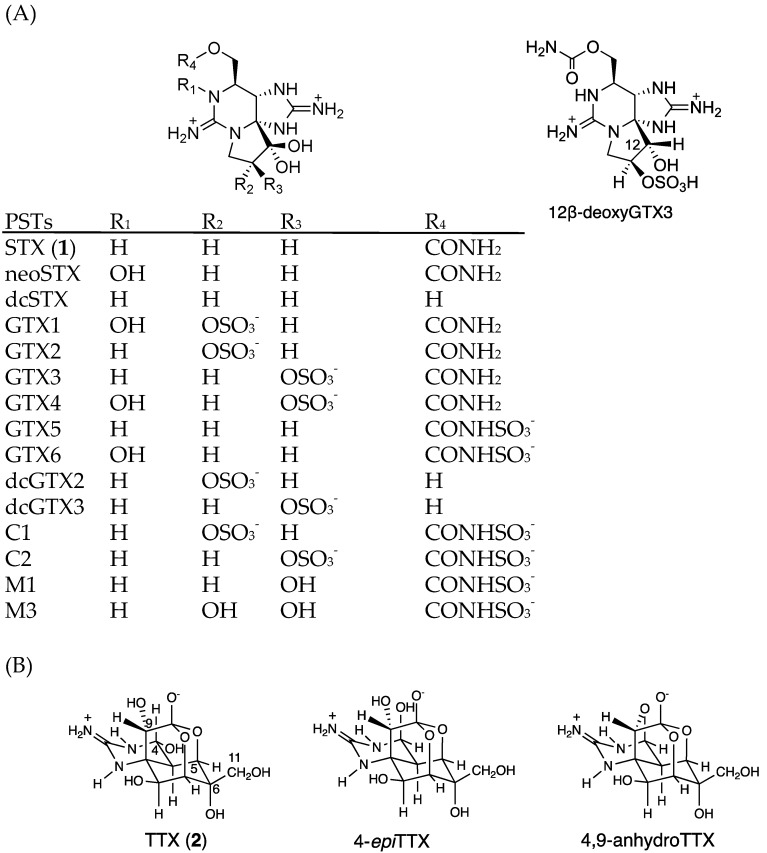
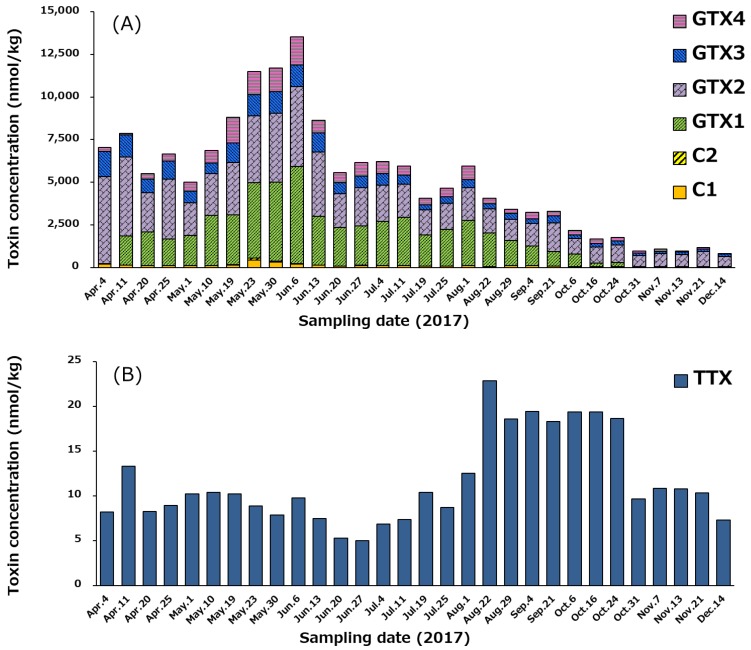
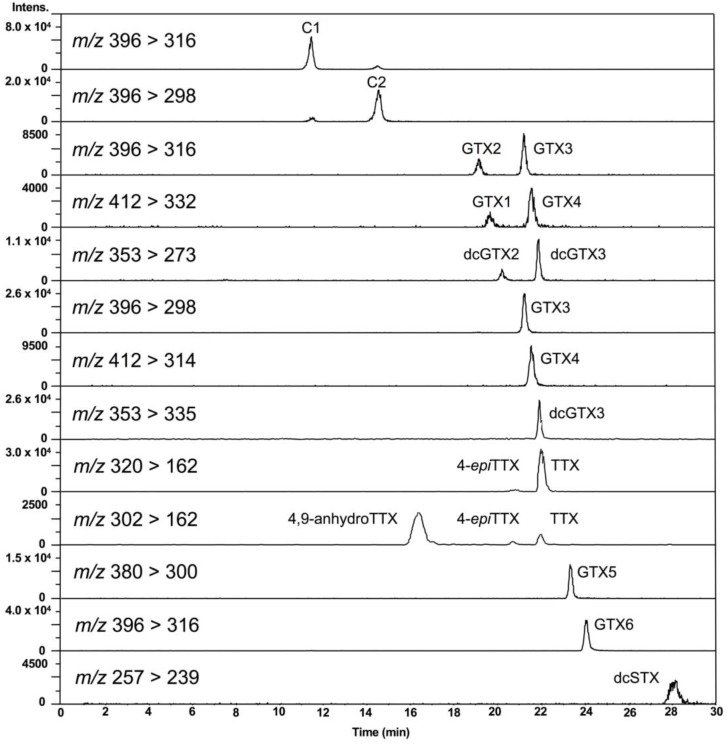
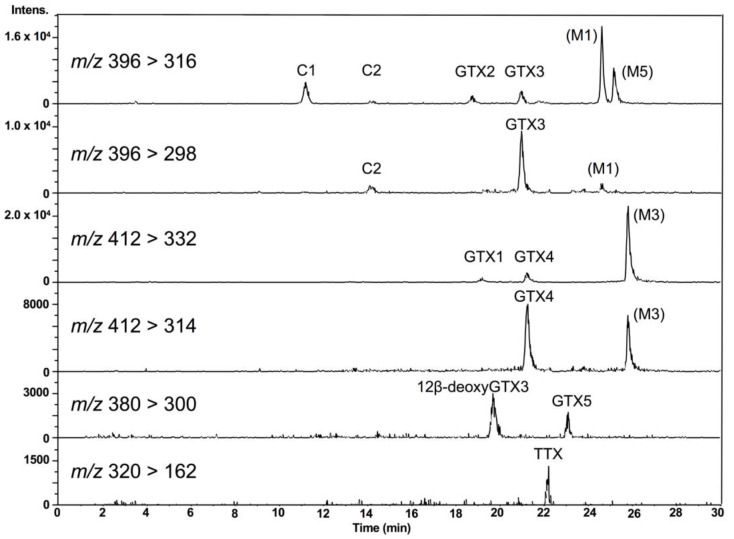
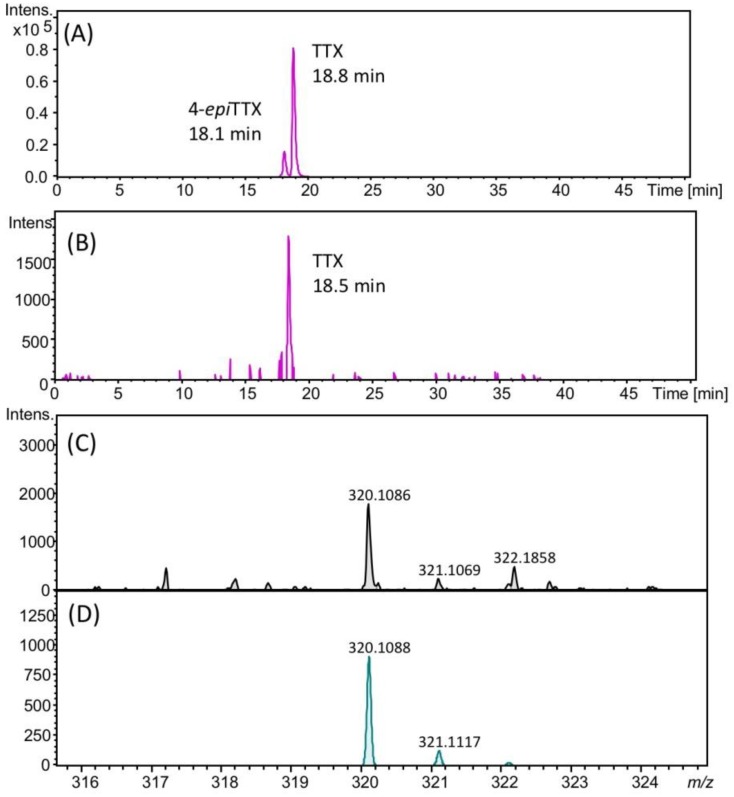
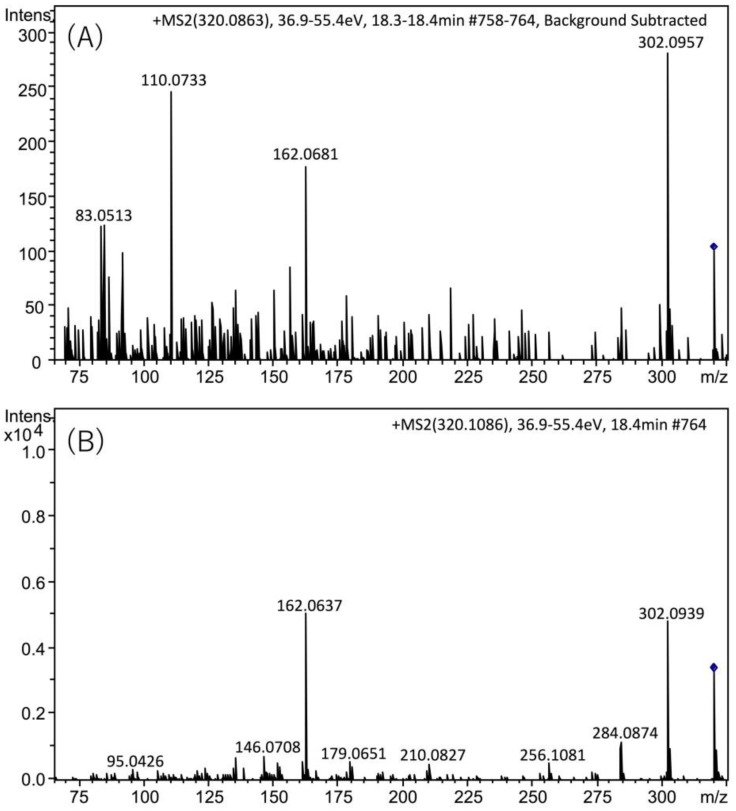
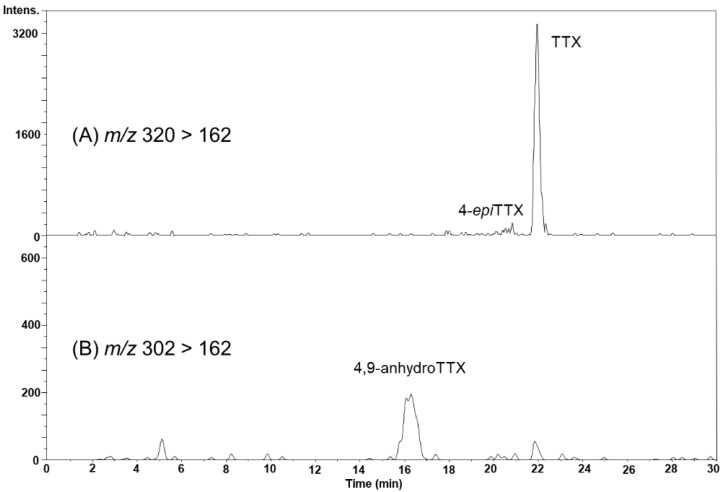
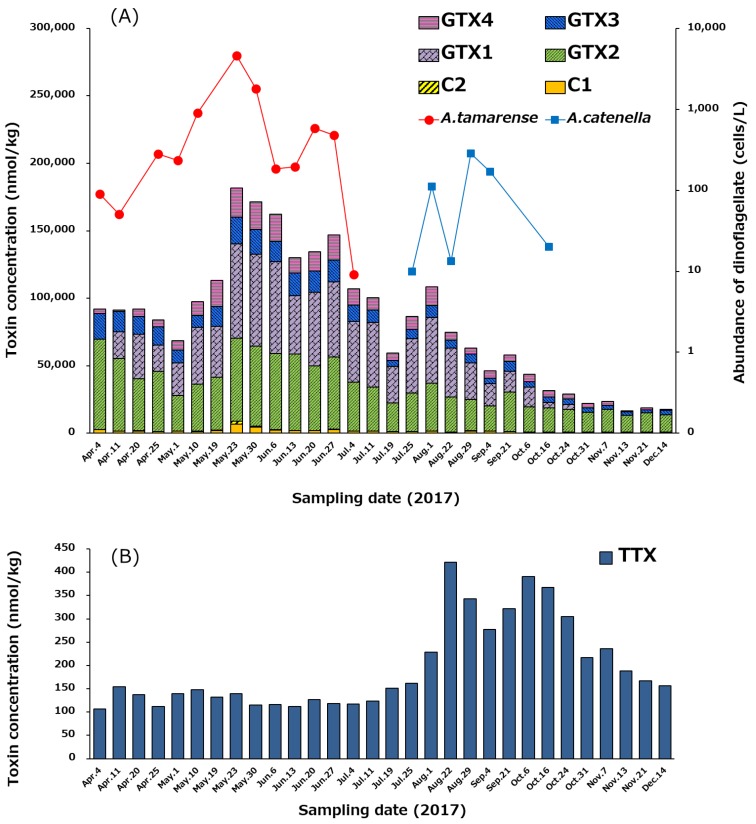
Paralytic shellfish toxins (PSTs) are the major neurotoxic contaminants of edible bivalves in Japan. Tetrodotoxin (TTX) was recently detected in bivalve shellfish around the world, drawing widespread attention. In Japan, high levels of TTX were reported in the digestive gland of the scallop, , in 1993; however, no new data have emerged since then. In this study, we simultaneously analyzed PSTs and TTX in scallops cultured in a bay of east Japan using hydrophilic interaction chromatography (HILIC)-MS/MS. These scallops were temporally collected from April to December 2017. The highest concentration of PSTs (182 µmol/kg, total congeners) in the hepatopancreas was detected in samples collected on May 23, lined to the cell density of the dinoflagellate, , in seawater around the scallops, whereas the highest concentration of TTX (421 nmol/kg) was detected in samples collected on August 22. Contrary to the previous report, temporal variation of the PSTs and TTX concentrations did not coincide. The highest concentration of TTX in the entire edible tissues was 7.3 µg/kg (23 nmol/kg) in samples obtained on August 22, which was lower than the European Food Safety Authority (EFSA)-proposed threshold, 44 µg TTX equivalents/kg shellfish meat. In addition, 12β-deoxygonyautoxin 3 was firstly identified in scallops.
麻痹性贝类毒素(PSTs)是日本可食用双壳贝类中的主要神经毒素污染物。近年来,世界各地的贝类中都检测到了河豚毒素(TTX),引起了广泛关注。1993 年,在日本扇贝的消化腺中检测到了高水平的 TTX;然而,此后没有新的数据出现。在这项研究中,我们使用亲水作用色谱(HILIC)-MS/MS 同时分析了日本东部一个海湾养殖的扇贝中的 PSTs 和 TTX。这些扇贝于 2017 年 4 月至 12 月期间定期采集。在 5 月 23 日采集的样本中,肝胰腺中 PSTs(182 µmol/kg,总同系物)的浓度最高,与扇贝周围海水中的 细胞密度有关,而 TTX(421 nmol/kg)的浓度最高则出现在 8 月 22 日采集的样本中。与之前的报告不同,PSTs 和 TTX 浓度的时间变化并不一致。在整个可食用组织中,TTX 的最高浓度出现在 8 月 22 日采集的样本中,为 7.3 µg/kg(23 nmol/kg),低于欧洲食品安全局(EFSA)提出的阈值,即贝类肉中 44 µg TTX 当量/kg。此外,12β-去氧gonyautoxin 3 也首次在扇贝中被鉴定出来。