Viola Hannah, Chang Jonathan, Grunwell Jocelyn R, Hecker Louise, Tirouvanziam Rabindra, Grotberg James B, Takayama Shuichi
Wallace H. Coulter Department of Biomedical Engineering, Georgia Institute of Technology and Emory School of Medicine, Atlanta, Georgia 30332, USA.
Department of Pediatrics, Division of Critical Care Medicine, Children's Healthcare of Atlanta at Egleston, Emory University School of Medicine, Atlanta, Georgia 30322, USA.
APL Bioeng. 2019 Nov 22;3(4):041503. doi: 10.1063/1.5111549. eCollection 2019 Dec.
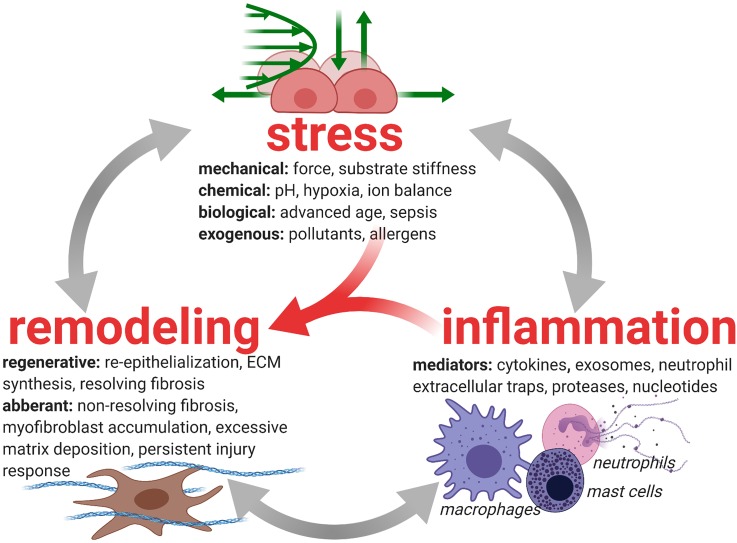
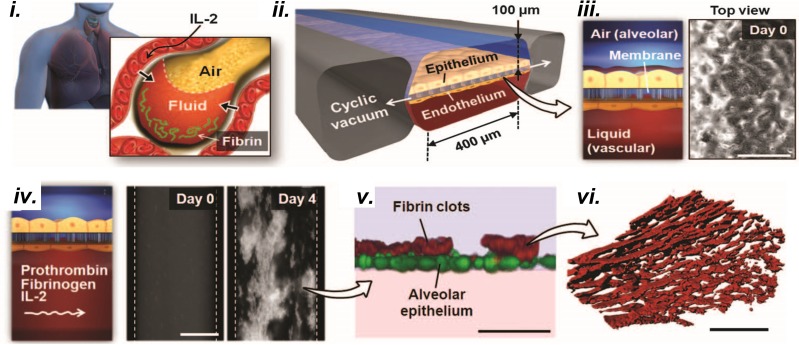
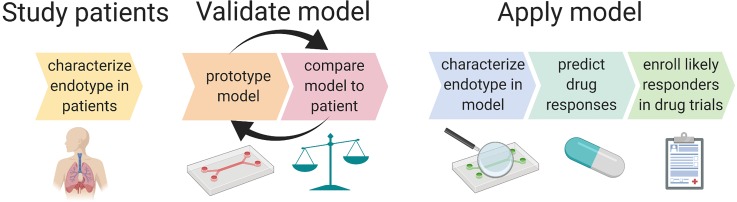
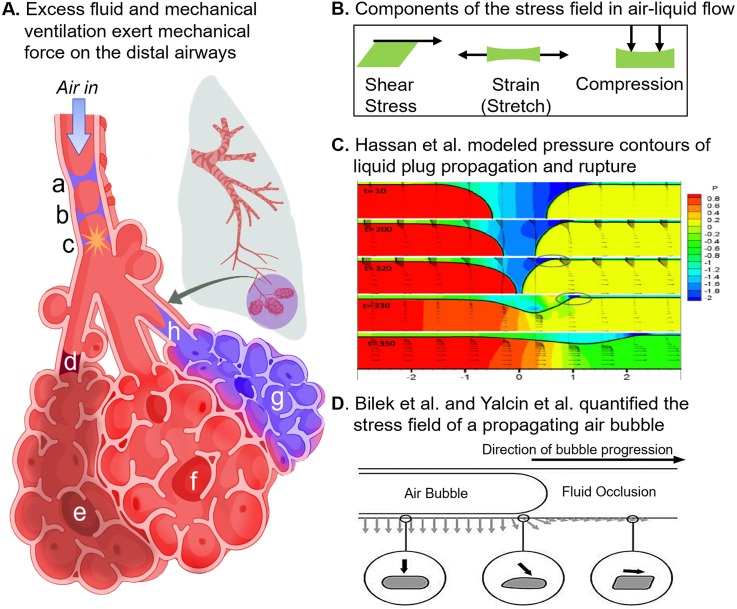
Complex models of the tissue microenvironment, termed microphysiological systems, have enormous potential to transform the process of discovering drugs and disease mechanisms. Such a paradigm shift is urgently needed in acute respiratory distress syndrome (ARDS), an acute lung condition with no successful therapies and a 40% mortality rate. Here, we consider how microphysiological systems could improve understanding of biological mechanisms driving ARDS and ultimately improve the success of therapies in clinical trials. We first discuss how microphysiological systems could explain the biological mechanisms underlying the segregation of ARDS patients into two clinically distinct phenotypes. Then, we contend that ARDS-mimetic microphysiological systems should recapitulate three critical aspects of the distal airway microenvironment, namely, mechanical force, inflammation, and fibrosis, and we review models that incorporate each of these aspects. Finally, we recognize the substantial challenges associated with combining inflammation, fibrosis, and/or mechanical force in microphysiological systems. Nevertheless, complex models are a novel paradigm for studying ARDS, and they could ultimately improve patient care.
被称为微生理系统的复杂组织微环境模型,在改变药物发现和疾病机制研究过程方面具有巨大潜力。在急性呼吸窘迫综合征(ARDS)这种尚无成功治疗方法且死亡率达40%的急性肺部疾病中,迫切需要这样一种范式转变。在此,我们探讨微生理系统如何能够增进对驱动ARDS的生物学机制的理解,并最终提高临床试验中治疗方法的成功率。我们首先讨论微生理系统如何能够解释将ARDS患者分为两种临床不同表型背后的生物学机制。然后,我们认为模拟ARDS的微生理系统应概括远端气道微环境的三个关键方面,即机械力、炎症和纤维化,并回顾纳入这些方面的模型。最后,我们认识到在微生理系统中结合炎症、纤维化和/或机械力所面临的重大挑战。尽管如此,复杂模型是研究ARDS的一种新范式,它们最终可能改善患者护理。