Turku Bioscience, University of Turku and Åbo Akademi University, 20520 Turku, Finland.
Department of Mycology, Shandong Agricultural University, Taian 271018, China.
Int J Mol Sci. 2019 Nov 27;20(23):5962. doi: 10.3390/ijms20235962.
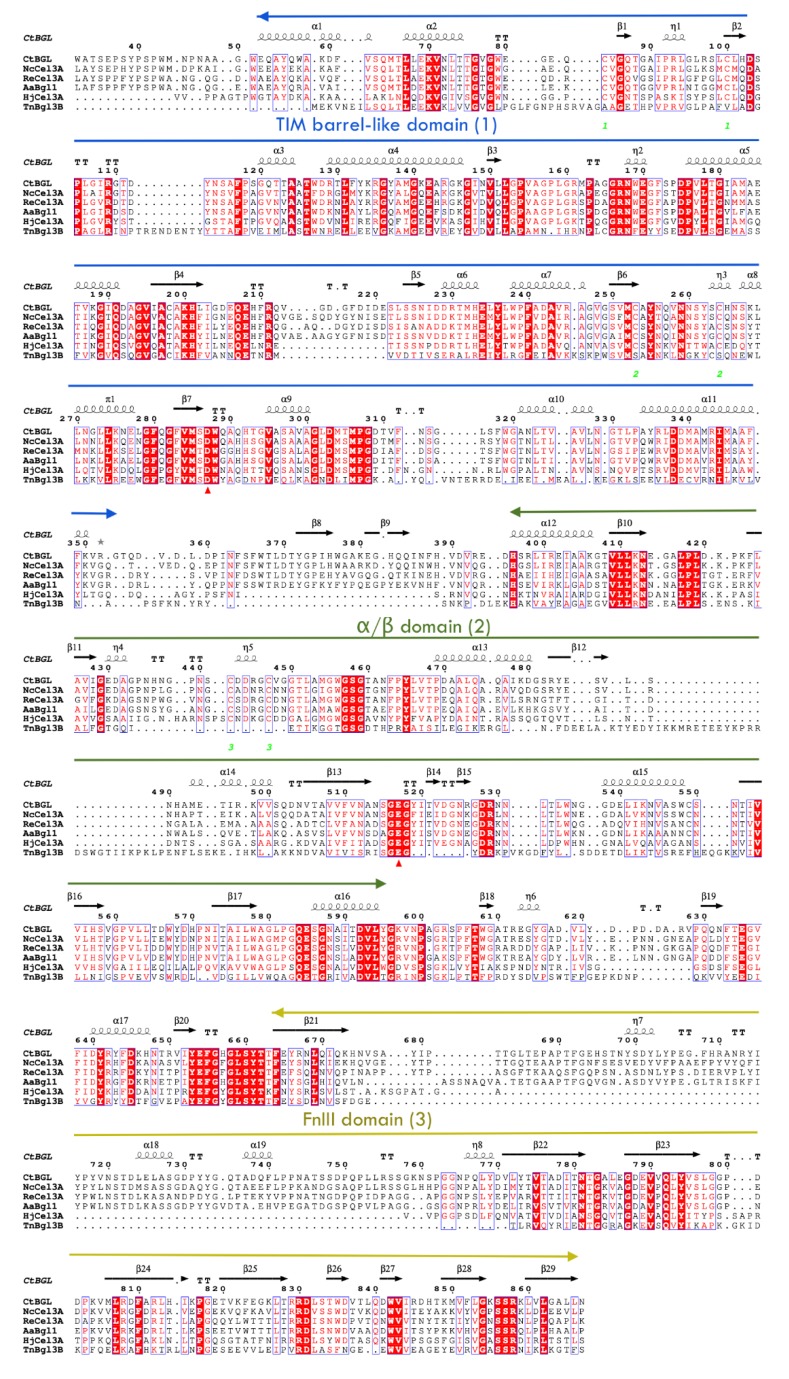
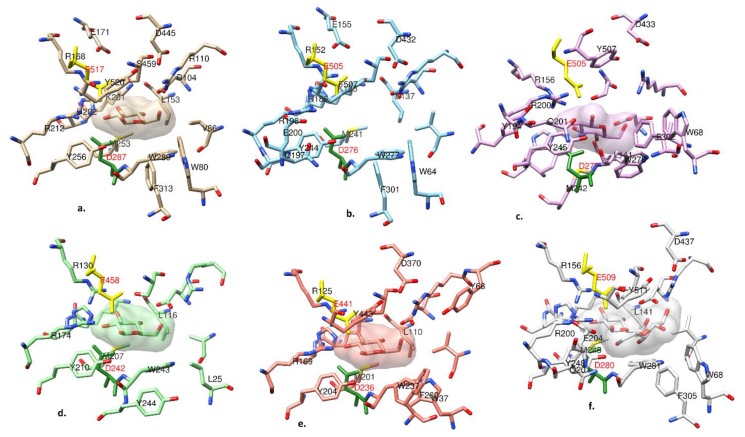
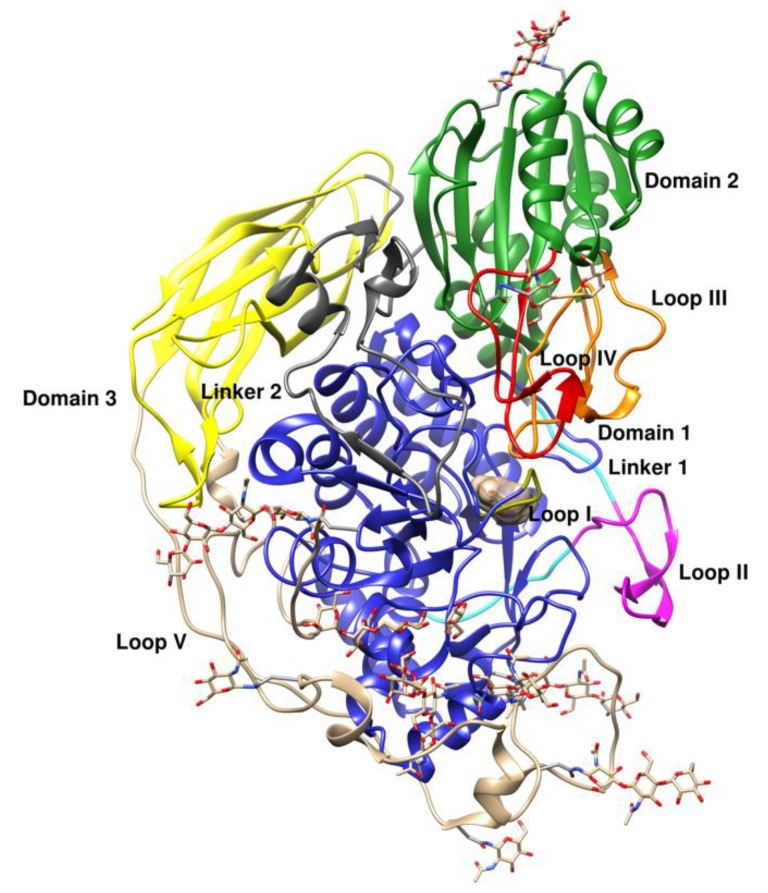
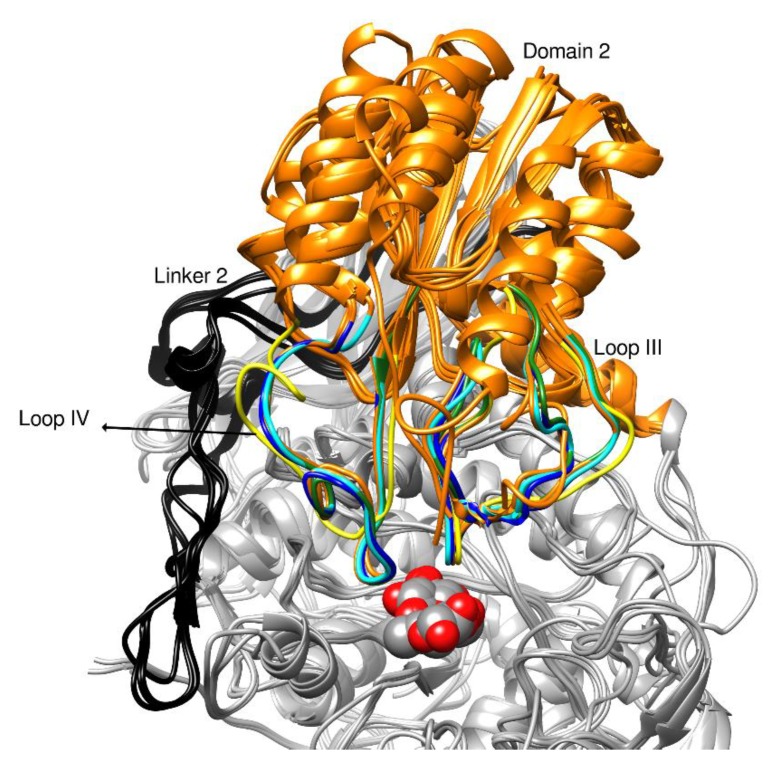
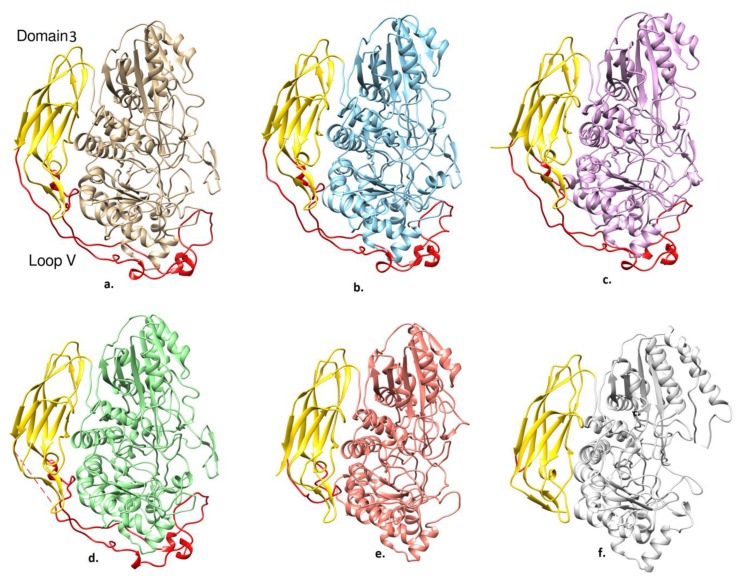
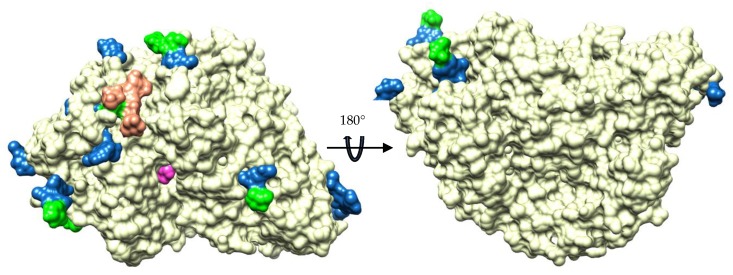
Beta-glucosidases (β-glucosidases) have attracted considerable attention in recent years for use in various biotechnological applications. They are also essential enzymes for lignocellulose degradation in biofuel production. However, cost-effective biomass conversion requires the use of highly efficient enzymes. Thus, the search for new enzymes as better alternatives of the currently available enzyme preparations is highly important. Thermophilic fungi are nowadays considered as a promising source of enzymes with improved stability. Here, the crystal structure of a family GH3 β-glucosidase from the thermophilic fungus (BGL) was determined at a resolution of 2.99 Å. The structure showed the three-domain architecture found in other β-glucosidases with variations in loops and linker regions. The active site catalytic residues in BGL were identified as Asp287 (nucleophile) and Glu517 (acid/base). Structural comparison of BGL with Protein Data Bank (PDB)-deposited structures revealed variations among glycosylated Asn residues. The enzyme displayed moderate glycosylation compared to other GH3 family β-glucosidases with similar structure. A new glycosylation site at position Asn504 was identified in BGL. Moreover, comparison with respect to several thermostability parameters suggested that glycosylation and charged residues involved in electrostatic interactions may contribute to the stability of the enzyme at elevated temperatures. The reported BGL structure provides additional insights into the family GH3 enzymes and could offer new ideas for further improvements in β-glucosidases for more efficient use in biotechnological applications regarding cellulose degradation.
β-葡萄糖苷酶(β-glucosidases)近年来在各种生物技术应用中受到了广泛关注。它们也是生物燃料生产中木质纤维素降解的必需酶。然而,具有成本效益的生物质转化需要使用高效的酶。因此,寻找新的酶作为目前可用酶制剂的更好替代品非常重要。嗜热真菌如今被认为是具有更高稳定性的酶的有前途的来源。在这里,我们测定了来自嗜热真菌(BGL)的 GH3 β-葡萄糖苷酶的晶体结构,分辨率为 2.99Å。该结构显示了在其他β-葡萄糖苷酶中发现的三结构域架构,其环和连接区域存在变化。BGL 的活性位点催化残基确定为 Asp287(亲核试剂)和 Glu517(酸碱)。BGL 与蛋白质数据库(PDB)中已储存结构的结构比较显示了糖基化 Asn 残基之间的差异。与具有相似结构的其他 GH3 家族β-葡萄糖苷酶相比,该酶显示出中等程度的糖基化。在 BGL 中鉴定出一个新的糖基化位点 Asn504。此外,与几个热稳定性参数的比较表明,糖基化和参与静电相互作用的带电残基可能有助于酶在高温下的稳定性。所报道的 BGL 结构为 GH3 家族酶提供了更多的见解,并为进一步提高β-葡萄糖苷酶的效率以更有效地用于纤维素降解的生物技术应用提供了新的思路。