Carroll-Portillo Amanda, Lin Henry C
Division of Gastroenterology and Hepatology, University of New Mexico, Albuquerque, NM 87131, USA.
Medicine Service, New Mexico VA Health Care System, Albuquerque, NM 87108, USA.
Microorganisms. 2019 Nov 28;7(12):625. doi: 10.3390/microorganisms7120625.
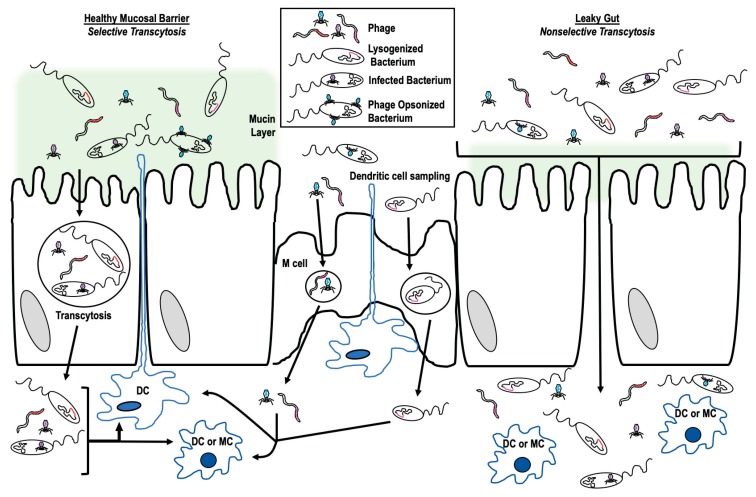
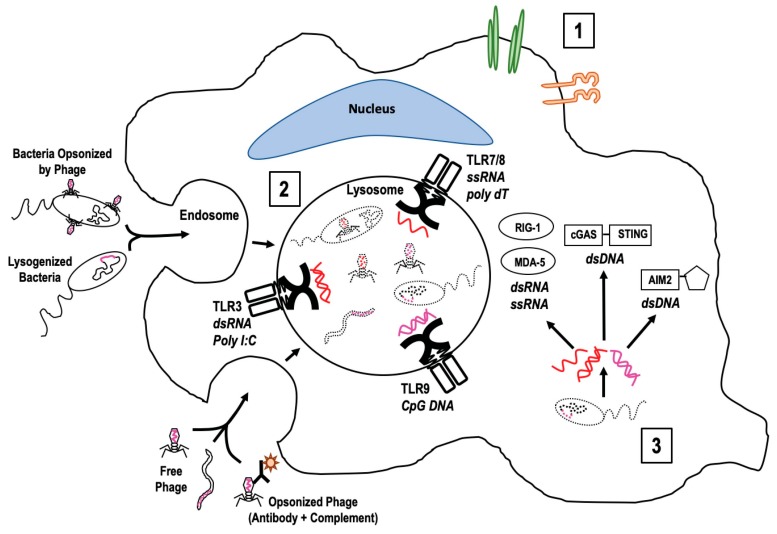
Bacteriophage and the bacteria they infect are the dominant members of the gastrointestinal microbiome. While bacteria are known to be central to maintenance of the structure, function, and health of the microbiome, it has only recently been recognized that phage too might serve a critical function. Along these lines, bacteria are not the only cells that are influenced by bacteriophage, and there is growing evidence of bacteriophage effects on epithelial, endothelial, and immune cells. The innate immune system is essential to protecting the Eukaryotic host from invading microorganisms, and bacteriophage have been demonstrated to interact with innate immune cells regularly. Here, we conduct a systematic review of the varying mechanisms allowing bacteriophage to access and interact with cells of the innate immune system and propose the potential importance of these interactions.
噬菌体及其感染的细菌是胃肠道微生物群的主要成员。虽然已知细菌对于微生物群的结构、功能和健康维持至关重要,但直到最近人们才认识到噬菌体也可能发挥关键作用。沿着这些思路,细菌并不是唯一受噬菌体影响的细胞,越来越多的证据表明噬菌体对上皮细胞、内皮细胞和免疫细胞有影响。先天免疫系统对于保护真核宿主免受入侵微生物的侵害至关重要,并且已经证明噬菌体经常与先天免疫细胞相互作用。在此,我们对噬菌体进入先天免疫系统细胞并与之相互作用的不同机制进行了系统综述,并提出了这些相互作用的潜在重要性。