Hashimoto Yusuke, Taniguchi Makoto, Uesaka Kazuma, Nomura Takahiro, Hirakawa Hidetada, Tanimoto Koichi, Tamai Kiyoko, Ruan Genjie, Zheng Bo, Tomita Haruyoshi
Department of Bacteriology, Gunma University Graduate School of Medicine, Maebashi, Japan.
Oral Microbiome Center, Taniguchi Dental Clinic, Takamatsu, Japan.
Front Microbiol. 2019 Nov 13;10:2568. doi: 10.3389/fmicb.2019.02568. eCollection 2019.
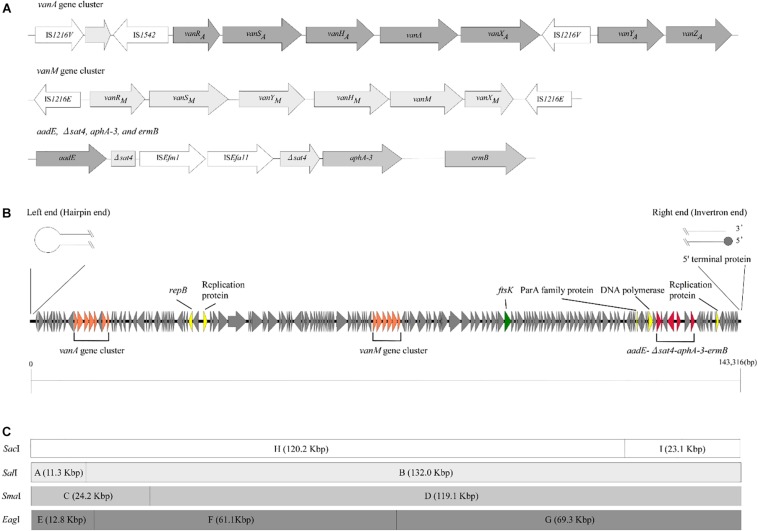
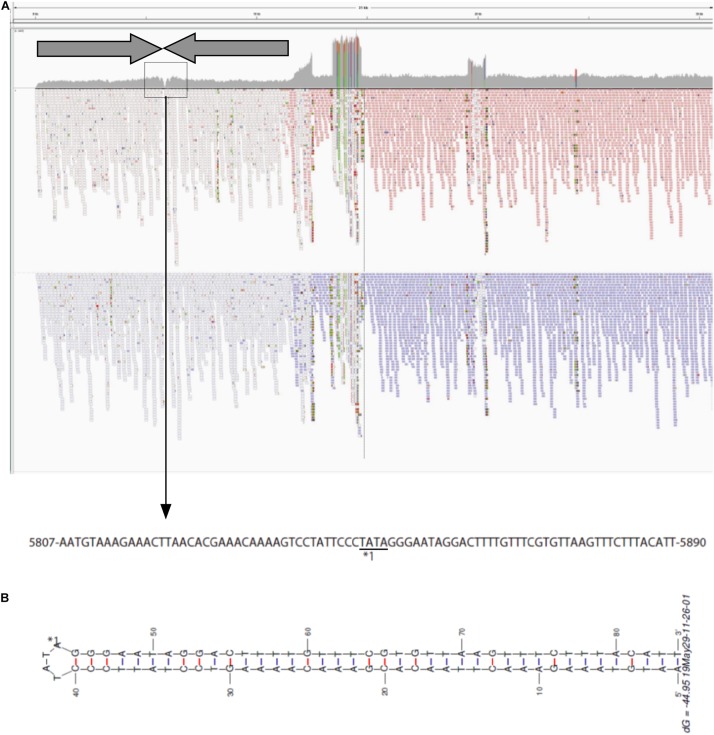
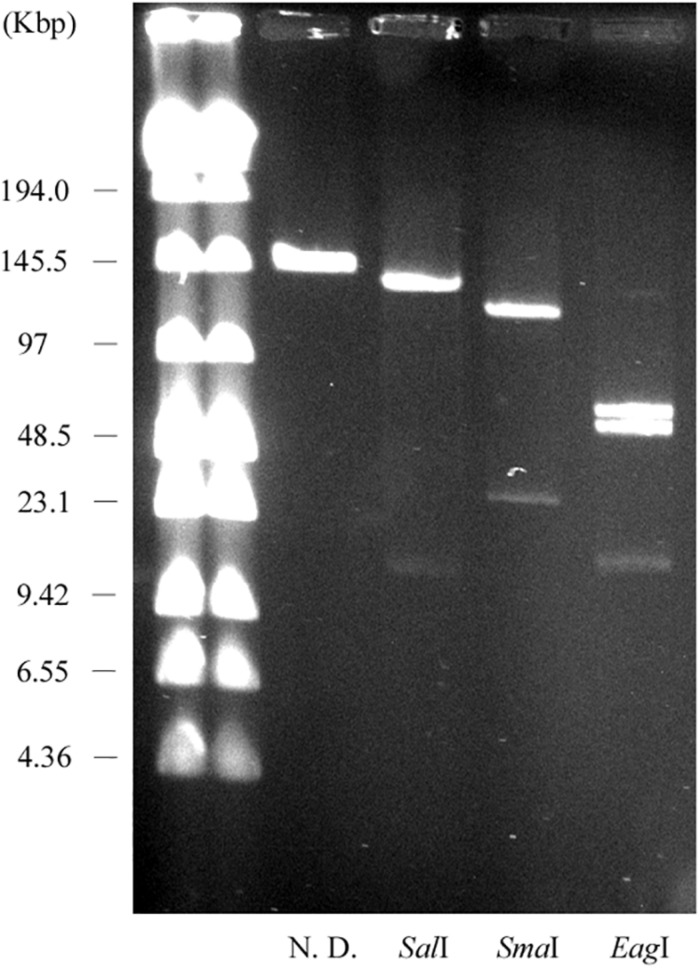
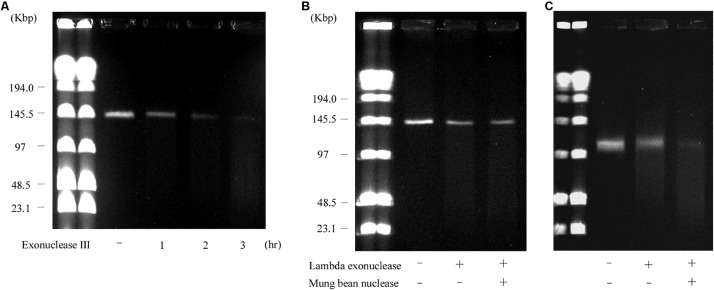
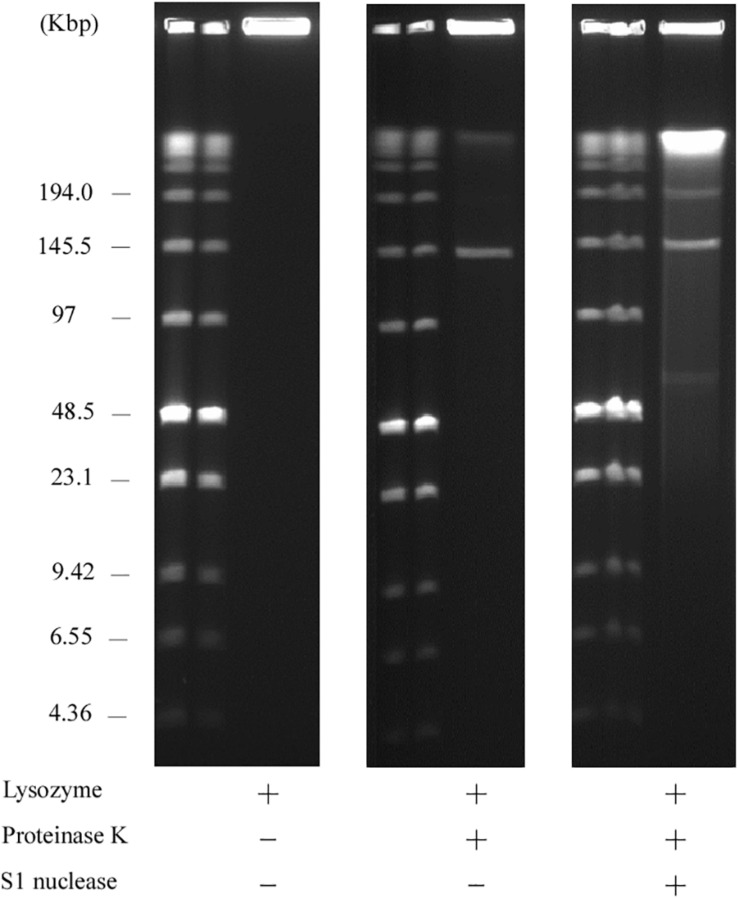
Vancomycin-resistant enterococci are troublesome pathogens in clinical settings because of few treatment options. A VanA/VanM-type vancomycin-resistant clinical isolate was identified in Japan. This strain, named AA708, harbored five plasmids, one of which migrated during agarose gel electrophoresis without S1 nuclease treatment, which is indicative of a linear topology. We named this plasmid pELF1. Whole genome sequencing (WGS) analysis of the AA708 strain revealed that the complete sequence of pELF1 was 143,316 bp long and harbored both the and gene clusters. Furthermore, mfold analysis and WGS data show that the left end of pELF1 presumably forms a hairpin structure, unlike its right end. The pELF1 plasmid was not digested by lambda exonuclease, indicating that terminal proteins were bound to the 5' end of the plasmid, similar to the linear plasmids. Sodium dodecyl sulfate-polyacrylamide gel electrophoresis results were also consistent with the exonuclease assay results. In retardation assays, DNAs containing the right end of proteinase K-untreated pELF1 did not appear to move as well as the proteinase K-treated pELF1, suggesting that terminal proteins might be attached to the right end of pELF1. Palindromic sequences formed hairpin structures at the right terminal sequence of pELF1; however, sequence similarity with the well-known linear plasmids of spp. was not high. pELF1 was unique as it possessed two different terminal structures. Conjugation experiments revealed that pELF1 could be transferred to , , , and . These transconjugants exhibited not only high resistance levels to vancomycin, but also resistance to streptomycin, kanamycin, and erythromycin. These results indicate that pELF1 has the ability to confer multidrug resistance to spp. simultaneously, which might lead to clinical hazards.
耐万古霉素肠球菌是临床环境中令人头疼的病原体,因为治疗选择有限。在日本鉴定出一株VanA/VanM型耐万古霉素临床分离株。该菌株名为AA708,携带5个质粒,其中一个在未进行S1核酸酶处理的琼脂糖凝胶电泳过程中迁移,这表明其拓扑结构为线性。我们将该质粒命名为pELF1。对AA708菌株进行的全基因组测序(WGS)分析显示,pELF1的完整序列长度为143,316 bp,同时含有 和 基因簇。此外,mfold分析和WGS数据表明,与pELF1的右端不同,其左端可能形成发夹结构。pELF1质粒未被λ外切核酸酶消化,这表明末端蛋白与质粒的5'端结合,类似于 线性质粒。十二烷基硫酸钠-聚丙烯酰胺凝胶电泳结果也与外切核酸酶测定结果一致。在阻滞试验中,含有未用蛋白酶K处理的pELF1右端的DNA似乎不如用蛋白酶K处理的pELF1移动得好,这表明末端蛋白可能附着在pELF1的右端。回文序列在pELF1的右末端序列处形成发夹结构;然而,与 属中著名的线性质粒的序列相似性不高。pELF1很独特,因为它具有两种不同的末端结构。接合实验表明,pELF1可以转移到 、 、 和 。这些接合子不仅对万古霉素表现出高抗性水平,而且对链霉素、卡那霉素和红霉素也具有抗性。这些结果表明,pELF1有能力同时赋予 属多药抗性,这可能会导致临床危害。