Kıvanç Sertaç Argun, Arık Gizem, Akova-Budak Berna, Kıvanç Merih
Uludag University, School of Medicine, Department of Ophthalmology, Görükle, Bursa/Turkey.
Anadolu University, Faculty of Science, Department of Microbiology, Eskişehir/Turkey.
Malawi Med J. 2018 Dec;30(4):243-249. doi: 10.4314/mmj.v30i4.6.
Bacterial biofilm is an exopolysaccharide matrix that is produced by bacteria while they adhere on abiotic or biotic surfaces. The bacteria living in this matrix are more resistant to antibiotics than planctonic bacteria. The biofilm formation property of the bacteria is determined by genes; and this is related to virulence of the microorganism. In ophthalmology, biofilms form especially on abiotic surfaces such as silicon tubes, contact lenses, intraocular lenses etc.
Our aim was to investigate genotypic and phenotypic structures of biofilms that are produced by ., which was obtained from the eyes of diabetic patients and determine the effect on antibiotic susceptibility.
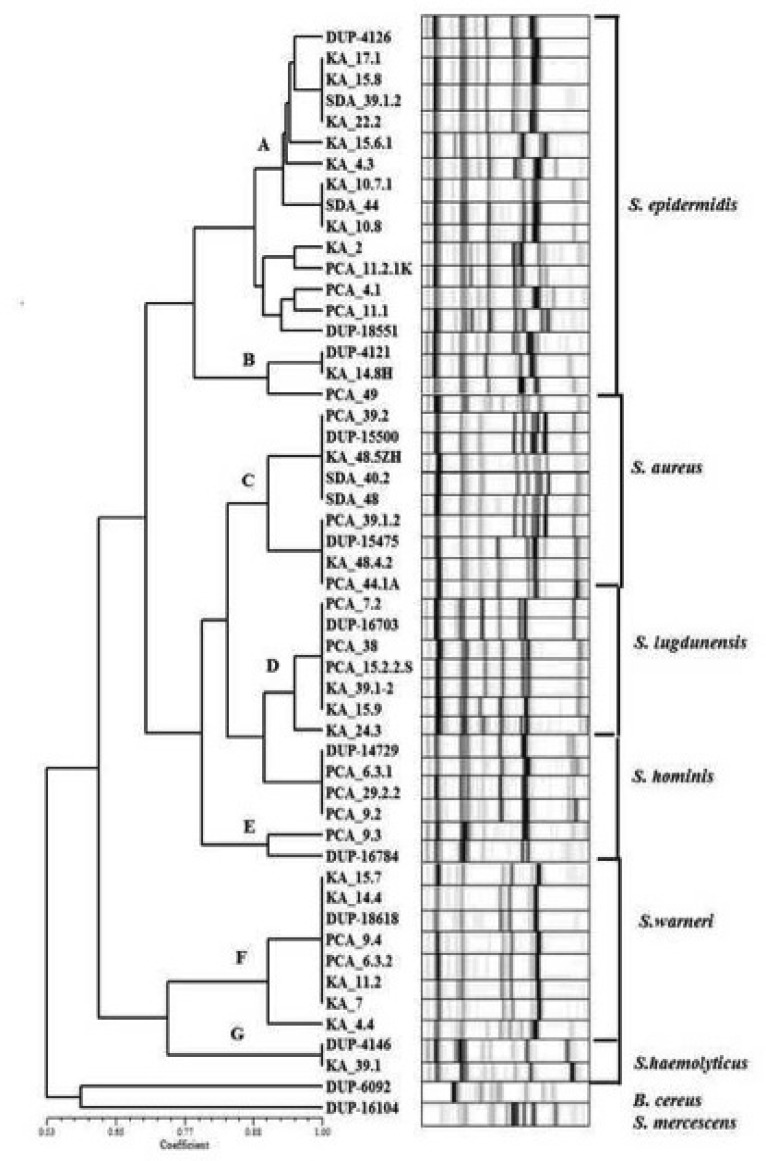
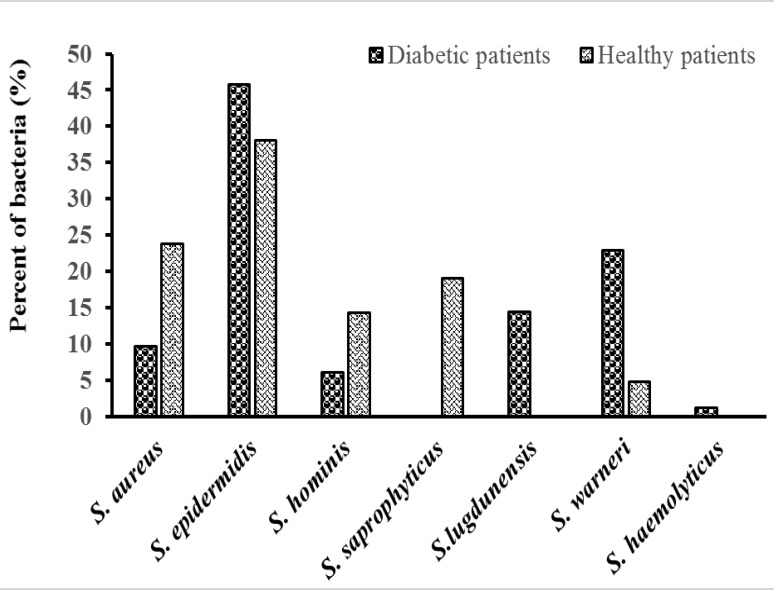
The study group was comprised with 83 isolates from diabetic patients and 21 isolates from non-diabetic patients. Presumptive isolates were detected and confirmed by a microbial identification system VITEK II. Automated EcoRI Ribotyping was performed. Biofilm production was detected by Congo Red Agar Plate and Microtiter Plate Assay. Disc diffusion method was used for determination of antibiotic susceptibility of isolates.
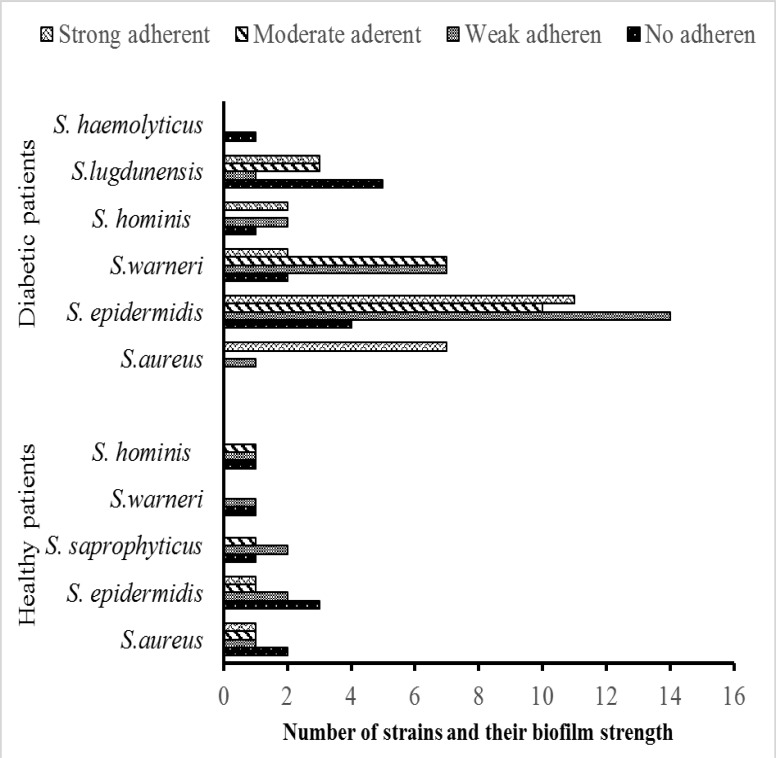
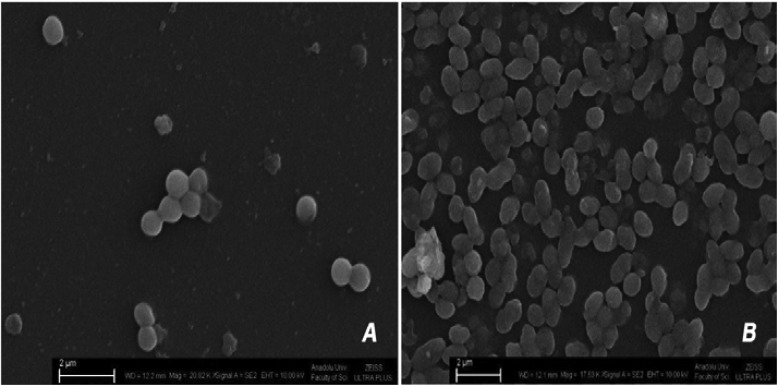
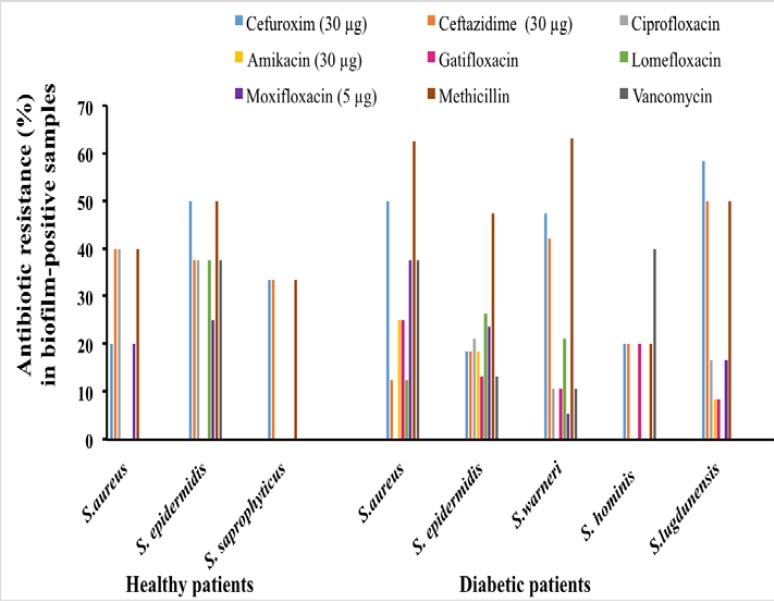
Out of the 83 isolates from diabetic patients, 25 were weakly (30%), 20 were moderately (24%), and 25 were strongly (30%) biofilm positive. Seven isolates of , 11 isolates of , 2 isolates of 3 isolates of , and 2 isolates of were identified as strong biofilm producers. Out of the 83 isolates, 37 were cefuroxime, 18 ciprofloxacin, 11 vancomycin, 12 gatifloxacin, and 18 moxifloxacin resistant. In total, 37 strains were resistant to three or more antibiotics. There was a statistically significant relation between biofilm formation and multidrug resistance (against three or more antibiotics, p<0.001). In nondiabetic patients, 15(71%) isolates were non adherent or weakly adherent, and 2(10%) were strongly adherent biofilm positive.
In conclusion, bacterial conjunctival flora of patients with diabetes is likely to produce biofilm. Biofilm formation is associated with multidrug rsistance in patients with diabetes.
细菌生物膜是细菌附着在非生物或生物表面时产生的一种胞外多糖基质。生活在这种基质中的细菌比浮游细菌对抗生素更具抗性。细菌的生物膜形成特性由基因决定;这与微生物的毒力有关。在眼科领域,生物膜尤其会在硅管、隐形眼镜、人工晶状体等非生物表面形成。
我们的目的是研究从糖尿病患者眼中分离出的……所产生的生物膜的基因型和表型结构,并确定其对抗生素敏感性的影响。
研究组包括83株从糖尿病患者中分离出的菌株和21株从非糖尿病患者中分离出的菌株。通过微生物鉴定系统VITEK II检测并确认推定的分离株。进行了自动化EcoRI核糖体分型。通过刚果红琼脂平板法和微量滴定板法检测生物膜的产生。采用纸片扩散法测定分离株的抗生素敏感性。
在83株从糖尿病患者中分离出的菌株中,25株为弱生物膜阳性(30%),20株为中度生物膜阳性(24%),25株为强生物膜阳性(30%)。7株……、11株……、2株……、3株……和2株……被鉴定为强生物膜产生菌。在83株分离株中,37株对头孢呋辛耐药,18株对环丙沙星耐药,11株对万古霉素耐药,12株对加替沙星耐药,18株对莫西沙星耐药。总共有37株菌株对三种或更多种抗生素耐药。生物膜形成与多重耐药性(对三种或更多种抗生素耐药,p<0.001)之间存在统计学上的显著关系。在非糖尿病患者中,15株(71%)分离株不附着或弱附着,2株(10%)为强附着生物膜阳性。
总之,糖尿病患者的结膜细菌菌群可能会产生生物膜。生物膜形成与糖尿病患者的多重耐药性有关。