Li Longfei, Mu Wei, Wang Yaning, Liu Zhenyu, Liu Zehua, Wang Yu, Ma Wenbin, Kong Ziren, Wang Shuo, Zhou Xuezhi, Wei Wei, Cheng Xin, Lin Yusong, Tian Jie
Collaborative Innovation Center for Internet Healthcare, Zhengzhou University, Zhengzhou, China.
CAS Key Laboratory of Molecular Imaging, Institute of Automation, Chinese Academy of Sciences, Beijing, China.
Front Oncol. 2019 Nov 14;9:1183. doi: 10.3389/fonc.2019.01183. eCollection 2019.
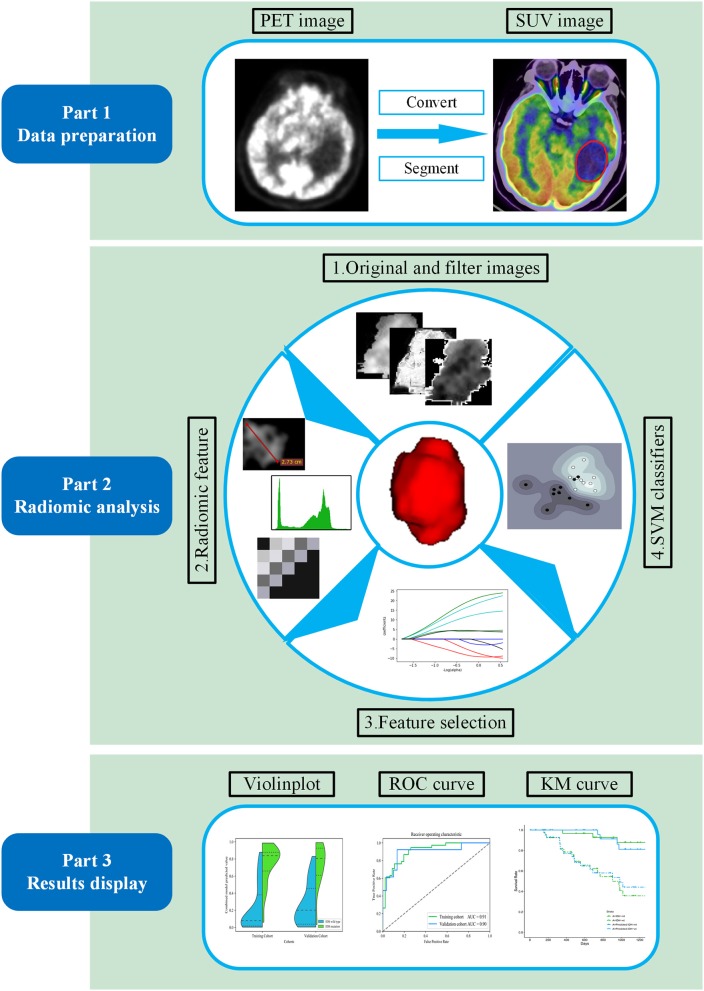
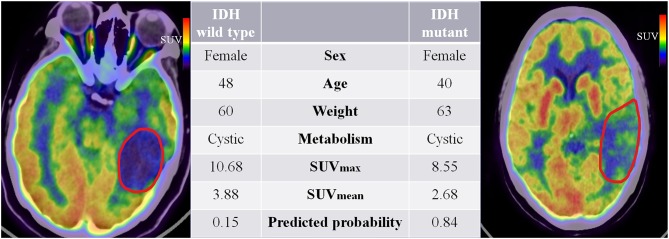
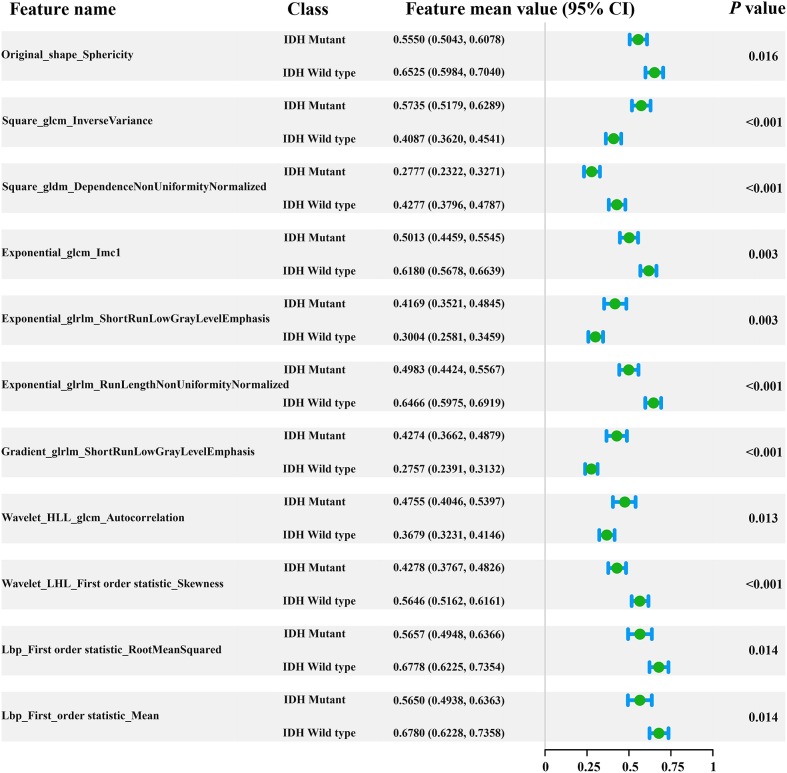
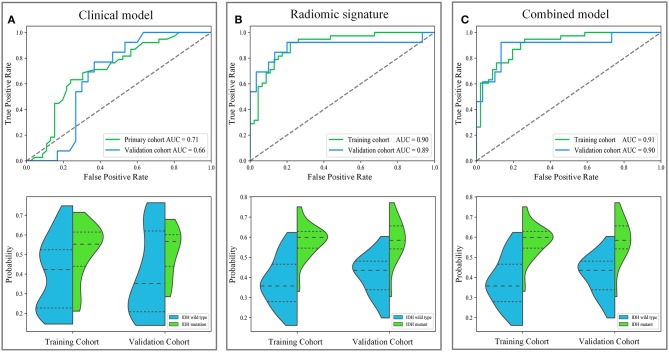
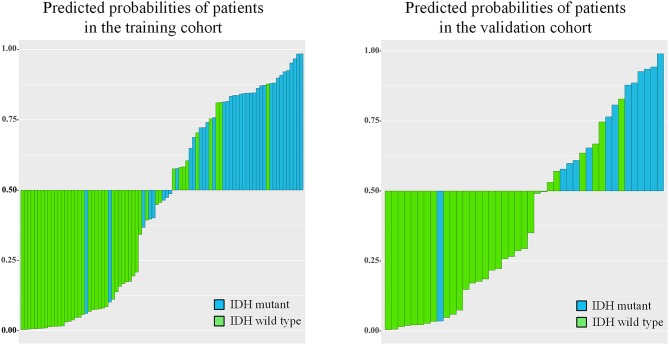
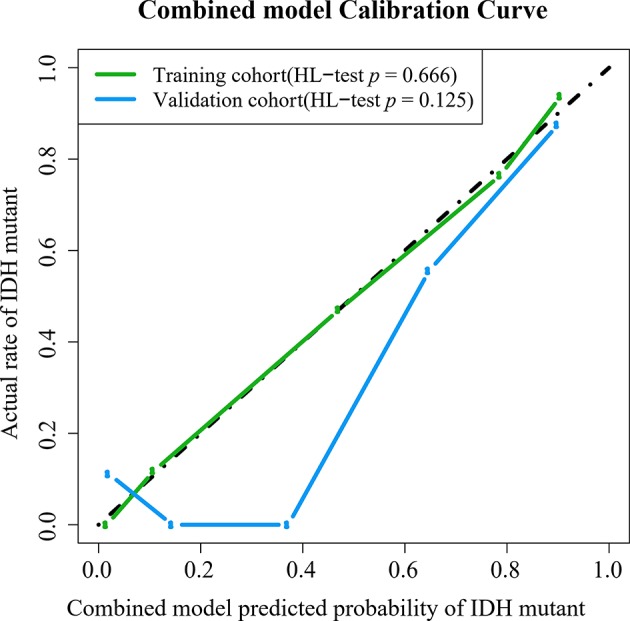
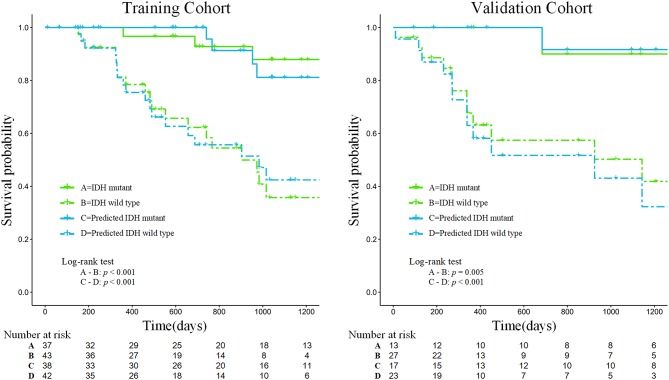
We aimed to analyze F-fluorodeoxyglucose positron emission tomography (F-FDG PET) images via the radiomic method to develop a model and validate the potential value of features reflecting glioma metabolism for predicting isocitrate dehydrogenase (IDH) genotype and prognosis. PET images of 127 patients were retrospectively analyzed. A series of quantitative features reflecting the metabolic heterogeneity of the tumors were extracted, and a radiomic signature was generated using the support vector machine method. A combined model that included clinical characteristics and the radiomic signature was then constructed by multivariate logistic regression to predict the IDH genotype status, and the model was evaluated and verified by receiver operating characteristic (ROC) curves and calibration curves. Finally, Kaplan-Meier curves and log-rank tests were used to analyze overall survival (OS) according to the predicted result. The generated radiomic signature was significantly associated with IDH genotype ( < 0.05) and could achieve large areas under the ROC curve of 0.911 and 0.900 on the training and validation cohorts, respectively, with the incorporation of age and type of tumor metabolism. The good agreement of the calibration curves in the validation cohort further validated the efficacy of the constructed model. Moreover, the predicted results showed a significant difference in OS between high- and low-risk groups ( < 0.001). Our results indicate that the F-FDG metabolism-related features could effectively predict the IDH genotype of gliomas and stratify the OS of patients with different prognoses.
我们旨在通过放射组学方法分析氟代脱氧葡萄糖正电子发射断层扫描(F-FDG PET)图像,以建立一个模型,并验证反映胶质瘤代谢的特征对于预测异柠檬酸脱氢酶(IDH)基因型和预后的潜在价值。对127例患者的PET图像进行回顾性分析。提取了一系列反映肿瘤代谢异质性的定量特征,并使用支持向量机方法生成了放射组学特征。然后通过多变量逻辑回归构建一个包含临床特征和放射组学特征的联合模型,以预测IDH基因型状态,并通过受试者操作特征(ROC)曲线和校准曲线对该模型进行评估和验证。最后,使用Kaplan-Meier曲线和对数秩检验根据预测结果分析总生存期(OS)。生成的放射组学特征与IDH基因型显著相关(<0.05),在纳入年龄和肿瘤代谢类型后,在训练队列和验证队列中分别可实现ROC曲线下面积为0.911和0.900。验证队列中校准曲线的良好一致性进一步验证了所构建模型的有效性。此外,预测结果显示高风险组和低风险组的OS存在显著差异(<0.001)。我们的结果表明,F-FDG代谢相关特征可以有效预测胶质瘤的IDH基因型,并对不同预后患者的OS进行分层。