Department of Pediatrics, Gastroenterology and Nutrition, Faculty of Medicine, Jagiellonian University Medical College, Wielicka 265, Kraków, 30-663, Poland.
Division of Molecular Medical Microbiology, Department of Microbiology, Faculty of Medicine, Jagiellonian University Medical College, Czysta 18, Kraków, 31-121, Poland.
Sci Rep. 2019 Dec 11;9(1):18880. doi: 10.1038/s41598-019-55290-9.
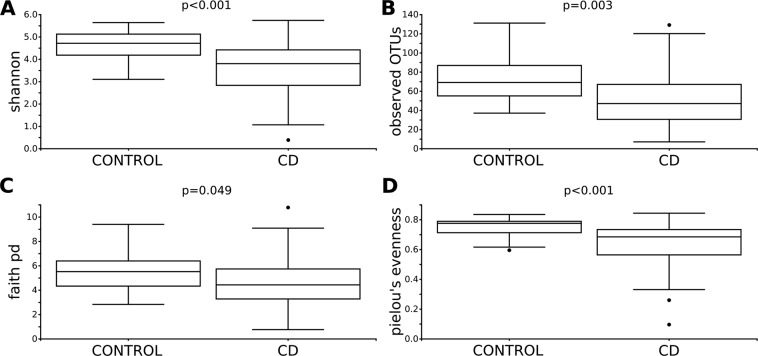
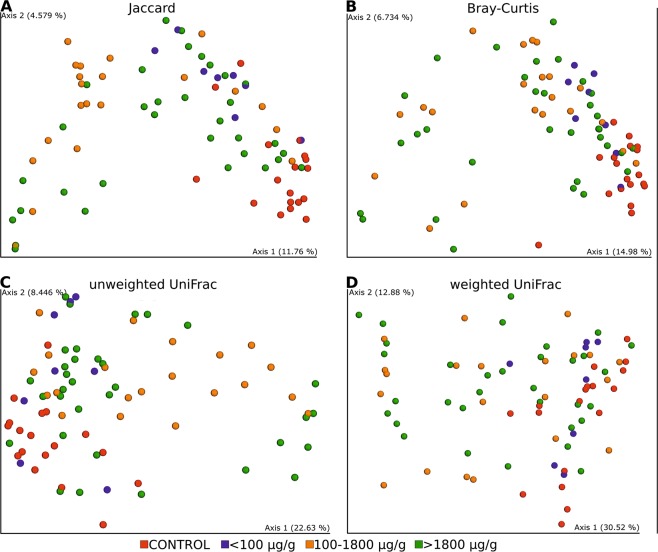
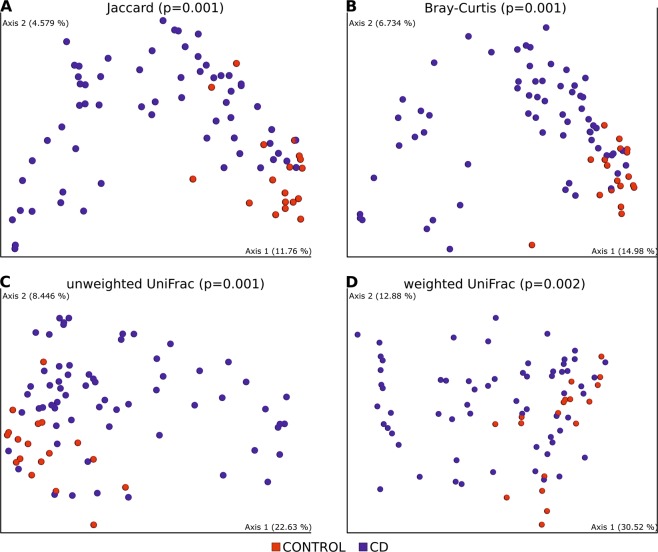
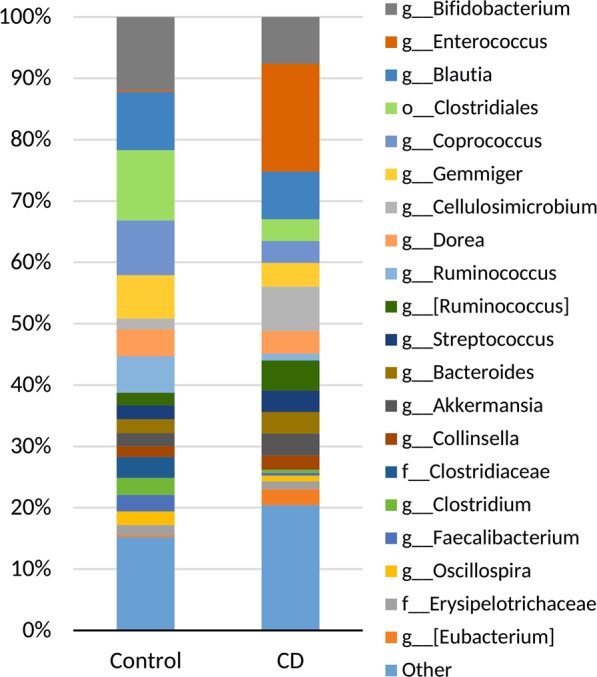
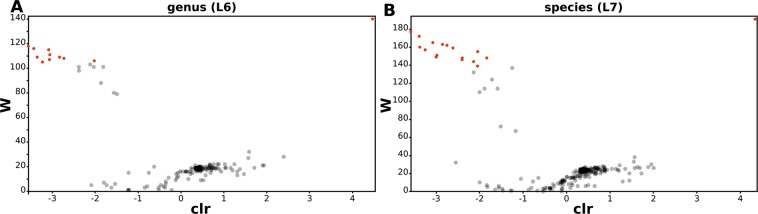
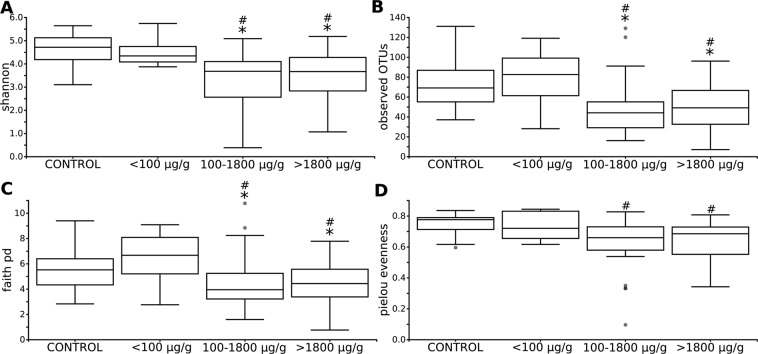
The aetiology of inflammatory bowel diseases (IBD) seems to be strongly connected to changes in the enteral microbiome. The dysbiosis pattern seen in Crohn's disease (CD) differs among published studies depending on patients' age, disease phenotype and microbiome research methods. The aims was to investigate microbiome in treatment-naive paediatric patients to get an insight into its structure at the early stage of the disease in comparison to healthy. Stool samples were obtained from controls and newly diagnosed patients prior to any intervention. Microbiota was analysed by 16SrRNAnext-generation-sequencing (NGS). Differences in the within-sample phylotype richness and evenness (alpha diversity) were detected between controls and patients. Statistically significant dissimilarities between samples were present for all used metrics. We also found a significant increase in the abundance of OTUs of the Enterococcus genus and reduction in, among others, Bifidobacterium (B. adolescentis), Roseburia (R.faecis), Faecalibacterium (F. prausnitzii), Gemmiger (G. formicilis), Ruminococcus (R. bromii) and Veillonellaceae (Dialister). Moreover, differences in alpha and beta diversities in respect to calprotectin and PCDAI were observed: patients with calprotectin <100 µg/g and with PCDAI below 10 points vs those with calprotectin >100 µg/g and mild (10-27.7 points), moderate (27.5-40 points) or severe (>40 points) CD disease activity had higher richness and diversity of gut microbiota. The results of our study highlight reduced diversity and dysbiosis at the earliest stage of the disease. Microbial imbalance and low abundance of butyrate-producing bacteria, including Bifidobacterium adolescentis, may suggest benefits of microbial modification therapy.
炎症性肠病(IBD)的病因似乎与肠内微生物组的变化密切相关。在克罗恩病(CD)中观察到的失调模式因发表研究的患者年龄、疾病表型和微生物组研究方法而异。本研究旨在调查未经治疗的儿科患者的微生物组,以深入了解其在疾病早期的结构,并与健康者进行比较。在进行任何干预之前,从对照组和新诊断的患者中获取粪便样本。通过 16SrRNA 下一代测序(NGS)分析微生物群。在对照组和患者之间检测到样本内分类丰富度和均匀度(alpha 多样性)的差异。所有使用的指标都存在样本之间的统计学显著差异。我们还发现肠球菌属 OTUs 的丰度显著增加,双歧杆菌(B. adolescentis)、罗氏菌(R. faecis)、粪杆菌(F. prausnitzii)、Gemmingger 菌(G. formicilis)、瘤胃球菌(R. bromii)和韦荣氏菌科(Dialister)等减少。此外,在 alpha 和 beta 多样性方面观察到与钙卫蛋白和 PCDAI 的差异:钙卫蛋白<100μg/g 且 PCDAI 低于 10 分的患者与钙卫蛋白>100μg/g 且轻度(10-27.7 分)、中度(27.5-40 分)或重度(>40 分)CD 疾病活动的患者相比,肠道微生物群的丰富度和多样性更高。我们的研究结果强调了疾病最早阶段的多样性降低和失调。微生物失衡和丁酸产生菌(包括双歧杆菌)丰度降低,可能提示微生物修饰治疗有益。