Nature. 2020 Jan;577(7789):235-238. doi: 10.1038/s41586-019-1872-1. Epub 2019 Dec 25.
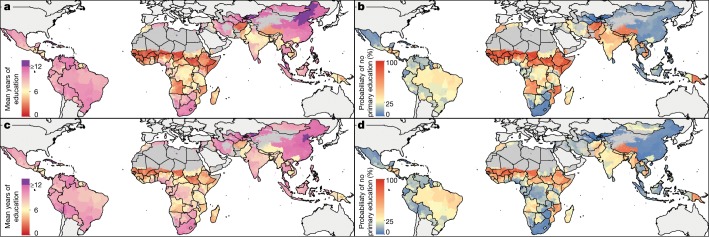
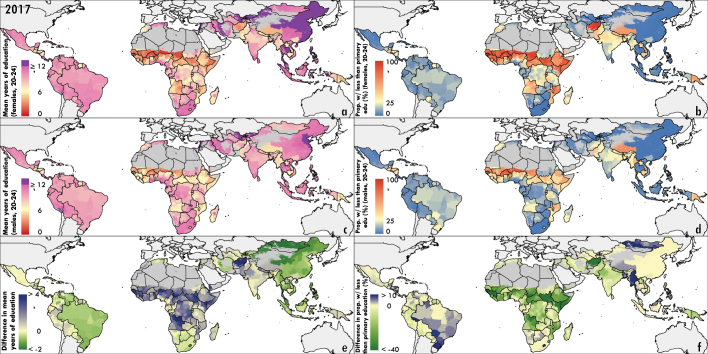
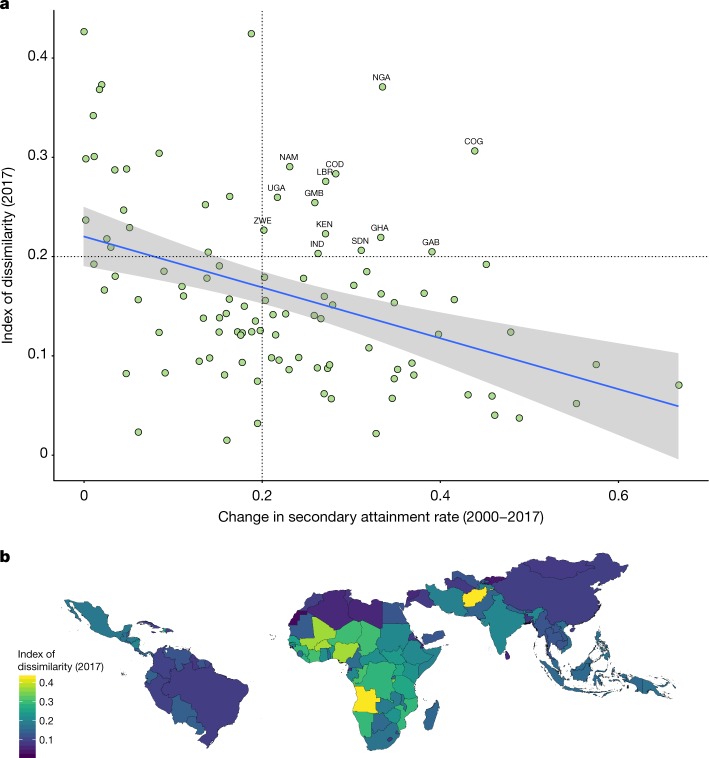
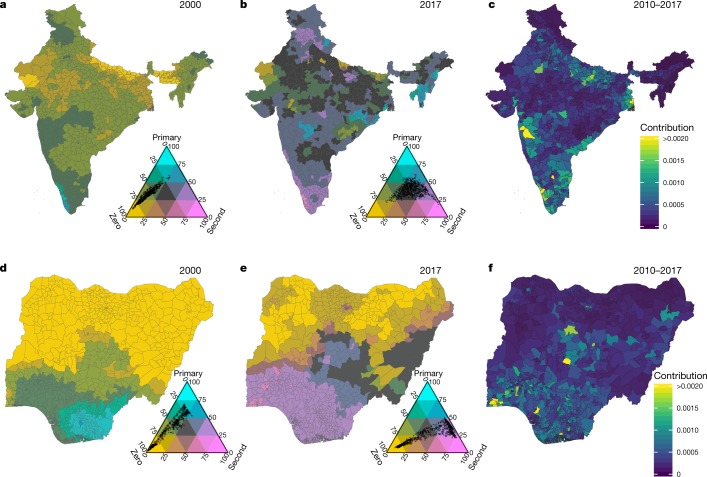
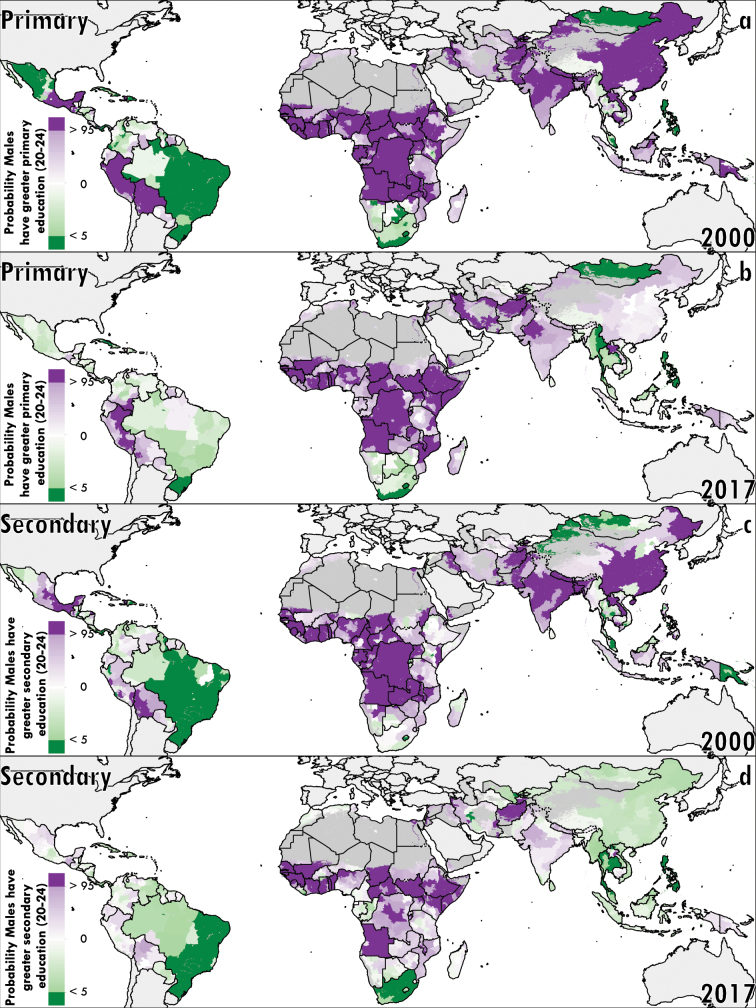
Educational attainment is an important social determinant of maternal, newborn, and child health. As a tool for promoting gender equity, it has gained increasing traction in popular media, international aid strategies, and global agenda-setting. The global health agenda is increasingly focused on evidence of precision public health, which illustrates the subnational distribution of disease and illness; however, an agenda focused on future equity must integrate comparable evidence on the distribution of social determinants of health. Here we expand on the available precision SDG evidence by estimating the subnational distribution of educational attainment, including the proportions of individuals who have completed key levels of schooling, across all low- and middle-income countries from 2000 to 2017. Previous analyses have focused on geographical disparities in average attainment across Africa or for specific countries, but-to our knowledge-no analysis has examined the subnational proportions of individuals who completed specific levels of education across all low- and middle-income countries. By geolocating subnational data for more than 184 million person-years across 528 data sources, we precisely identify inequalities across geography as well as within populations.
受教育程度是影响母婴和儿童健康的一个重要社会决定因素。作为促进性别平等的工具,它在大众媒体、国际援助战略和全球议程设置中越来越受到关注。全球卫生议程越来越关注精准公共卫生的证据,该证据说明了疾病在次国家层面的分布情况;然而,关注未来公平的议程必须整合关于卫生保健社会决定因素分布的可比证据。在这里,我们通过估计 2000 年至 2017 年期间所有中低收入国家的教育程度的次国家分布情况,扩展了现有的精准可持续发展目标的证据,包括完成关键教育水平的个人比例。以前的分析集中在非洲或特定国家的平均教育程度的地理差异上,但据我们所知,没有分析检查过所有中低收入国家完成特定教育水平的个人的次国家比例。通过对 528 个数据源的 1.84 多亿个人年的次国家数据进行地理定位,我们准确地确定了地理上以及人口内部的不平等情况。