Selli Daniele, Tawfilas Massimo, Mauri Michele, Simonutti Roberto, Di Valentin Cristiana
Dipartimento di Scienza dei Materiali, Università di Milano-Bicocca, via R. Cozzi 55, 20125 Milano, Italy.
Chem Mater. 2019 Sep 24;31(18):7531-7546. doi: 10.1021/acs.chemmater.9b02329. Epub 2019 Aug 9.
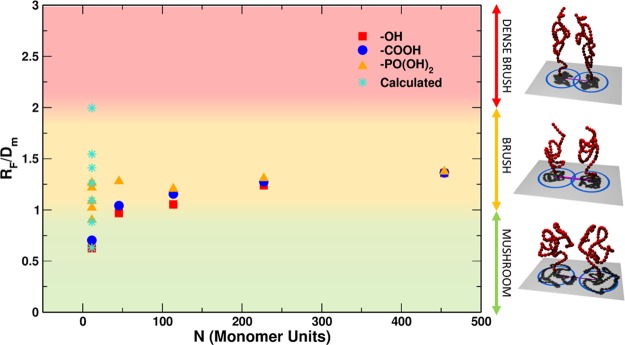
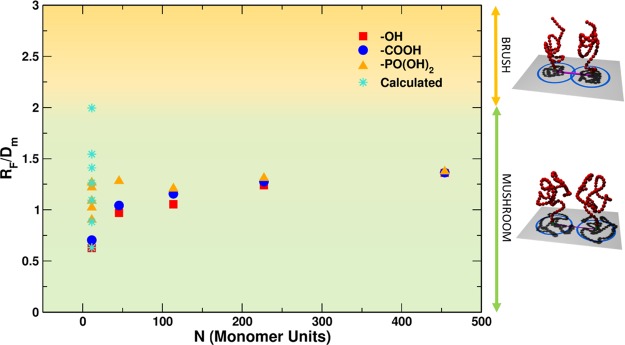
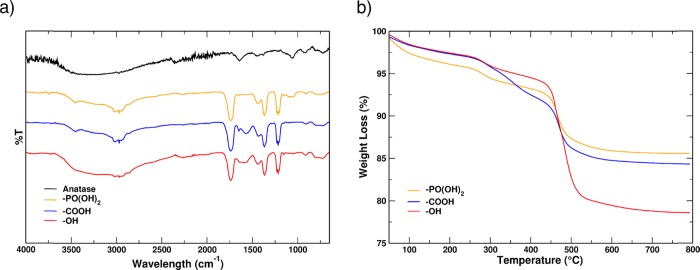
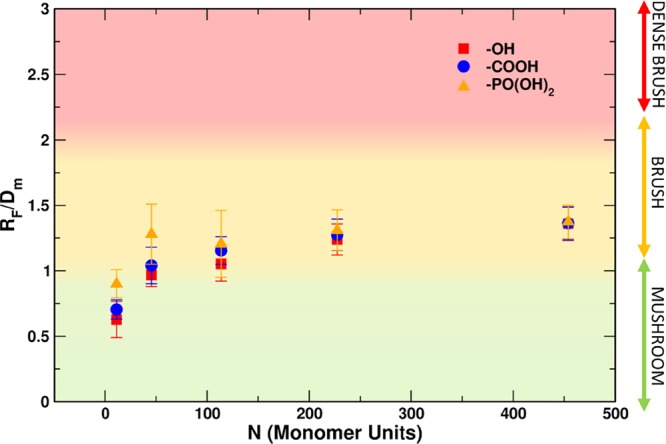
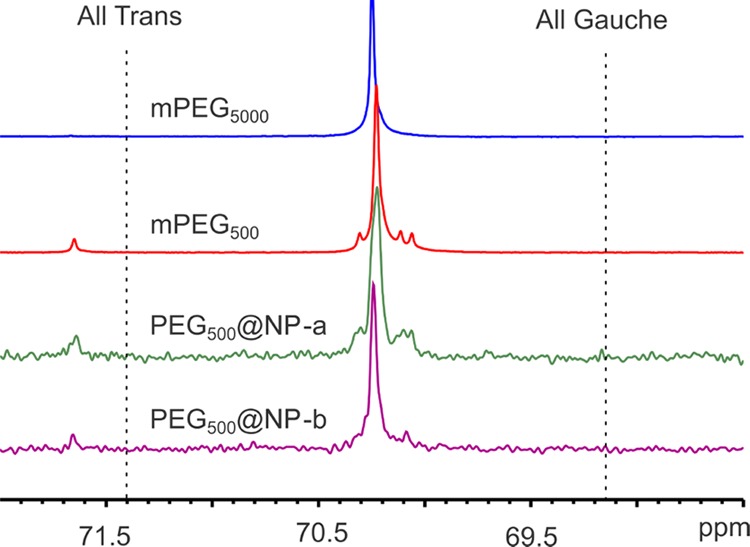
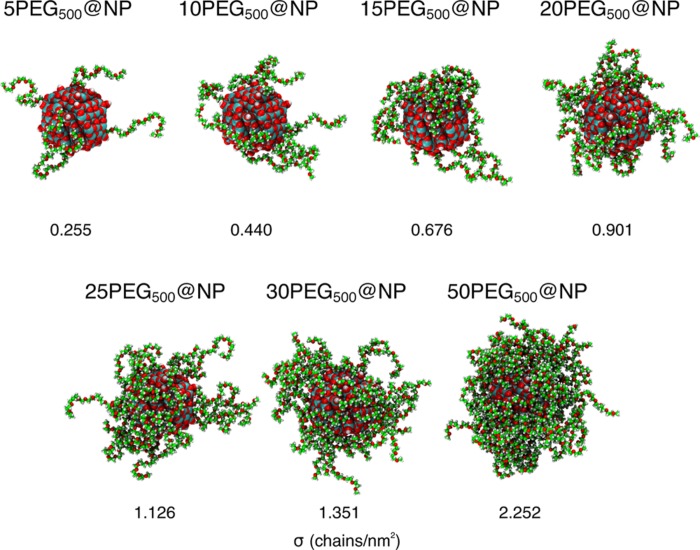
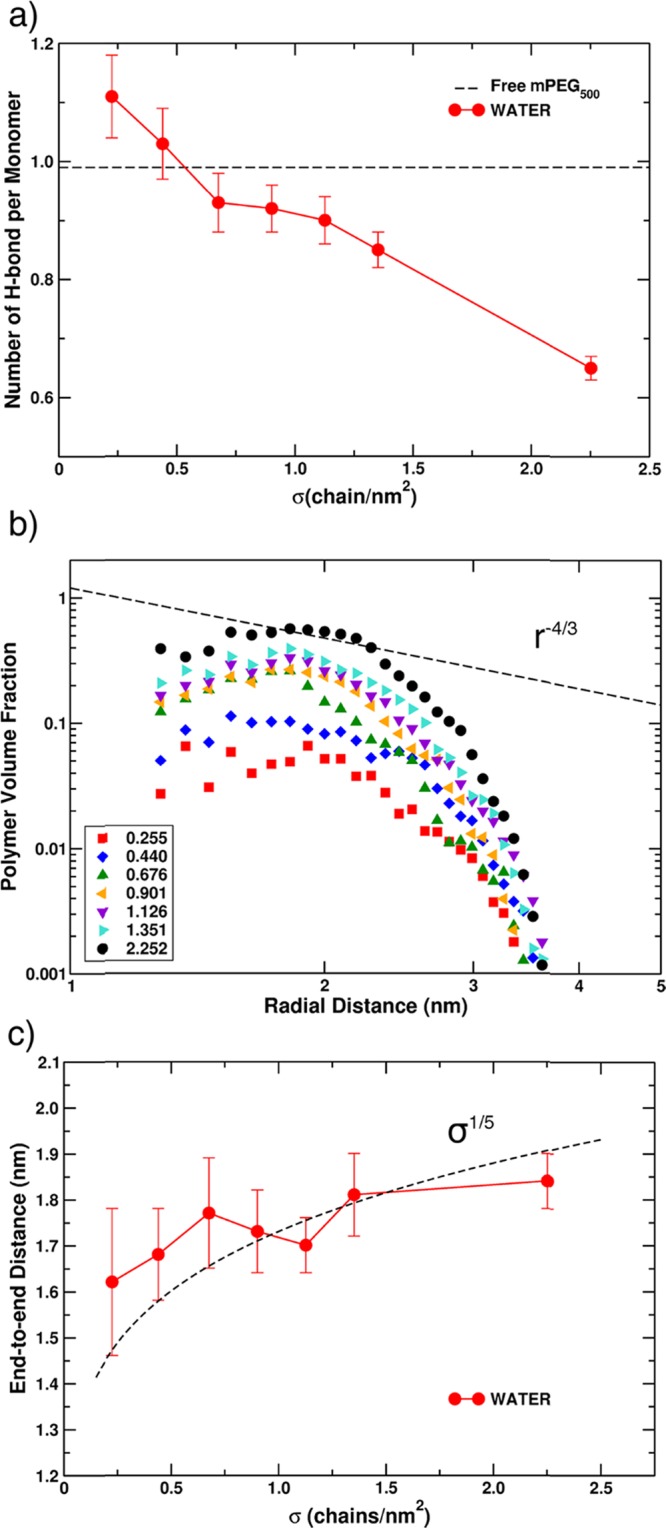
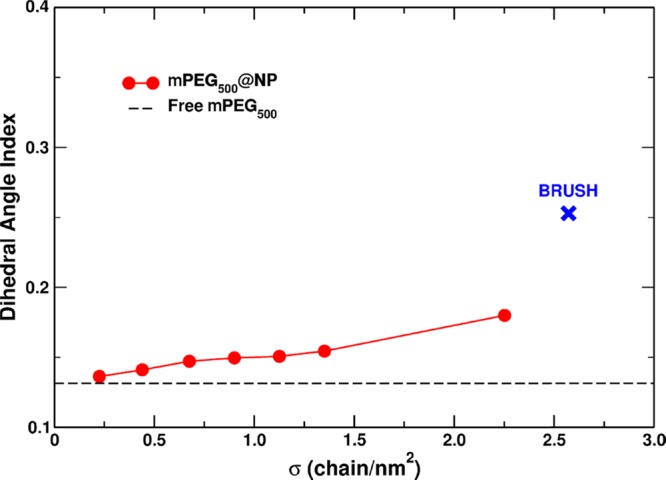
PEGylation of metal oxide nanoparticles is the common approach to improve their biocompatibility and in vivo circulation time. In this work, we present a combined experimental and theoretical study to determine the operating condition that guarantee very high grafting densities, which are desirable in any biomedical application. Moreover, we present an insightful conformational analysis spanning different coverage regimes and increasing polymer chain lengths. Based on C NMR measurements and molecular dynamics simulations, we show that classical and popular models of polymer conformation on surfaces fail in determining the mushroom-to-brush transition point and prove that it actually takes place only at rather high grafting density values.
金属氧化物纳米颗粒的聚乙二醇化是提高其生物相容性和体内循环时间的常用方法。在这项工作中,我们进行了实验与理论相结合的研究,以确定能保证非常高接枝密度的操作条件,这在任何生物医学应用中都是理想的。此外,我们还对不同覆盖范围和增加的聚合物链长度进行了深入的构象分析。基于碳核磁共振测量和分子动力学模拟,我们表明表面聚合物构象的经典常用模型在确定蘑菇态到刷状转变点时失效,并证明该转变实际上仅在相当高的接枝密度值时才会发生。