
白花丹素的耐药性调节作用、时间-杀菌动力学测定及对生物膜形成的抑制作用
Resistance Modulation Action, Time-Kill Kinetics Assay, and Inhibition of Biofilm Formation Effects of Plumbagin from Linn.
作者信息
Adusei Emmanuel B A, Adosraku Reimmel K, Oppong-Kyekyeku James, Amengor Cedric D K, Jibira Yakubu
机构信息
Department of Pharmaceutical Chemistry, Faculty of Pharmacy and Pharmaceutical Sciences, College of Health Sciences, Kwame Nkrumah University of Science and Technology, Kumasi, Ghana.
Department of Pharmaceutical Chemistry, School of Pharmacy, University of Health and Allied Sciences, Ho, Ghana.
出版信息
J Trop Med. 2019 Nov 26;2019:1250645. doi: 10.1155/2019/1250645. eCollection 2019.
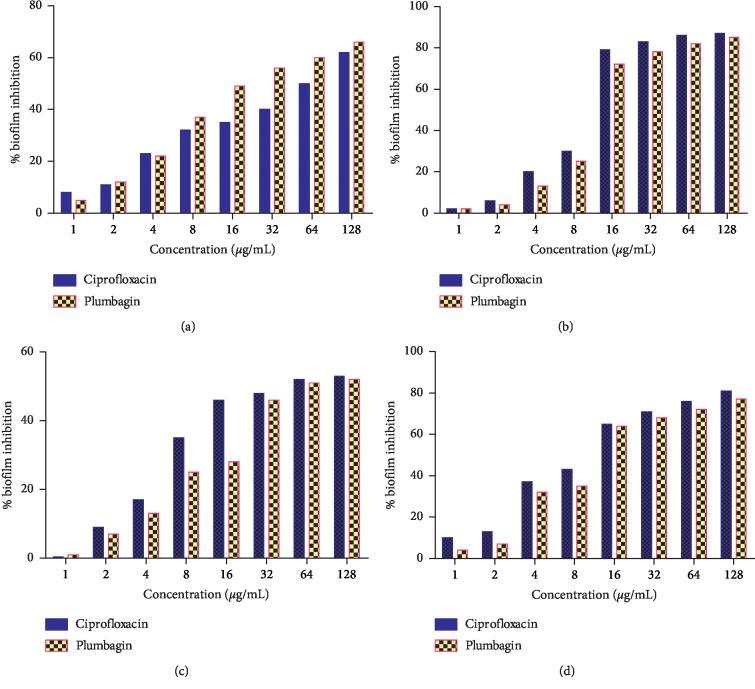
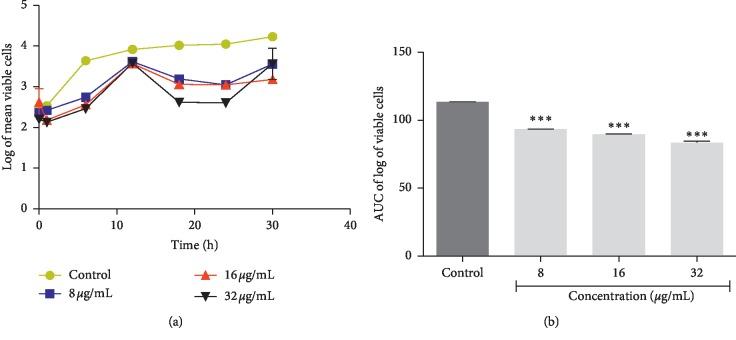
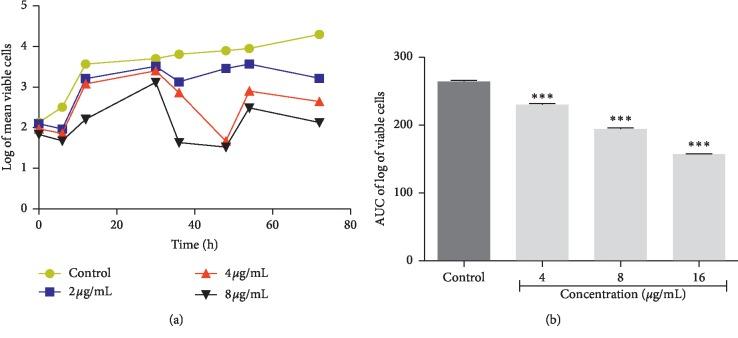
Antimicrobial resistance (AMR) is a threat to the prevention and treatment of the increasing range of infectious diseases. There is therefore the need for renewed efforts into antimicrobial discovery and development to combat the menace. The antimicrobial activity of plumbagin isolated from roots of against selected organisms was evaluated for resistance modulation antimicrobial assay, time-kill kinetics assay, and inhibition of biofilm formation. The minimum inhibitory concentrations (MICs) of plumbagin and standard drugs were determined via the broth microdilution method to be 0.5 to 8 g/mL and 0.25-128 g/mL, respectively. In the resistance modulation study, MICs of the standard drugs were redetermined in the presence of subinhibitory concentration of plumbagin (4 g/mL), and plumbagin was found to either potentiate or reduce the activities of these standard drugs with the highest potentiation recorded up to 12-folds for ketoconazole against . Plumbagin was found to be bacteriostatic and fungistatic from the time-kill kinetics study. Plumbagin demonstrated strong inhibition of biofilm formation activity at concentrations of 128, 64, and 32 g/mL against the test microorganisms compared with ciprofloxacin. Plumbagin has been proved through this study to be a suitable lead compound in antimicrobial resistance drug development.
抗菌药物耐药性(AMR)对日益增多的传染病的预防和治疗构成威胁。因此,需要重新努力进行抗菌药物的发现和开发,以应对这一威胁。对从[植物名称]根部分离出的白花丹醌针对选定生物体的抗菌活性进行了评估,包括耐药性调节抗菌试验、时间杀菌动力学试验和生物膜形成抑制试验。通过肉汤微量稀释法测定白花丹醌和标准药物的最低抑菌浓度(MIC)分别为0.5至8μg/mL和0.25 - 128μg/mL。在耐药性调节研究中,在亚抑菌浓度的白花丹醌(4μg/mL)存在下重新测定标准药物的MIC,发现白花丹醌可增强或降低这些标准药物的活性,酮康唑对[具体菌株]的增强作用最高可达12倍。从时间杀菌动力学研究中发现白花丹醌具有抑菌和抑真菌作用。与环丙沙星相比,白花丹醌在浓度为128、64和32μg/mL时对测试微生物表现出强烈的生物膜形成抑制活性。通过这项研究已证明白花丹醌是抗菌药物耐药性药物开发中一种合适的先导化合物。


 Zotero 插件