Pan Chin-Yun, Liu Pao-Hsin, Tseng Yu-Chuan, Chou Szu-Ting, Wu Chao-Yi, Chang Hong-Po
School of Dentistry and Graduate Program of Dental Science (Orthodontics), College of Dental Medicine, Kaohsiung Medical University, Kaohsiung, Taiwan.
Department of Orthodontics, Faculty of Dentistry, Kaohsiung Medical University Hospital, Kaohsiung, Taiwan.
J Dent Sci. 2019 Dec;14(4):383-388. doi: 10.1016/j.jds.2019.06.002. Epub 2019 Jul 20.
BACKGROUND/PURPOSE: Mini-implant screws are now routinely used as anchorage devices in orthodontic treatments. This study used synthetic bone models to investigate how the primary stability of an orthodontic mini-implant (OMI) as measured by resonance frequency (RF) is affected by varying cortical bone thickness and trabecular bone density.
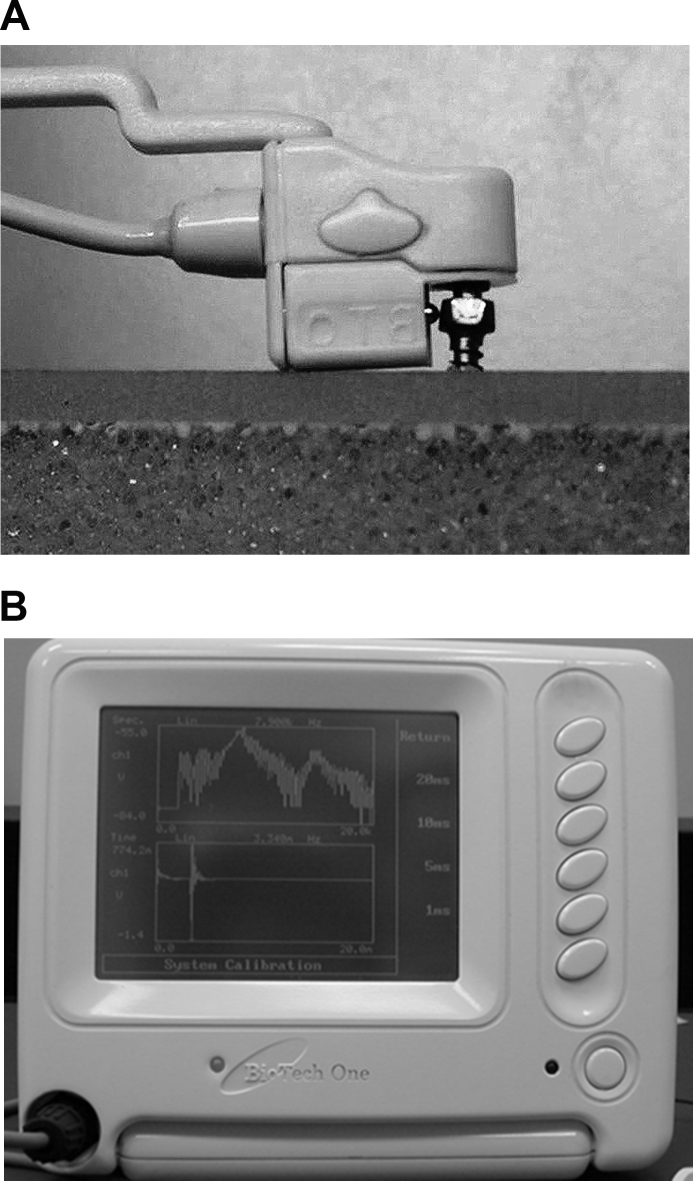
Three synthetic cortical shells (thicknesses of 1, 2, and 3 mm) and three polyurethane foam blocks (densities of 40, 20, and 10 pound/cubic foot) were used to represent jawbones of varying cortical bone thicknesses and varying trabecular bone densities. Twenty-five stainless steel OMIs (2 × 10 mm) were sequentially inserted into artificial bone blocks to depths of 2, 4, and 6 mm. Five experimental groups of bone blocks with OMIs were examined by Implomates® RF analyzer. Statistical and correlation analyses were performed by Kruskal-Wallis test, Wilcoxon rank-sum test, and simple linear regression.
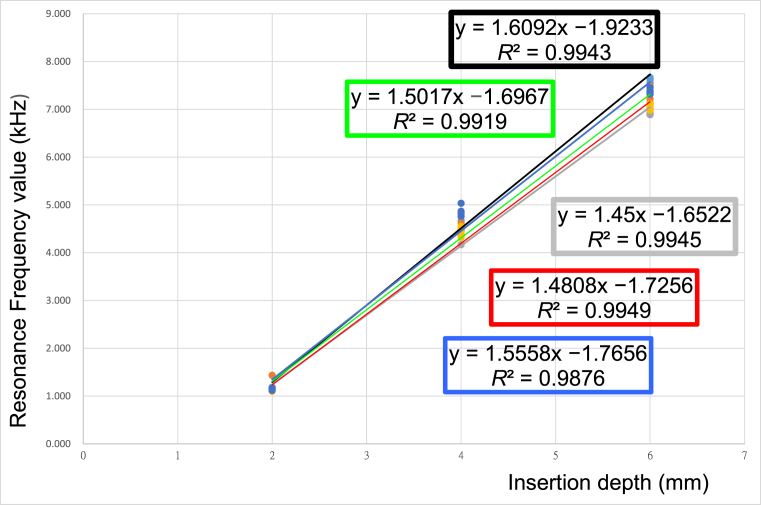
As trabecular bone density decreased, RF decreased; as cortical bone thickness decreased, RF also decreased. Simple linear regression analysis showed highly linear correlations between trabecular bone density and RF ( > 0.99; < 0.0001) and between cortical bone thickness and RF ( > 0.98; < 0.0001).
The stability of an OMI at the time of placement is influenced by both cortical bone thickness and trabecular bone density. Both cortical bone thickness and trabecular bone density have strong linear correlations with RF.
背景/目的:微型种植螺钉目前在正畸治疗中常规用作锚固装置。本研究使用合成骨模型来研究通过共振频率(RF)测量的正畸微型种植体(OMI)的初始稳定性如何受到皮质骨厚度和松质骨密度变化的影响。
使用三个合成皮质壳(厚度分别为1、2和3毫米)和三个聚氨酯泡沫块(密度分别为40、20和10磅/立方英尺)来代表不同皮质骨厚度和不同松质骨密度的颌骨。将25个不锈钢OMI(2×10毫米)依次插入人工骨块至2、4和6毫米的深度。使用Implomates® RF分析仪检查五组带有OMI的骨块。通过Kruskal-Wallis检验、Wilcoxon秩和检验和简单线性回归进行统计和相关性分析。
随着松质骨密度降低,RF降低;随着皮质骨厚度降低,RF也降低。简单线性回归分析显示松质骨密度与RF之间(>0.99;<0.0001)以及皮质骨厚度与RF之间(>0.98;<0.0001)存在高度线性相关性。
OMI植入时的稳定性受皮质骨厚度和松质骨密度两者影响。皮质骨厚度和松质骨密度与RF均具有很强的线性相关性。