Institute of Military Cognitive and Brain Sciences, Beijing, 100850, China.
National Institute of Environmental Health Chinese Center for Disease Control and Prevention, Beijing, 100021, China.
Int J Biol Sci. 2020 Jan 1;16(1):49-60. doi: 10.7150/ijbs.36073. eCollection 2020.
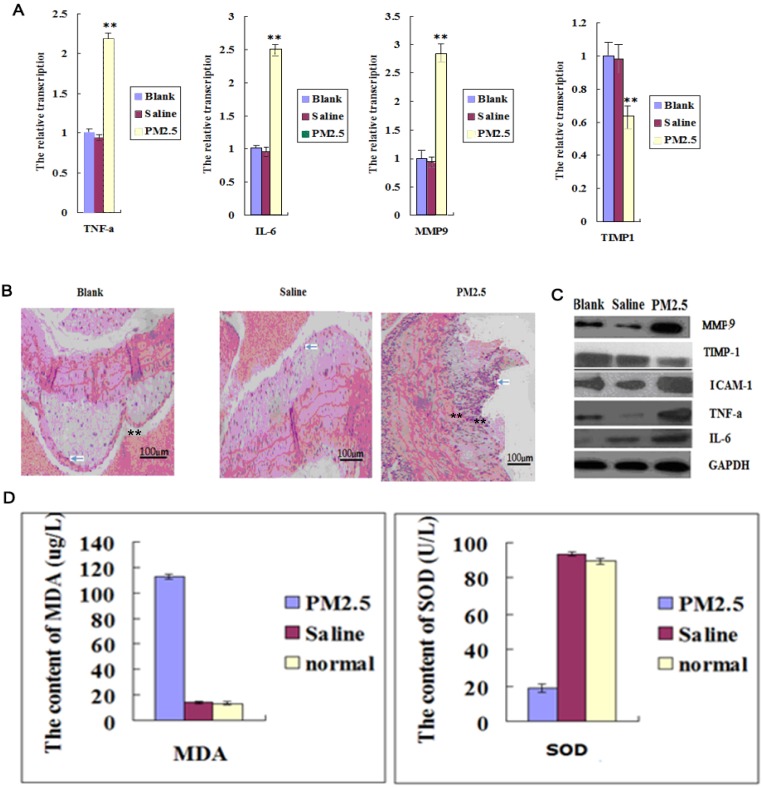
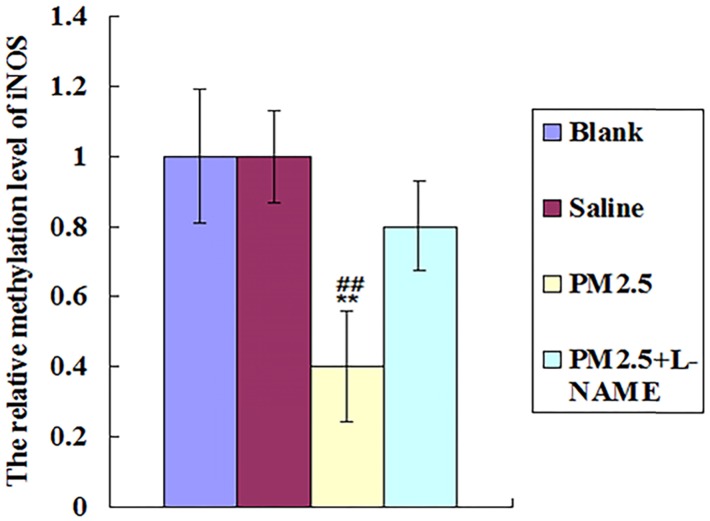
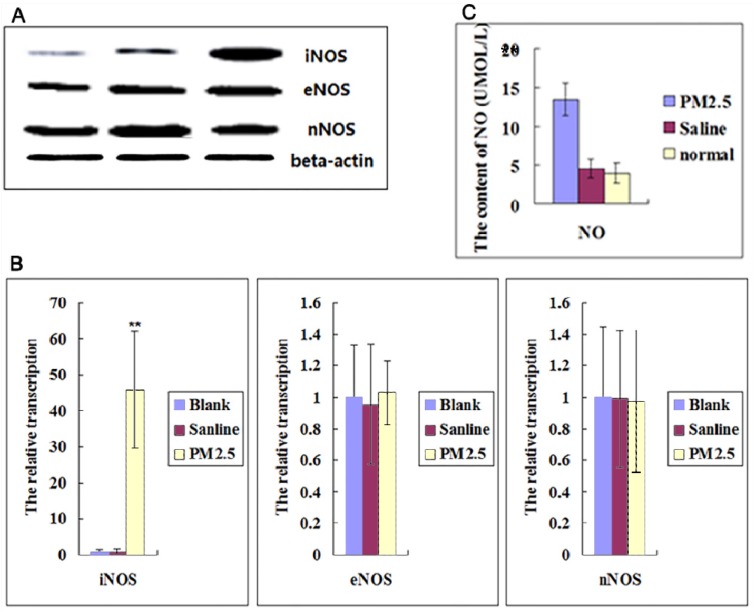
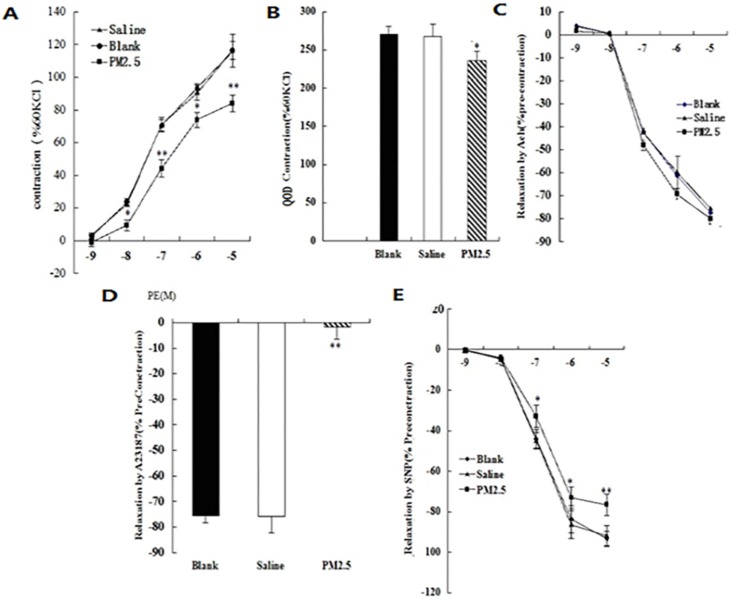
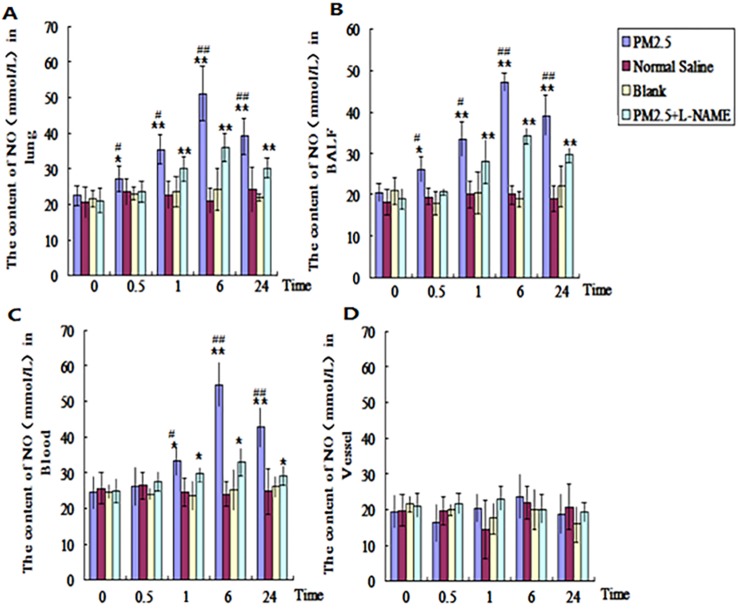
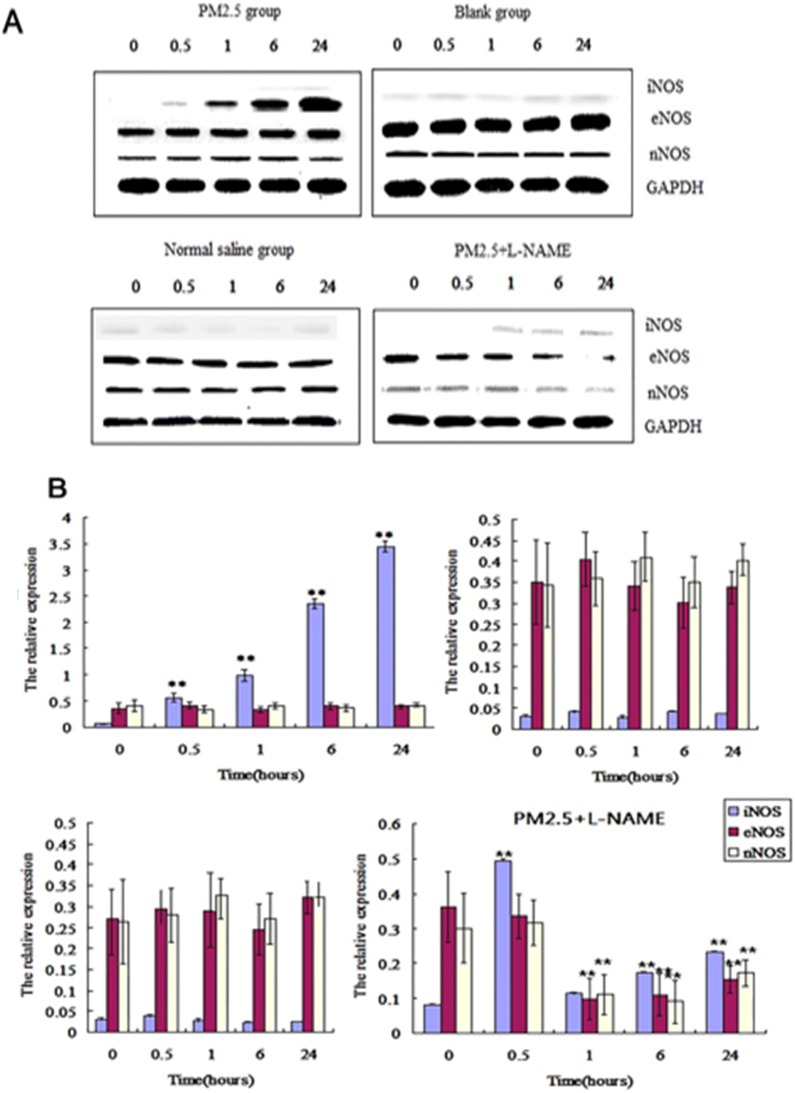
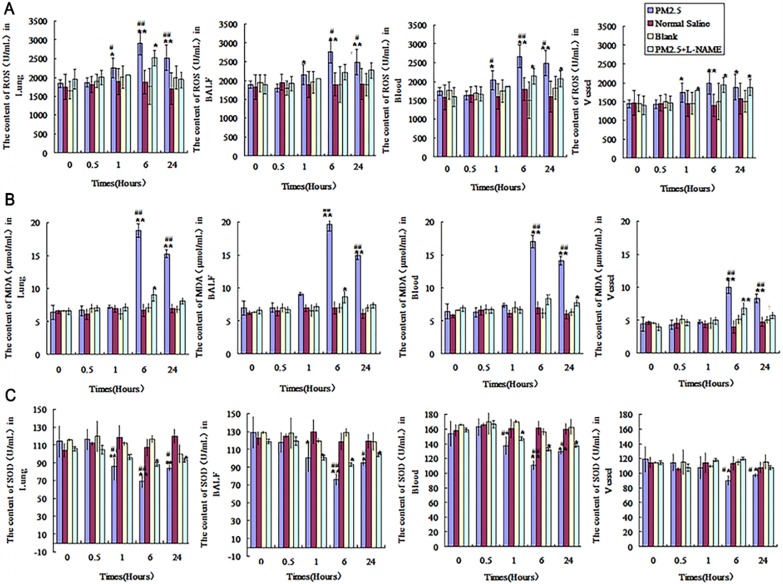
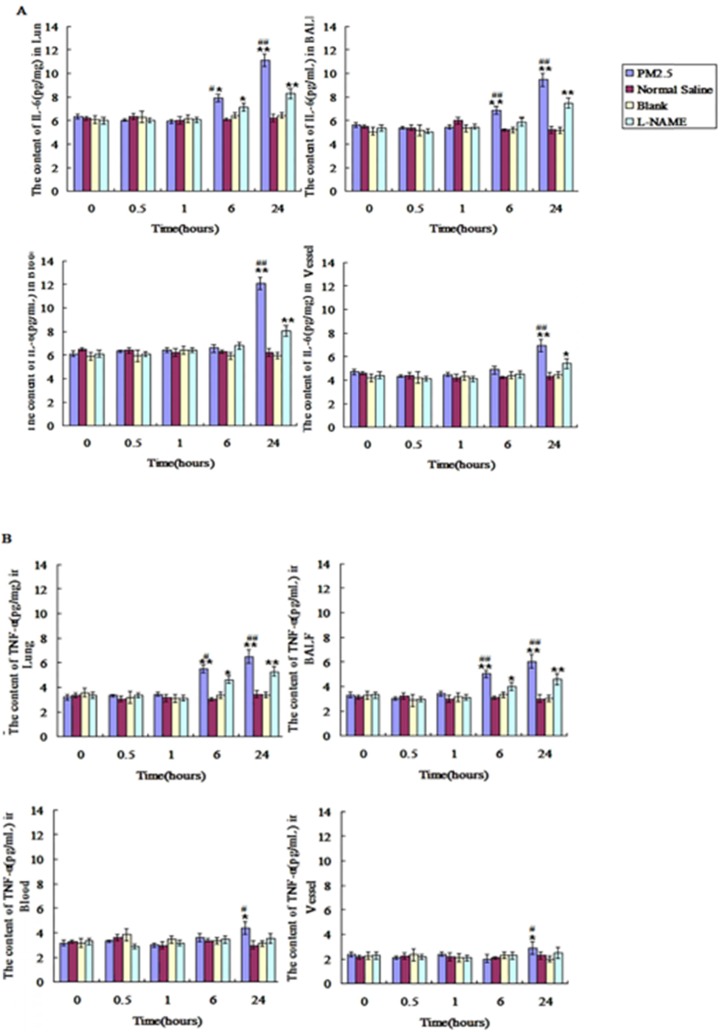
PM2.5 exposure exacerbates cardiovascular diseases via oxidative stress and inflammation, the detailed mechanism of which is unclear. In this study, the effects of oxidative stress and inflammation, as well as vascular structure and function were studied by multiple PM2.5 exposure model of ApoE-/- mice. The results indicated that NO produced by iNOS not cNOS might play important roles in inducing vascular dysfunction after PM2.5 exposure. The occurrence order and causality among NO, other oxidative stress indicators and inflammation is explored by single PM2.5 exposure. The results showed that NO generated by iNOS occurred earlier than that of other oxidative stress indicators, which was followed by the increased inflammation. Inhibition of NOS could effectively block the raise of NO, oxidative stress and inflammation after PM2.5 exposure. All in all, we firstly confirmed that NO was the initiation factor of PM2.5 exposure-induced oxidative stress, which led to inflammation and the following vascular dysfunction.
PM2.5 暴露通过氧化应激和炎症加重心血管疾病,其详细机制尚不清楚。在这项研究中,通过 ApoE-/- 小鼠的多种 PM2.5 暴露模型研究了氧化应激和炎症以及血管结构和功能的影响。结果表明,iNOS 产生的而不是 cNOS 产生的 NO 可能在 PM2.5 暴露后诱导血管功能障碍中发挥重要作用。通过单次 PM2.5 暴露探索了 NO、其他氧化应激指标和炎症之间的发生顺序和因果关系。结果表明,iNOS 产生的 NO 早于其他氧化应激指标产生,随后炎症增加。抑制 NOS 可以有效阻断 PM2.5 暴露后 NO、氧化应激和炎症的升高。总之,我们首次证实 NO 是 PM2.5 暴露诱导的氧化应激的起始因子,导致随后的炎症和血管功能障碍。