Lenz Patrick R N, Nadeau Simon, Mottet Marie-Josée, Perron Martin, Isabel Nathalie, Beaulieu Jean, Bousquet Jean
Canadian Wood Fibre Centre Natural Resources Canada Québec Québec Canada.
Canada Research Chair in Forest Genomics Institute of Integrative Biology and Systems, Centre for Forest Research Université Laval Québec Québec Canada.
Evol Appl. 2019 Jun 20;13(1):76-94. doi: 10.1111/eva.12823. eCollection 2020 Jan.
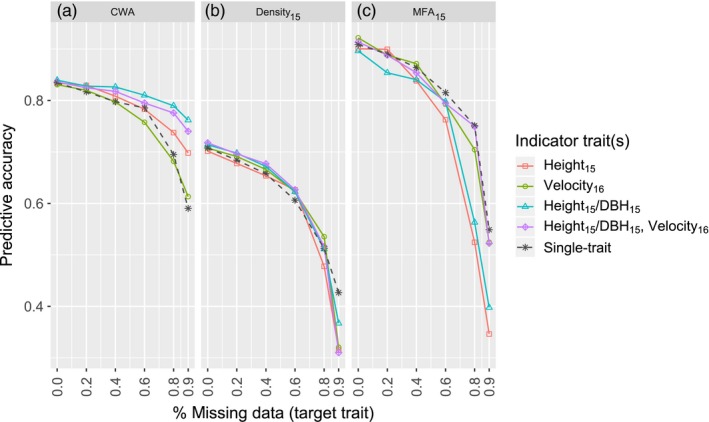
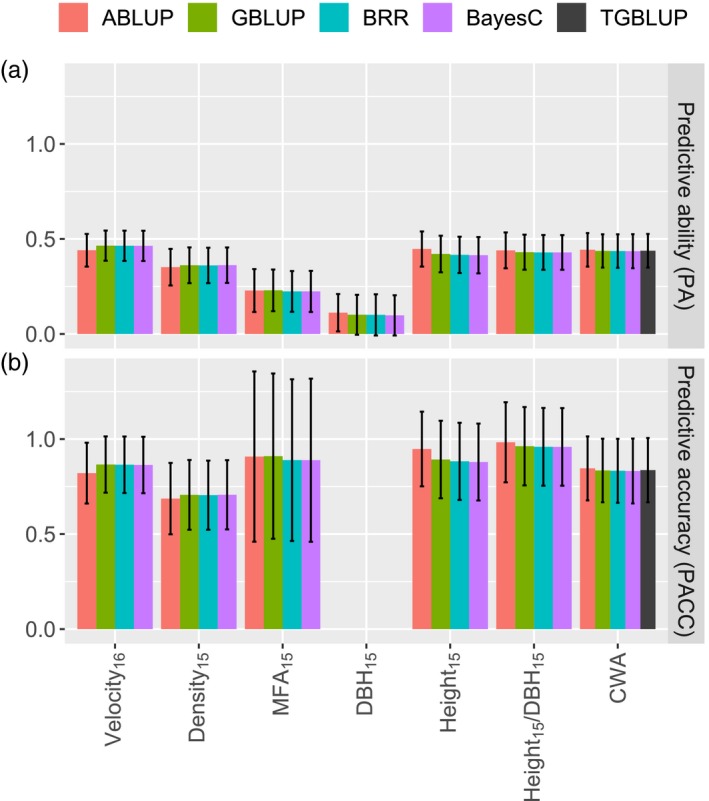
Plantation-grown trees have to cope with an increasing pressure of pest and disease in the context of climate change, and breeding approaches using genomics may offer efficient and flexible tools to face this pressure. In the present study, we targeted genetic improvement of resistance of an introduced conifer species in Canada, Norway spruce ( (L.) Karst.), to the native white pine weevil ( Peck). We developed single- and multi-trait genomic selection (GS) models and selection indices considering the relationships between weevil resistance, intrinsic wood quality, and growth traits. Weevil resistance, acoustic velocity as a proxy for mechanical wood stiffness, and average wood density showed moderate-to-high heritability and low genotype-by-environment interactions. Weevil resistance was genetically positively correlated with tree height, height-to-diameter at breast height (DBH) ratio, and acoustic velocity. The accuracy of the different GS models tested (GBLUP, threshold GBLUP, Bayesian ridge regression, BayesCπ) was high and did not differ among each other. Multi-trait models performed similarly as single-trait models when all trees were phenotyped. However, when weevil attack data were not available for all trees, weevil resistance was more accurately predicted by integrating genetically correlated growth traits into multi-trait GS models. A GS index that corresponded to the breeders' priorities achieved near maximum gains for weevil resistance, acoustic velocity, and height growth, but a small decrease for DBH. The results of this study indicate that it is possible to breed for high-quality, weevil-resistant Norway spruce reforestation stock with high accuracy achieved from single-trait or multi-trait GS.
在气候变化的背景下,人工林种植的树木必须应对病虫害日益增加的压力,而利用基因组学的育种方法可能提供高效且灵活的工具来应对这一压力。在本研究中,我们旨在对加拿大引进的针叶树种挪威云杉(Picea abies (L.) Karst.)针对本地白松象(Pissodes strobi Peck)的抗性进行遗传改良。我们开发了单性状和多性状基因组选择(GS)模型以及选择指数,同时考虑了象虫抗性、木材内在品质和生长性状之间的关系。象虫抗性、作为木材机械硬度指标的声速以及平均木材密度显示出中等到高度的遗传力和较低的基因型与环境互作。象虫抗性与树高、胸径高径比和声速在遗传上呈正相关。所测试的不同GS模型(GBLUP、阈值GBLUP、贝叶斯岭回归、BayesCπ)的准确性很高,且彼此之间没有差异。当对所有树木进行表型测定时,多性状模型的表现与单性状模型相似。然而,当并非所有树木都有象虫侵害数据时,通过将遗传相关的生长性状整合到多性状GS模型中,可以更准确地预测象虫抗性。一个符合育种者优先考虑事项的GS指数在象虫抗性、声速和树高生长方面实现了近乎最大的增益,但胸径略有下降。本研究结果表明,通过单性状或多性状GS可以高精度地培育出高质量、抗象虫的挪威云杉造林苗木。