Laboratory of Microbiology, Wageningen University & Research, Stippeneng 4, 6708 WE, Wageningen, The Netherlands.
Department of Applied and Ecological Microbiology, Institute of Microbiology, Friedrich Schiller University, 07743, Jena, Germany.
ISME J. 2020 Mar;14(3):815-827. doi: 10.1038/s41396-019-0573-y. Epub 2020 Jan 2.
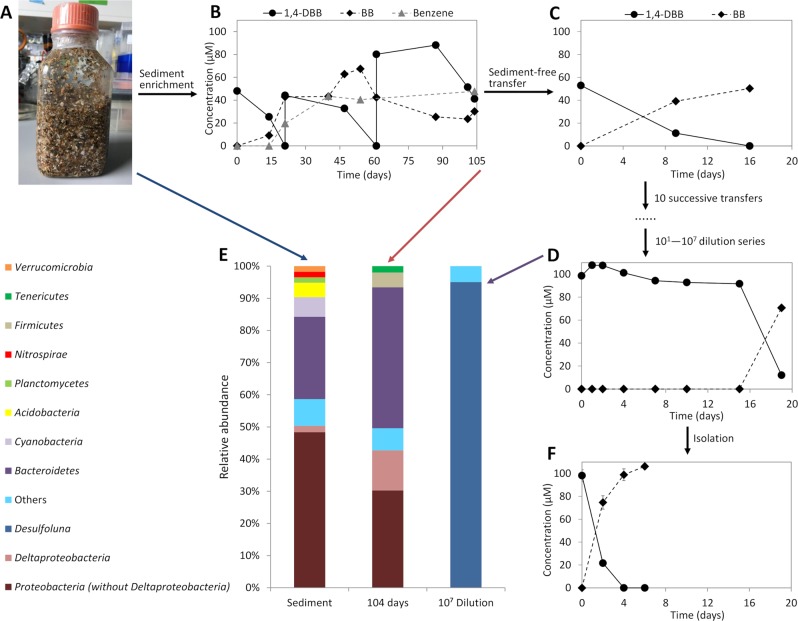
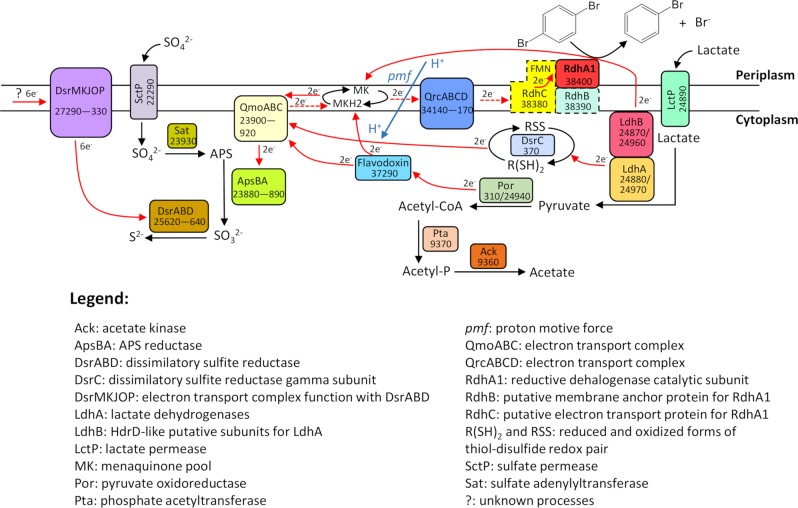
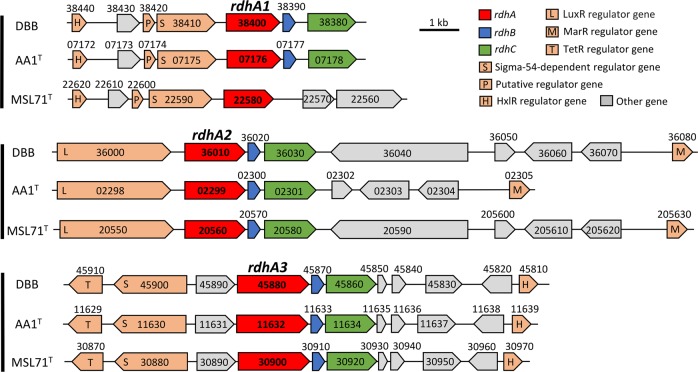
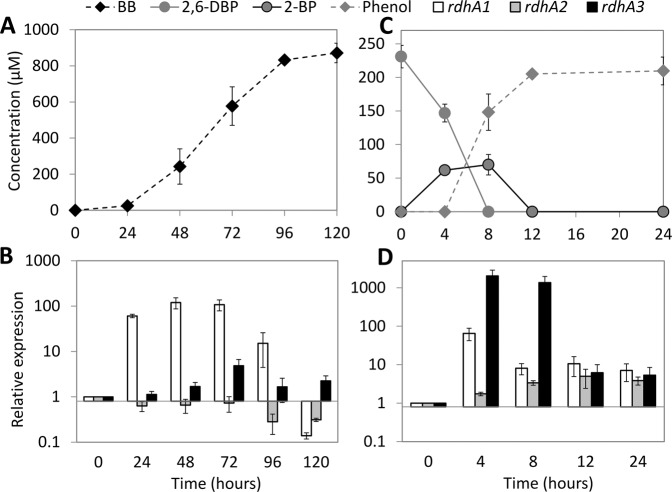
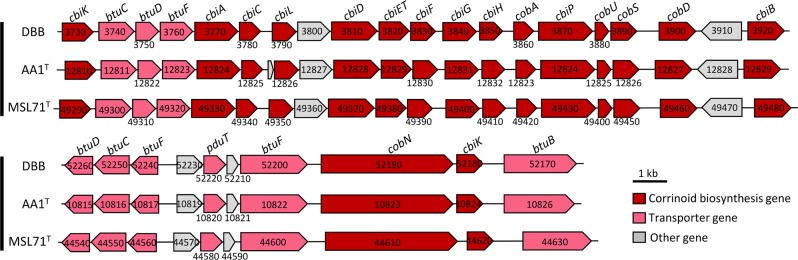
The genus Desulfoluna comprises two anaerobic sulfate-reducing strains, D. spongiiphila AA1 and D. butyratoxydans MSL71, of which only the former was shown to perform organohalide respiration (OHR). Here we isolated a third strain, designated D. spongiiphila strain DBB, from marine intertidal sediment using 1,4-dibromobenzene and sulfate as the electron acceptors and lactate as the electron donor. Each strain harbors three reductive dehalogenase gene clusters (rdhABC) and corrinoid biosynthesis genes in their genomes, and dehalogenated brominated but not chlorinated organohalogens. The Desulfoluna strains maintained OHR in the presence of 20 mM sulfate or 20 mM sulfide, which often negatively affect other organohalide-respiring bacteria. Strain DBB sustained OHR with 2% oxygen in the gas phase, in line with its genetic potential for reactive oxygen species detoxification. Reverse transcription-quantitative PCR revealed differential induction of rdhA genes in strain DBB in response to 1,4-dibromobenzene or 2,6-dibromophenol. Proteomic analysis confirmed expression of rdhA1 with 1,4-dibromobenzene, and revealed a partially shared electron transport chain from lactate to 1,4-dibromobenzene and sulfate, which may explain accelerated OHR during concurrent sulfate reduction. Versatility in using electron donors, de novo corrinoid biosynthesis, resistance to sulfate, sulfide and oxygen, and concurrent sulfate reduction and OHR may confer an advantage to marine Desulfoluna strains.
脱硫肠状菌属包含两个严格厌氧硫酸盐还原菌株,即 D. spongiiphila AA1 和 D. butyratoxydans MSL71,其中只有前者被证明具有有机卤化物呼吸(OHR)能力。本研究从海洋潮间带沉积物中,使用 1,4-二溴苯和硫酸盐作为电子受体以及乳酸盐作为电子供体,分离到第三个菌株,命名为 D. spongiiphila 菌株 DBB。每个菌株的基因组中都含有三个还原脱卤酶基因簇(rdhABC)和钴胺素生物合成基因,并能脱卤化溴代而非氯代有机卤化物。脱硫肠状菌属在存在 20mM 硫酸盐或 20mM 硫化物的情况下保持 OHR,而这两种物质通常会对其他有机卤化物呼吸细菌产生负面影响。DBB 菌株在气相中含 2%氧气的条件下维持 OHR,符合其对活性氧解毒的遗传潜力。反转录定量 PCR 显示 DBB 菌株对 1,4-二溴苯或 2,6-二溴苯酚的响应中 rdhA 基因的差异诱导。蛋白质组学分析证实了 rdhA1 在 1,4-二溴苯存在时的表达,并揭示了从乳酸盐到 1,4-二溴苯和硫酸盐的部分共享电子传递链,这可能解释了在同时进行硫酸盐还原时 OHR 的加速。使用电子供体的多功能性、从头合成钴胺素、对硫酸盐、硫化物和氧气的抗性以及同时进行硫酸盐还原和 OHR,可能赋予海洋脱硫肠状菌属菌株优势。