Ohi Kazutaka, Nishizawa Daisuke, Shimada Takamitsu, Kataoka Yuzuru, Hasegawa Junko, Shioiri Toshiki, Kawasaki Yasuhiro, Hashimoto Ryota, Ikeda Kazutaka
Department of Neuropsychiatry, Kanazawa Medical University, Ishikawa, Japan.
Medical Research Institute, Kanazawa Medical University, Ishikawa, Japan.
Int J Neuropsychopharmacol. 2020 Apr 21;23(3):157-164. doi: 10.1093/ijnp/pyz073.
The genetic etiology of schizophrenia (SCZ) overlaps with that of other major psychiatric disorders in samples of European ancestry. The present study investigated transethnic polygenetic features shared between Japanese SCZ or their unaffected first-degree relatives and European patients with major psychiatric disorders by conducting polygenic risk score (PRS) analyses.
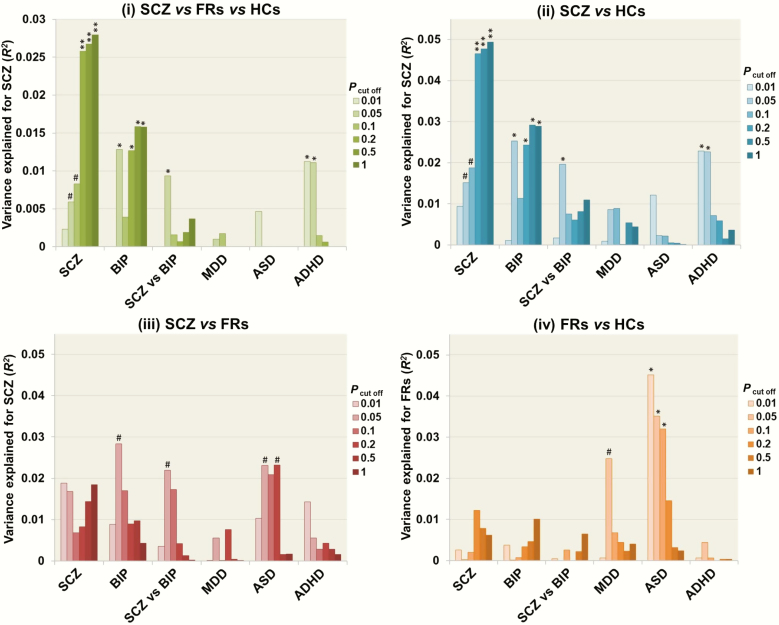
To calculate PRSs for 5 psychiatric disorders (SCZ, bipolar disorder [BIP], major depressive disorder, autism spectrum disorder, and attention-deficit/hyperactivity disorder) and PRSs differentiating SCZ from BIP, we utilized large-scale European genome-wide association study (GWAS) datasets as discovery samples. PRSs derived from these GWASs were calculated for 335 Japanese target participants [SCZ patients, FRs, and healthy controls (HCs)]. We took these PRSs based on GWASs of European psychiatric disorders and investigated their effect on risk in Japanese SCZ patients and unaffected first-degree relatives.
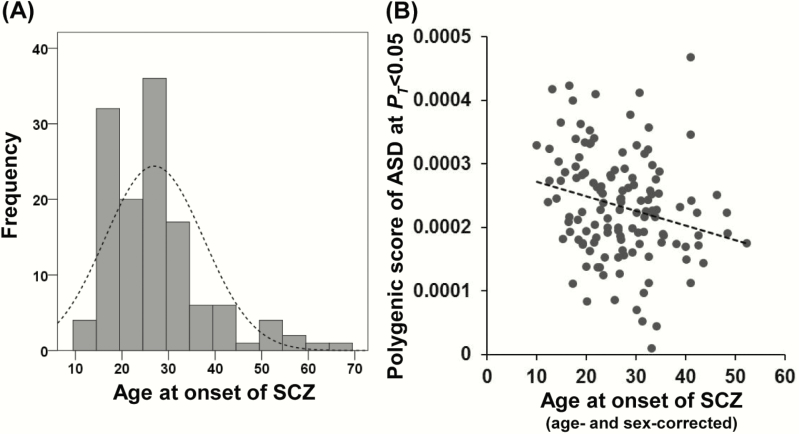
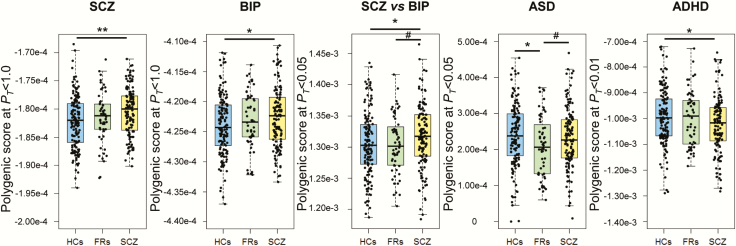
The PRSs obtained from European SCZ and BIP patients were higher in Japanese SCZ patients than in HCs. Furthermore, PRSs differentiating SCZ patients from European BIP patients were higher in Japanese SCZ patients than in HCs. Interestingly, PRSs related to European autism spectrum disorder were lower in Japanese first-degree relatives than in HCs or SCZ patients. The PRSs of autism spectrum disorder were positively correlated with a young onset age of SCZ.
These findings suggest that polygenic factors related to European SCZ and BIP and the polygenic components differentiating SCZ from BIP can transethnically contribute to SCZ risk in Japanese people. Furthermore, we suggest that reduced levels of an ASD-related genetic factor in unaffected first-degree relatives may help protect against SCZ development.
在欧洲血统样本中,精神分裂症(SCZ)的遗传病因与其他主要精神障碍的遗传病因存在重叠。本研究通过进行多基因风险评分(PRS)分析,调查了日本SCZ患者或其未受影响的一级亲属与欧洲主要精神障碍患者之间共有的跨种族多基因特征。
为了计算5种精神障碍(SCZ、双相情感障碍[BIP]、重度抑郁症、自闭症谱系障碍和注意力缺陷多动障碍)的PRS以及区分SCZ与BIP的PRS,我们利用大规模欧洲全基因组关联研究(GWAS)数据集作为发现样本。为335名日本目标参与者[SCZ患者、一级亲属和健康对照(HCs)]计算了源自这些GWAS的PRS。我们采用基于欧洲精神障碍GWAS的这些PRS,并研究它们对日本SCZ患者和未受影响的一级亲属风险的影响。
从欧洲SCZ和BIP患者获得的PRS在日本SCZ患者中高于HCs。此外,区分日本SCZ患者与欧洲BIP患者的PRS在日本SCZ患者中高于HCs。有趣的是,与欧洲自闭症谱系障碍相关的PRS在日本一级亲属中低于HCs或SCZ患者。自闭症谱系障碍的PRS与SCZ的早发年龄呈正相关。
这些发现表明,与欧洲SCZ和BIP相关的多基因因素以及区分SCZ与BIP的多基因成分可以跨种族地影响日本人患SCZ的风险。此外,我们认为未受影响的一级亲属中与自闭症谱系障碍相关的遗传因素水平降低可能有助于预防SCZ的发生。