Department of Pharmacy, The Islamia University of Bahawalpur, Bahawalpur 63100, Pakistan.
Drug Testing Laboratory, Bahawalpur 63100, Pakistan.
Int J Nanomedicine. 2019 Dec 20;14:10035-10046. doi: 10.2147/IJN.S232350. eCollection 2019.
Polymeric nanoparticles are potential carriers for the efficient delivery of hydrophilic and hydrophobic drugs due to their multifaceted applications. Docetaxel is relatively less hydrophobic and twice as potent as paclitaxel. Like other taxane chemotherapeutic agents, docetaxel is not well tolerated and shows toxicity in the patients. Nanoencapsulation of potent chemotherapeutic agents has been shown to improve tolerability and therapeutic outcome. Therefore, the present study was designed to fabricate chitosan and sodium tripolyphosphate (STPP) based on ionically cross-linked nanoparticles for sustained release of docetaxel.
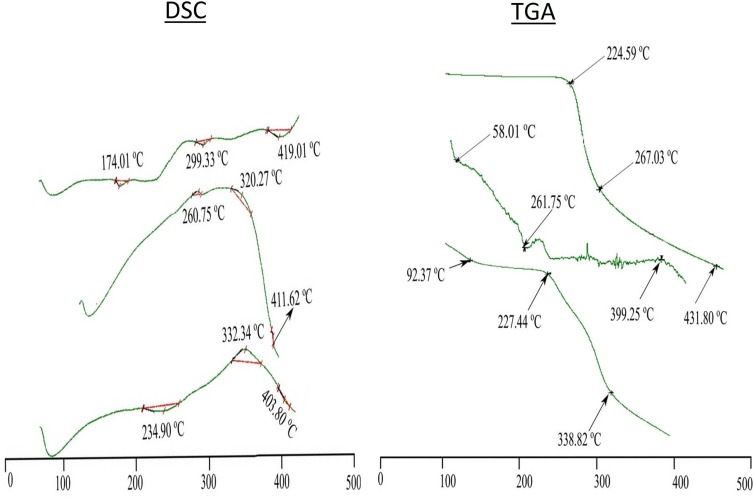
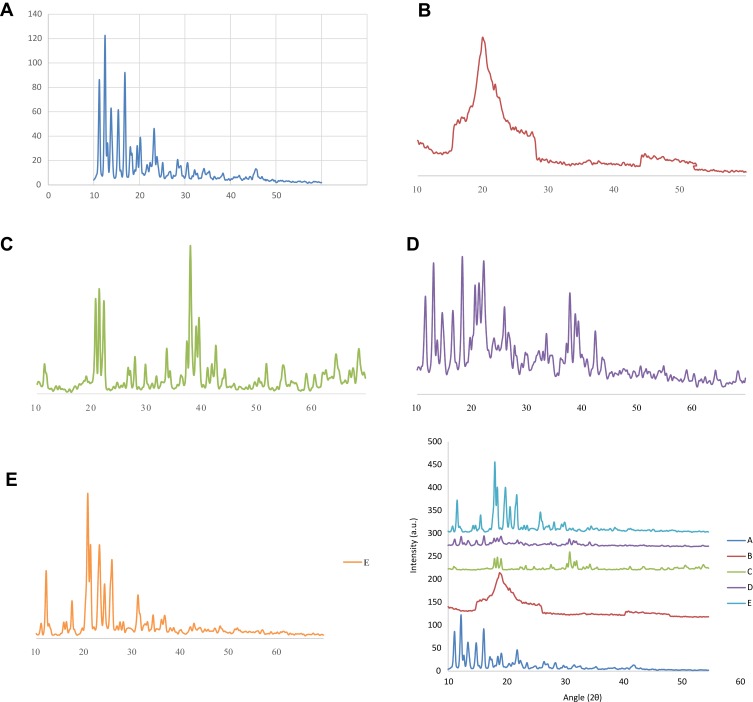
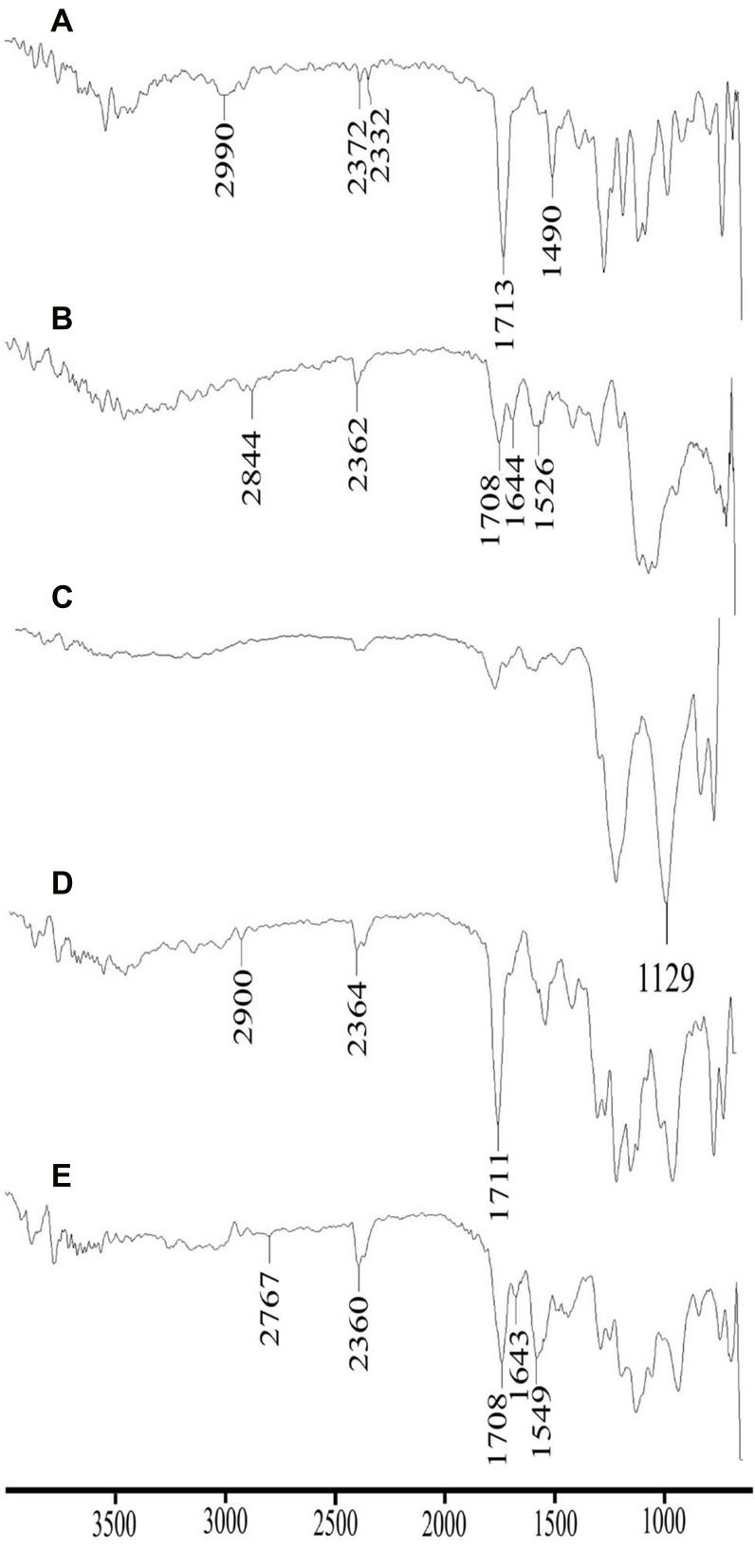
Nanoparticles were prepared by the ionic-gelation method by dropwise addition of the STPP solution into the chitosan solution in different ratios. CNPs were characterized for post-formulation parameters like size, zeta potential, scanning electron microscope (SEM), FTIR, DSC/TGA, pXRD, and in-vitro drug release, as well as for acute oral toxicity studies in Wistar rats.
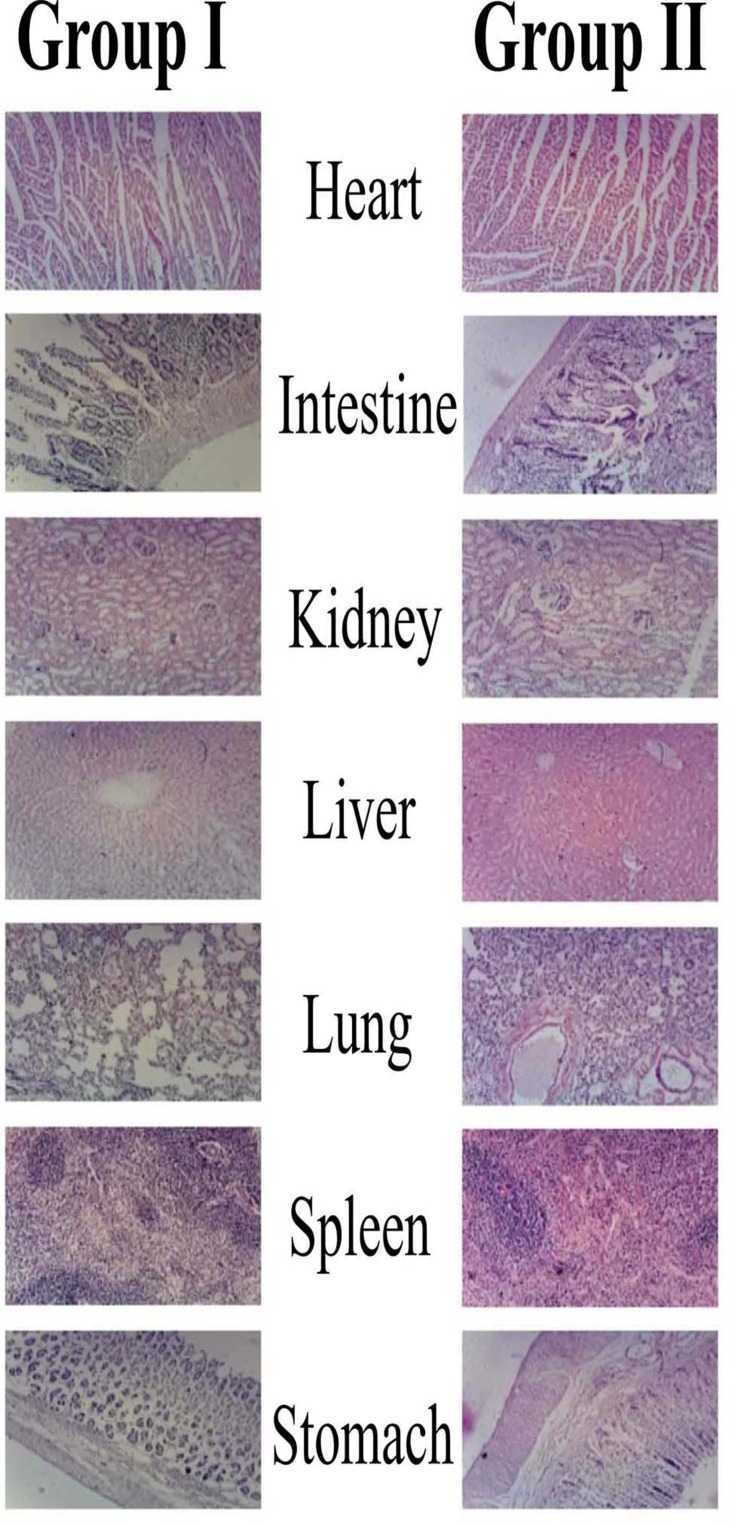
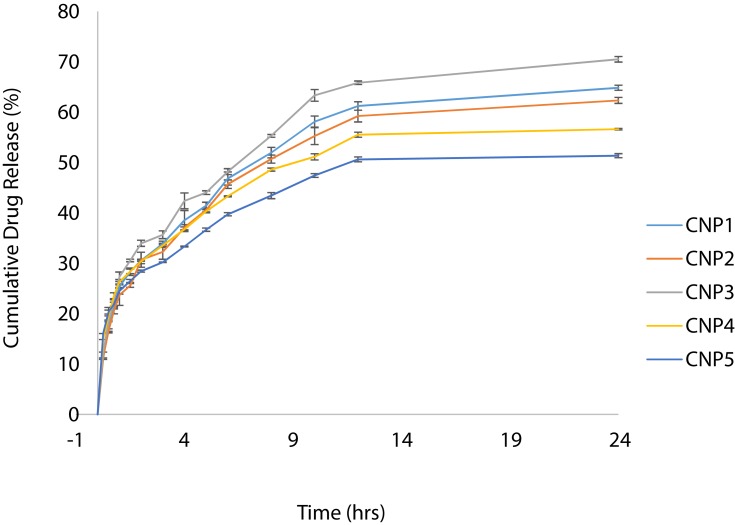
The optimized docetaxel loaded polymeric nanoparticles were in the size range (172.6nm-479.65 nm), and zeta potential (30.45-35.95 mV) required to achieve enhanced permeation and retention effect. In addition, scanning electron microscopy revealed rough and porous surface, whereas, FTIR revealed the compatible polymeric nanoparticles. Likewise, the thermal stability was ensured through DSC and TG analysis, and powder X-ray diffraction analysis exhibited solid-state stability of the docetaxel loaded nanoparticles. The in-vitro drug release evaluation in phosphate buffer saline (pH 7.4) showed sustained release pattern, i.e. 51.57-69.93% within 24 hrs. The data were fitted to different release kinetic models which showed Fickian diffusion as a predominant release mechanism ( = 0.9734-0.9786, n= 0.264-0.340). Acceptable tolerability was exhibited by acute oral toxicity in rabbits and no abnormality was noted in growth, behavior, blood biochemistry or histology and function of vital organs.
Ionically cross-linked chitosan nanoparticles are non-toxic and biocompatible drug delivery systems for sustained release of chemotherapeutic agents, such as docetaxel.
由于具有多方面的应用,聚合物纳米粒子是高效传递亲水性和疏水性药物的潜在载体。多烯紫杉醇的疏水性相对较低,但效力是紫杉醇的两倍。与其他紫杉烷类化疗药物一样,多烯紫杉醇的耐受性较差,会对患者产生毒性。封装强力化疗药物的纳米颗粒已被证明可提高耐受性和治疗效果。因此,本研究设计了壳聚糖和三聚磷酸钠(STPP)为基础的离子交联纳米粒子,用于多烯紫杉醇的持续释放。
通过将 STPP 溶液逐滴加入到壳聚糖溶液中,以不同的比例制备纳米粒子。对 CNPs 进行了制剂后参数的表征,如粒径、Zeta 电位、扫描电子显微镜(SEM)、傅里叶变换红外光谱(FTIR)、差示扫描量热法/热重分析(DSC/TGA)、粉末 X 射线衍射(pXRD)和体外药物释放以及 Wistar 大鼠的急性口服毒性研究。
优化后的多烯紫杉醇负载聚合物纳米粒子的粒径范围为(172.6nm-479.65nm),Zeta 电位为(30.45-35.95mV),以达到增强渗透和保留效果。此外,扫描电子显微镜显示粗糙多孔的表面,而傅里叶变换红外光谱显示了相容的聚合物纳米粒子。同样,通过 DSC 和 TG 分析确保了热稳定性,粉末 X 射线衍射分析表明负载多烯紫杉醇的纳米粒子具有固态稳定性。在磷酸盐缓冲盐水(pH7.4)中的体外药物释放评估显示出持续释放模式,即在 24 小时内释放 51.57-69.93%。数据拟合到不同的释放动力学模型,表明 Fickian 扩散是主要的释放机制(=0.9734-0.9786,n=0.264-0.340)。在兔子的急性口服毒性试验中表现出可接受的耐受性,在生长、行为、血液生化或组织学和重要器官的功能方面没有发现异常。
离子交联壳聚糖纳米粒子是一种无毒、生物相容的药物传递系统,可用于持续释放多烯紫杉醇等化疗药物。