Rao Xuefeng, Wan Lihui, Jie Zhigang, Zhu Xiaoliang, Yin Junxiang, Cao Hong
Department of General Surgery, Jiangxi Provincial People's Hospital Affiliated to Nanchang University, Nanchang 330006, People's Republic of China.
Department of Gastroenterology, Jiangxi Provincial People's Hospital Affiliated to Nanchang University, Nanchang 330006, People's Republic of China.
Onco Targets Ther. 2019 Dec 19;12:11241-11254. doi: 10.2147/OTT.S220621. eCollection 2019.
Abnormal miR-27a-3p expression has been frequently reported in several types of human cancer and contributes to tumor progression. However, the role and potential molecular mechanism of miR-27a-3p in the progression of pancreatic carcinoma have not been clarified.
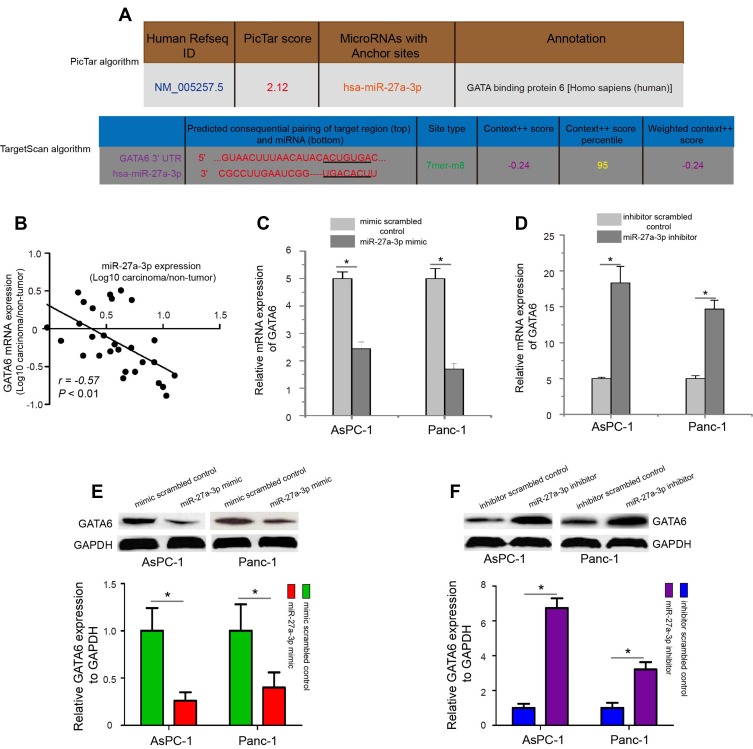
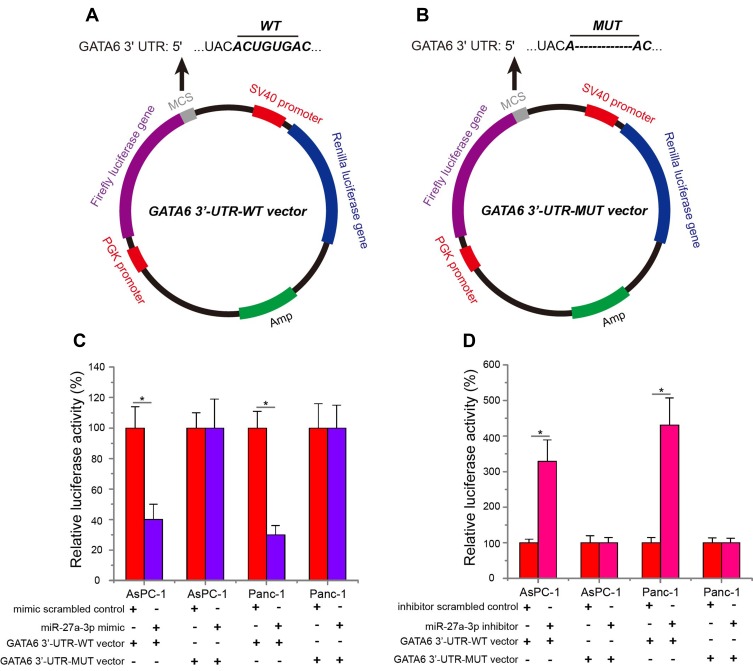
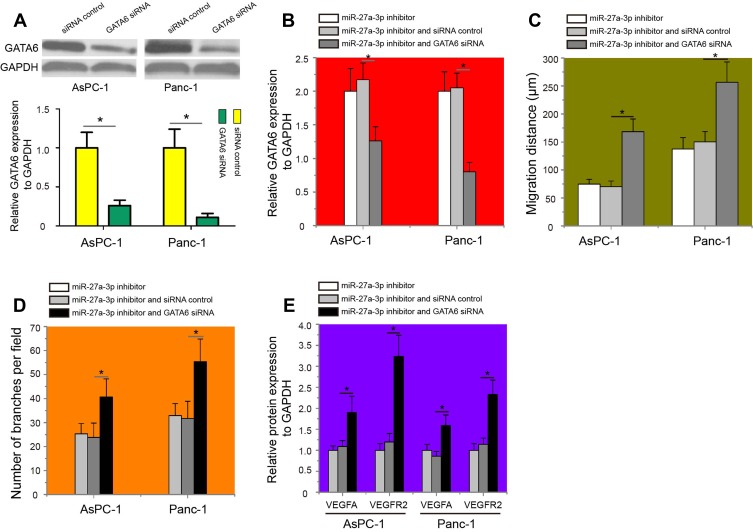
The expression of miR-27a-3p and GATA binding protein 6 (GATA6) in pancreatic carcinoma tissues and cell lines was evaluated by quantitative real-time PCR and Western blotting analysis. The relationship between clinical pathologic features and miR-27a-3p expression was analyzed with Chi-square test. The regulatory mechanism of miR-27a-3p on GATA6 was confirmed by luciferase reporter assay and bioinformatics analysis. The effects of miR-27a-3p by targeting GATA6 on cell angiogenesis and migration were assessed by capillary tube formation and wound healing assays.
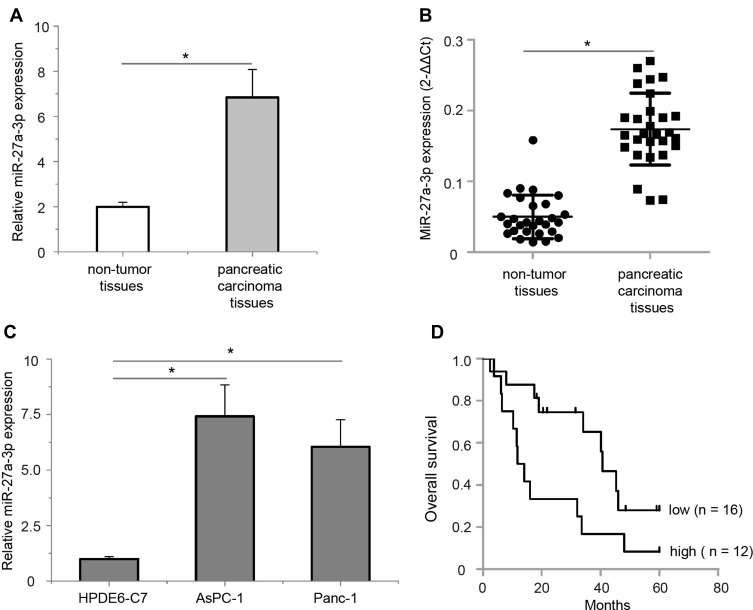
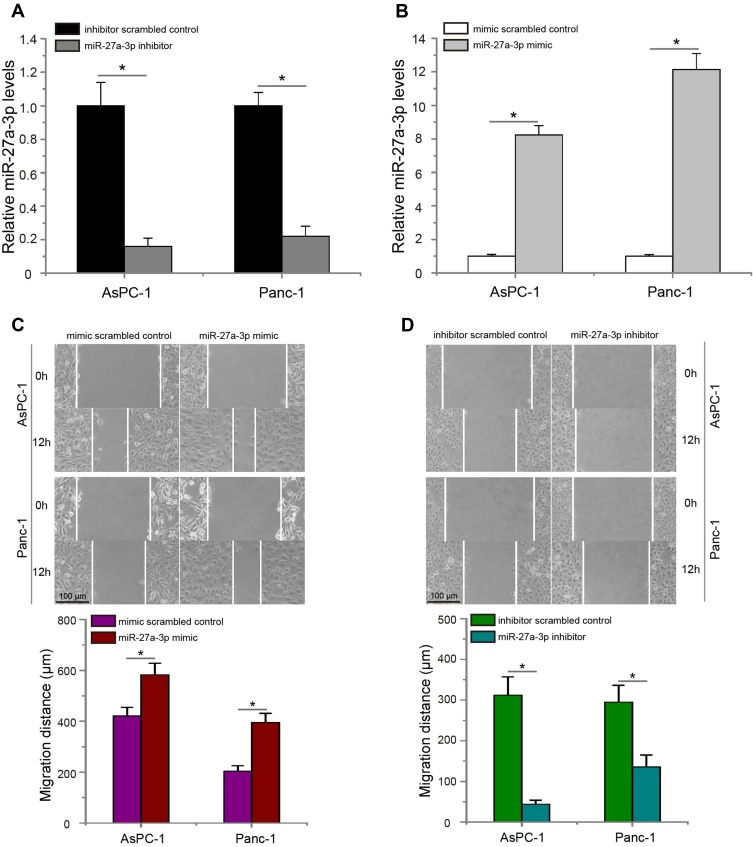
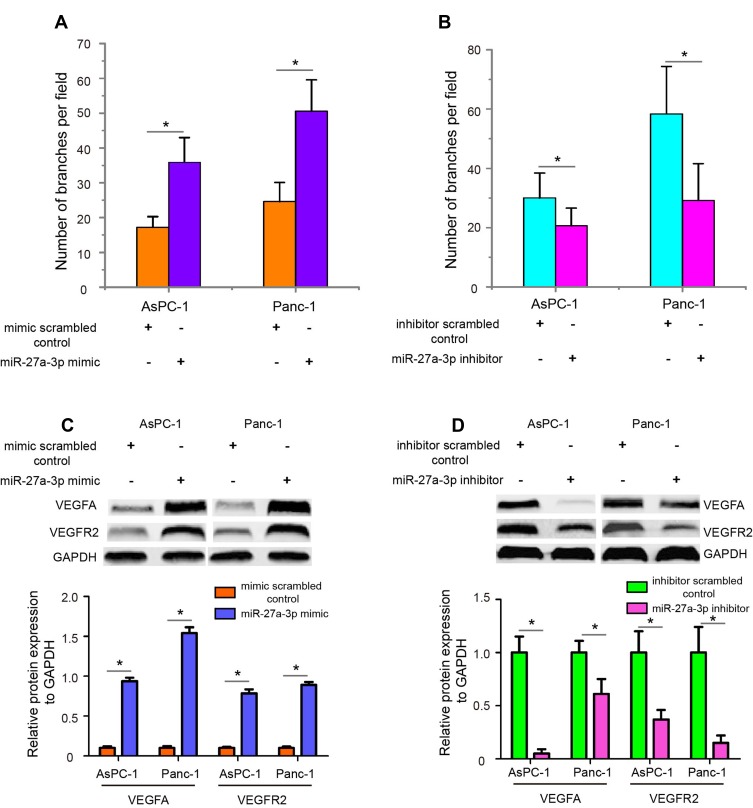
MiR-27a-3p expression was significantly upregulated in pancreatic carcinoma tissues and cell lines. Highly expressed miR-27a-3p was closely related to more lymph node metastasis, present peritoneal metastasis, and poor prognosis in patients with pancreatic carcinoma. MiR-27a-3p promoted migration and angiogenesis of pancreatic carcinoma cells by activating vascular endothelial growth factor A (VEGFA) and vascular endothelial growth factor receptor 2 (VEGFR2) expression. A significantly negative correlation between GATA6 mRNA and miR-27a-3 expression was found in pancreatic carcinoma samples. Modulation of miR-27a-3p could alter GATA6 expression in pancreatic carcinoma cells. GATA6 was identified as a functional target gene of miR-27a-3p, and GATA6 knockdown partially reversed the effects of miR-27a-3p siliencing on the migration and angiogenesis of pancreatic carcinoma cells by regulation of VEGFA/VEGFR2 pathway.
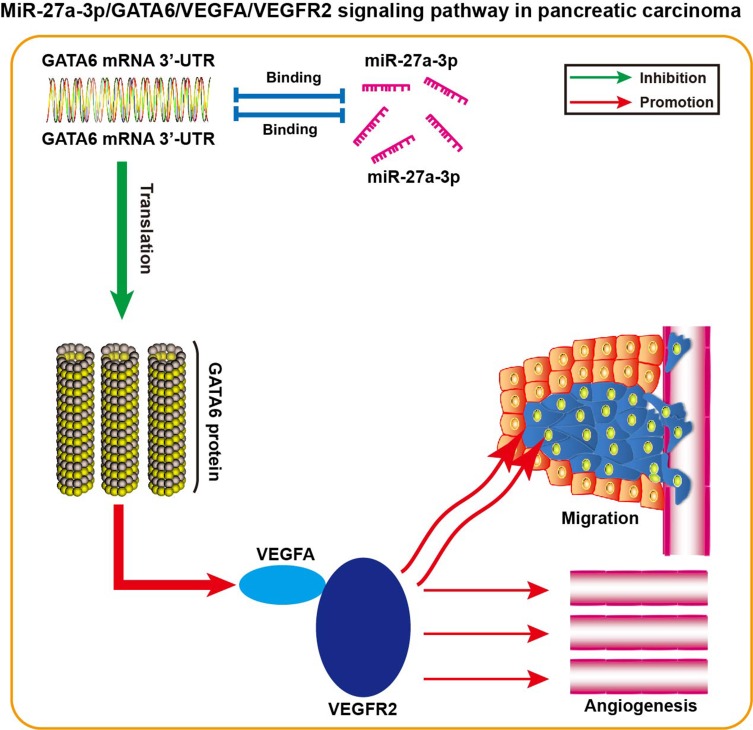
Upregulated miR-27a-3p indicates a poor prognosis in pancreatic carcinoma patients and promotes the angiogenesis and migration by epigenetic silencing of GATA6 and activating VEGFA/VEGFR2 signaling pathway, and indicating miR-27a-3p may be a promising therapeutic target for pancreatic carcinoma treatment.
异常的miR-27a-3p表达在多种人类癌症中经常被报道,并促进肿瘤进展。然而,miR-27a-3p在胰腺癌进展中的作用和潜在分子机制尚未阐明。
通过定量实时PCR和蛋白质免疫印迹分析评估胰腺癌组织和细胞系中miR-27a-3p和GATA结合蛋白6(GATA6)的表达。采用卡方检验分析临床病理特征与miR-27a-3p表达之间的关系。通过荧光素酶报告基因检测和生物信息学分析证实miR-27a-3p对GATA6的调控机制。通过毛细管形成实验和伤口愈合实验评估miR-27a-3p靶向GATA6对细胞血管生成和迁移的影响。
miR-27a-3p在胰腺癌组织和细胞系中表达显著上调。高表达的miR-27a-3p与胰腺癌患者更多的淋巴结转移、存在腹膜转移及不良预后密切相关。miR-27a-3p通过激活血管内皮生长因子A(VEGFA)和血管内皮生长因子受体2(VEGFR2)的表达促进胰腺癌细胞的迁移和血管生成。在胰腺癌样本中发现GATA6 mRNA与miR-27a-3表达之间存在显著负相关。miR-27a-3p的调节可改变胰腺癌细胞中GATA6的表达。GATA6被确定为miR-27a-3p的功能靶基因,敲低GATA6可通过调节VEGFA/VEGFR2途径部分逆转miR-27a-3p沉默对胰腺癌细胞迁移和血管生成的影响。
miR-27a-3p上调表明胰腺癌患者预后不良,其通过对GATA6进行表观遗传沉默并激活VEGFA/VEGFR2信号通路促进血管生成和迁移,提示miR-27a-3p可能是胰腺癌治疗的一个有前景的治疗靶点。