Aberdeen Fungal Group, Institute of Medical Sciences, University of Aberdeen, Aberdeen, UK.
NHS Grampian Central Decontamination Unit, Foresterhill Health Campus, Aberdeen, UK.
Med Mycol. 2020 Aug 1;58(6):744-755. doi: 10.1093/mmy/myz127.
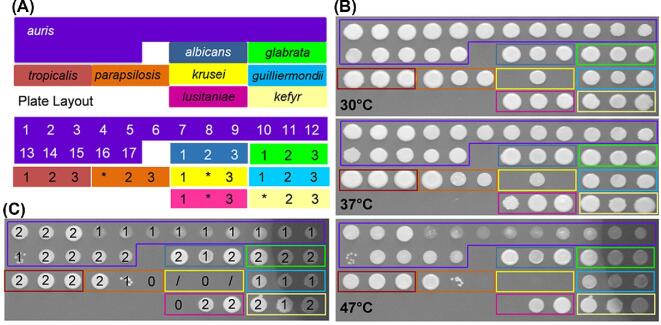
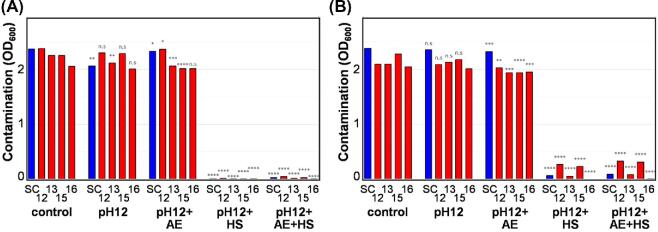
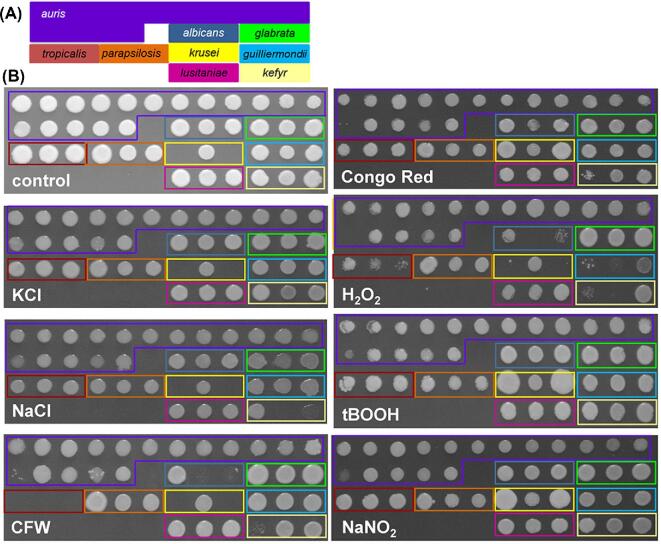
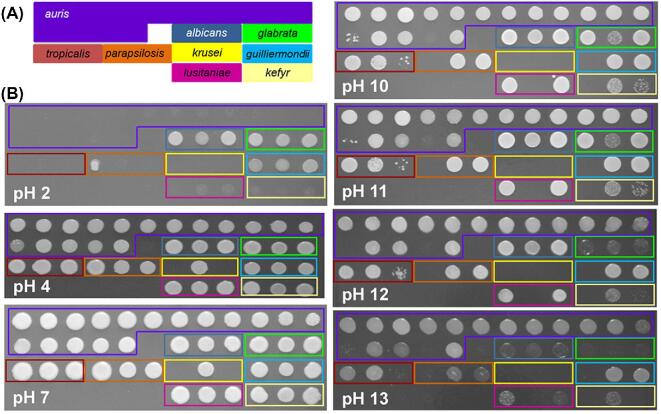
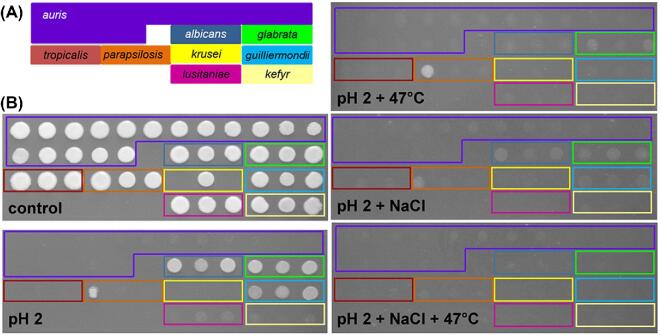
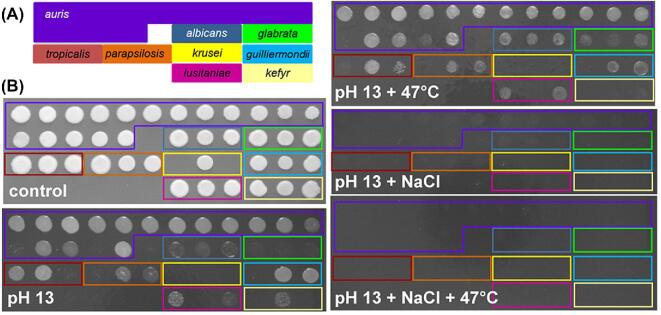
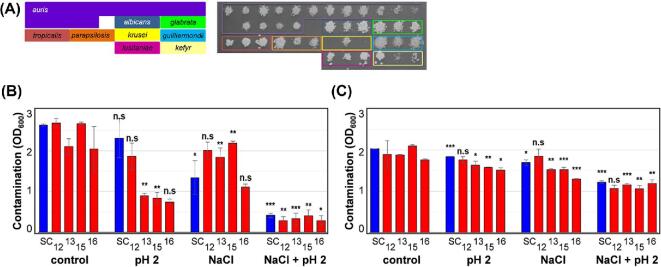
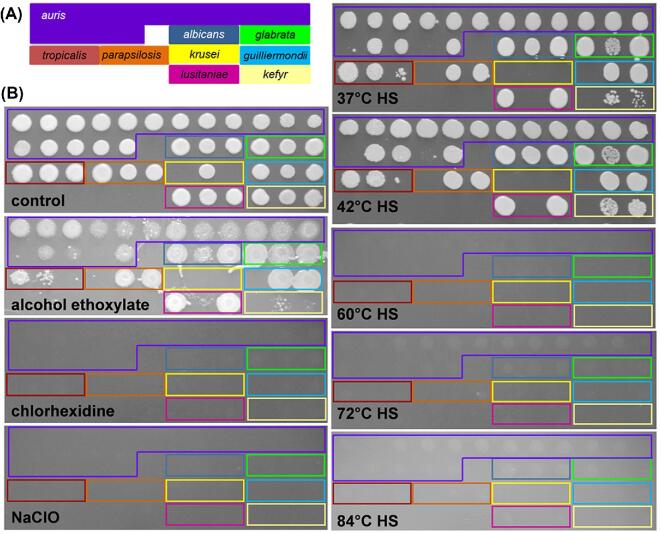
Candida auris is an emerging pathogenic yeast of significant clinical concern because of its frequent intrinsic resistance to fluconazole and often other antifungal drugs and the high mortality rates associated with systemic infections. Furthermore, C. auris has a propensity for persistence and transmission in health care environments. The reasons for this efficient transmission are not well understood, and therefore we tested whether enhanced resistance to environmental stresses might contribute to the ability of C. auris to spread in health care environments. We compared C. auris to other pathogenic Candida species with respect to their resistance to individual stresses and combinations of stresses. Stress resistance was examined using in vitro assays on laboratory media and also on hospital linen. In general, the 17 C. auris isolates examined displayed similar degrees of resistance to oxidative, nitrosative, cationic and cell wall stresses as clinical isolates of C. albicans, C. glabrata, C. tropicalis, C. parapsilosis, C. krusei, C. guilliermondii, C. lusitaniae and C. kefyr. All of the C. auris isolates examined were more sensitive to low pH (pH 2, but not pH 4) compared to C. albicans, but were more resistant to high pH (pH 13). C. auris was also sensitive to low pH, when tested on contaminated hospital linen. Most C. auris isolates were relatively thermotolerant, displaying significant growth at 47°C. Furthermore, C. auris was relatively resistant to certain combinations of combinatorial stress (e.g., pH 13 plus 47°C). Significantly, C. auris was sensitive to the stress combinations imposed by hospital laundering protocol (pH > 12 plus heat shock at >80°C), suggesting that current laundering procedures are sufficient to limit the transmission of this fungal pathogen via hospital linen.
耳念珠菌是一种具有重要临床意义的新兴致病性酵母菌,因为其对氟康唑和其他抗真菌药物经常具有内在耐药性,以及与全身感染相关的高死亡率。此外,耳念珠菌在医疗保健环境中具有持续存在和传播的倾向。这种高效传播的原因尚不清楚,因此我们测试了增强对环境压力的抵抗力是否有助于耳念珠菌在医疗保健环境中传播。我们比较了耳念珠菌与其他致病性念珠菌属物种对个体压力和压力组合的抗性。使用实验室培养基和医院亚麻布上的体外测定法检查了应激抗性。一般来说,检查的 17 株耳念珠菌分离株对氧化、亚硝化、阳离子和细胞壁应激的抗性与临床分离株的白念珠菌、光滑念珠菌、热带念珠菌、近平滑念珠菌、克柔念珠菌、季也蒙念珠菌、葡萄牙念珠菌和乳酒念珠菌相似。与白念珠菌相比,所有检查的耳念珠菌分离株对低 pH(pH 2,但不是 pH 4)更敏感,但对高 pH(pH 13)更耐药。当在污染的医院亚麻布上测试时,耳念珠菌也对低 pH 敏感。大多数耳念珠菌分离株相对耐热,在 47°C 下显示出明显的生长。此外,耳念珠菌对某些组合的组合应激(例如,pH 13 加 47°C)具有相对抗性。重要的是,耳念珠菌对医院洗涤协议(pH>12 加>80°C 的热冲击)施加的应激组合敏感,这表明当前的洗涤程序足以限制这种真菌病原体通过医院亚麻布传播。