Peles Ferenc, Sipos Péter, Győri Zoltán, Pfliegler Walter P, Giacometti Federica, Serraino Andrea, Pagliuca Giampiero, Gazzotti Teresa, Pócsi István
Institute of Food Science, Faculty of Agricultural and Food Sciences and Environmental Management, University of Debrecen, Debrecen, Hungary.
Institute of Nutrition, University of Debrecen, Debrecen, Hungary.
Front Microbiol. 2019 Dec 11;10:2861. doi: 10.3389/fmicb.2019.02861. eCollection 2019.
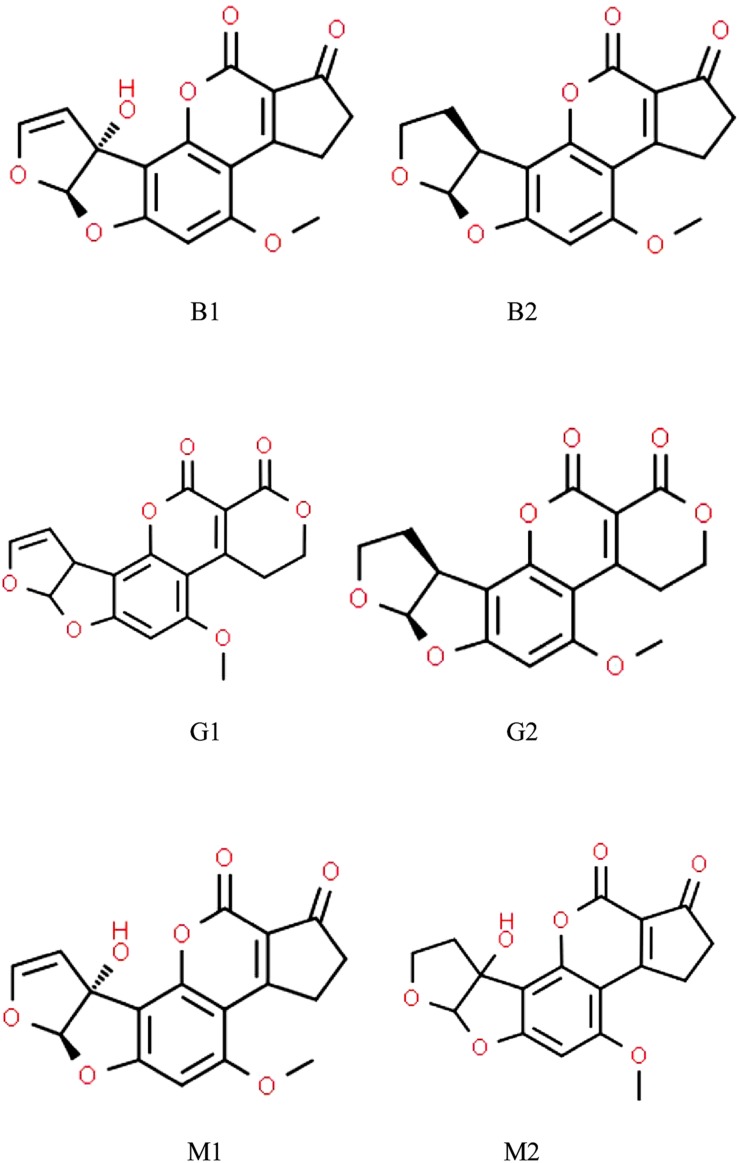
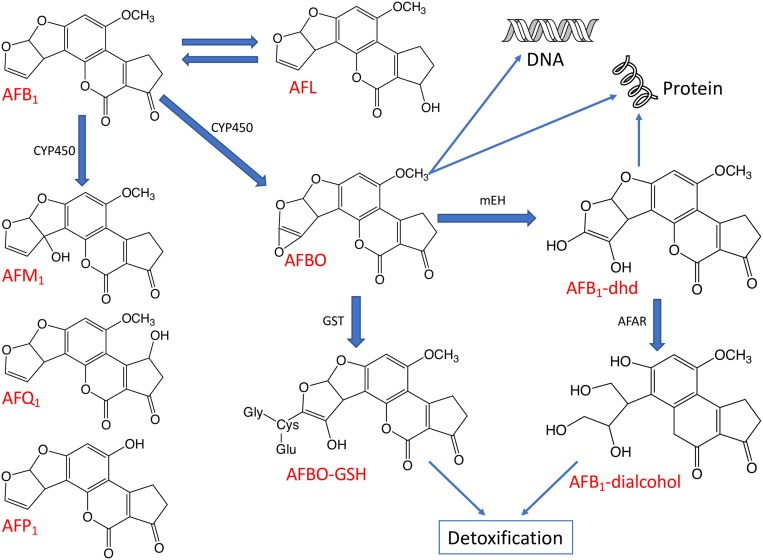
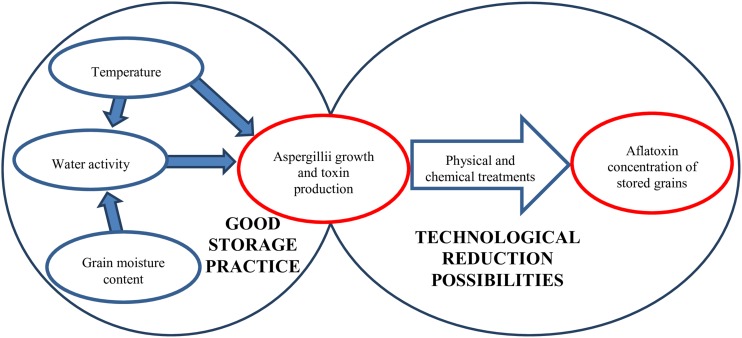
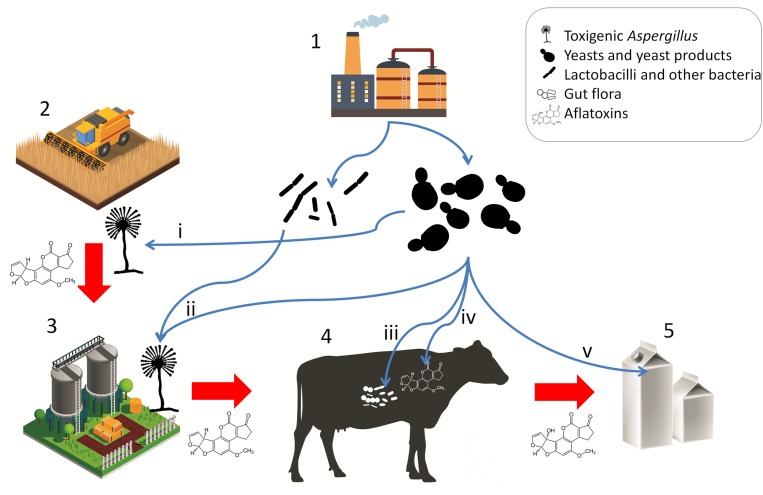
Aflatoxins are wide-spread harmful carcinogenic secondary metabolites produced by species, which cause serious feed and food contaminations and affect farm animals deleteriously with acute or chronic manifestations of mycotoxicoses. On farm, both pre-harvest and post-harvest strategies are applied to minimize the risk of aflatoxin contaminations in feeds. The great economic losses attributable to mycotoxin contaminations have initiated a plethora of research projects to develop new, effective technologies to prevent the highly toxic effects of these secondary metabolites on domestic animals and also to block the carry-over of these mycotoxins to humans through the food chain. Among other areas, this review summarizes the latest findings on the effects of silage production technologies and silage microbiota on aflatoxins, and it also discusses the current applications of probiotic organisms and microbial products in feeding technologies. After ingesting contaminated foodstuffs, aflatoxins are metabolized and biotransformed differently in various animals depending on their inherent and acquired physiological properties. These mycotoxins may cause primary aflatoxicoses with versatile, species-specific adverse effects, which are also dependent on the susceptibility of individual animals within a species, and will be a function of the dose and duration of aflatoxin exposures. The transfer of these undesired compounds from contaminated feed into food of animal origin and the aflatoxin residues present in foods become an additional risk to human health, leading to secondary aflatoxicoses. Considering the biological transformation of aflatoxins in livestock, this review summarizes (i) the metabolism of aflatoxins in different animal species, (ii) the deleterious effects of the mycotoxins and their derivatives on the animals, and (iii) the major risks to animal health in terms of the symptoms and consequences of acute or chronic aflatoxicoses, animal welfare and productivity. Furthermore, we traced the transformation and channeling of Aspergillus-derived mycotoxins into food raw materials, particularly in the case of aflatoxin contaminated milk, which represents the major route of human exposure among animal-derived foods. The early and reliable detection of aflatoxins in feed, forage and primary commodities is an increasingly important issue and, therefore, the newly developed, easy-to-use qualitative and quantitative aflatoxin analytical methods are also summarized in the review.
黄曲霉毒素是由某些物种产生的广泛存在的有害致癌次生代谢产物,会导致严重的饲料和食品污染,并对农场动物产生有害影响,引发急性或慢性霉菌毒素中毒症状。在农场中,收获前和收获后都采取了相应策略,以尽量降低饲料中黄曲霉毒素污染的风险。霉菌毒素污染造成的巨大经济损失引发了大量研究项目,旨在开发新的有效技术,以防止这些次生代谢产物对家畜产生高毒性影响,并阻断这些霉菌毒素通过食物链传递给人类。在其他领域中,本综述总结了青贮生产技术和青贮微生物群对黄曲霉毒素影响的最新研究结果,还讨论了益生菌和微生物产品在饲养技术中的当前应用。摄入受污染的食物后,黄曲霉毒素在不同动物体内会根据其固有和后天的生理特性进行不同的代谢和生物转化。这些霉菌毒素可能会引发原发性黄曲霉毒素中毒,产生多种具有物种特异性的不良反应,这也取决于同一物种内个体动物的易感性,并且是黄曲霉毒素暴露剂量和持续时间的函数。这些不良化合物从受污染饲料转移到动物源性食品中,以及食品中存在的黄曲霉毒素残留,对人类健康构成了额外风险,导致继发性黄曲霉毒素中毒。考虑到黄曲霉毒素在牲畜体内的生物转化,本综述总结了:(i)黄曲霉毒素在不同动物物种中的代谢;(ii)霉菌毒素及其衍生物对动物的有害影响;(iii)急性或慢性黄曲霉毒素中毒的症状和后果、动物福利和生产力方面对动物健康的主要风险。此外,我们追踪了曲霉属霉菌毒素向食品原料中的转化和传递,特别是在黄曲霉毒素污染牛奶的情况下,牛奶是动物源性食品中人类接触的主要途径。饲料、草料和初级商品中黄曲霉毒素的早期可靠检测是一个日益重要的问题,因此,本综述还总结了新开发的、易于使用的黄曲霉毒素定性和定量分析方法。