Deniskova Tatiana, Dotsev Arsen, Lushihina Eugenia, Shakhin Alexey, Kunz Elisabeth, Medugorac Ivica, Reyer Henry, Wimmers Klaus, Khayatzadeh Negar, Sölkner Johann, Sermyagin Alexander, Zhunushev Asankadyr, Brem Gottfried, Zinovieva Natalia
L.K. Ernst Federal Science Center for Animal Husbandry, Podolsk, Russia.
Institute of Biotechnology, National Academy of Science of Kyrgyz Republic, Bishkek, Kyrgyzstan.
Front Genet. 2019 Dec 12;10:1311. doi: 10.3389/fgene.2019.01311. eCollection 2019.
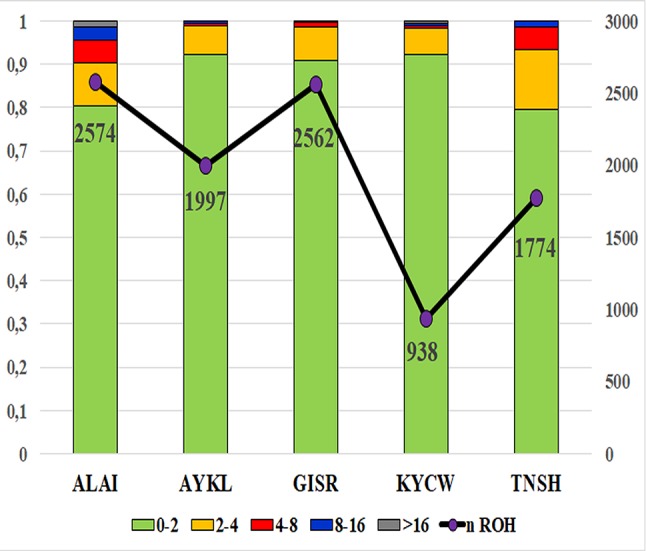
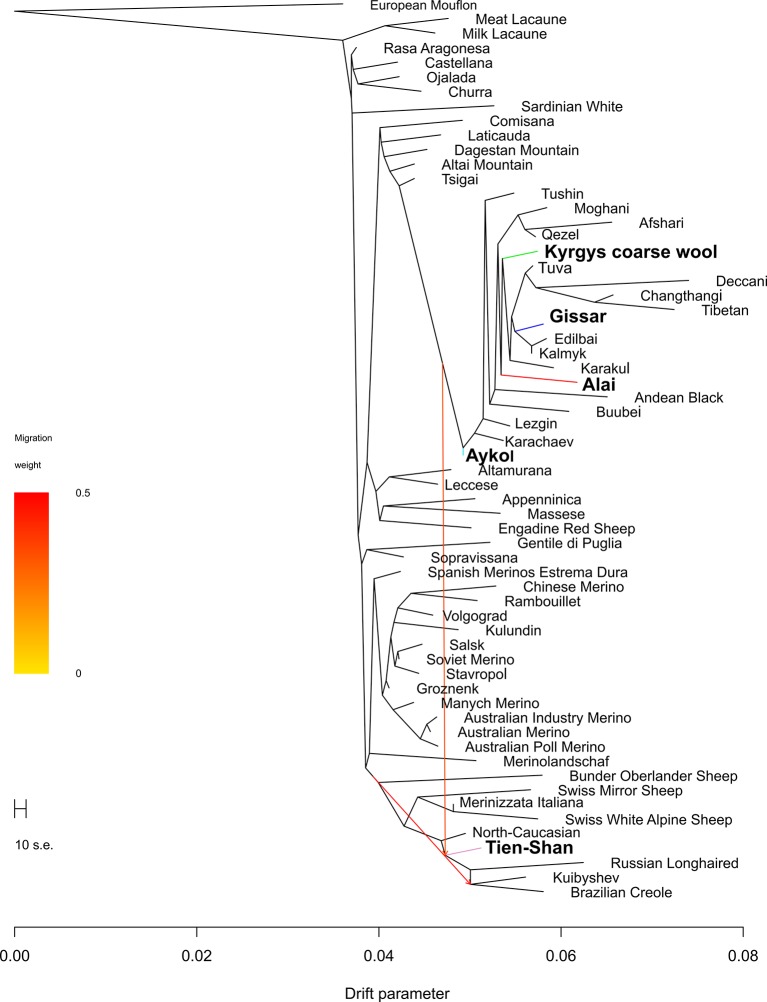
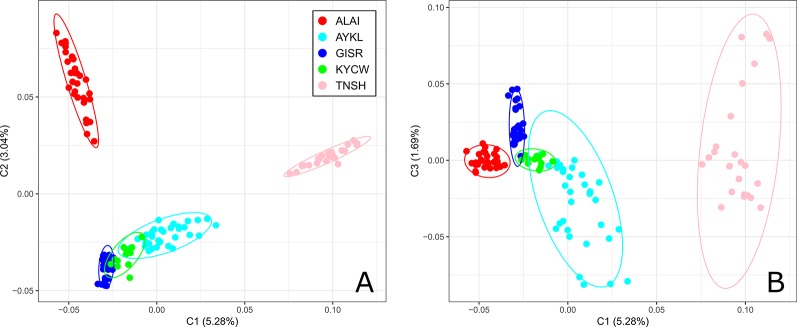
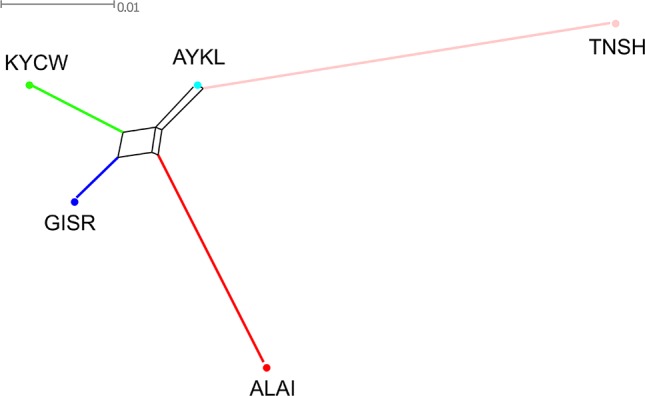
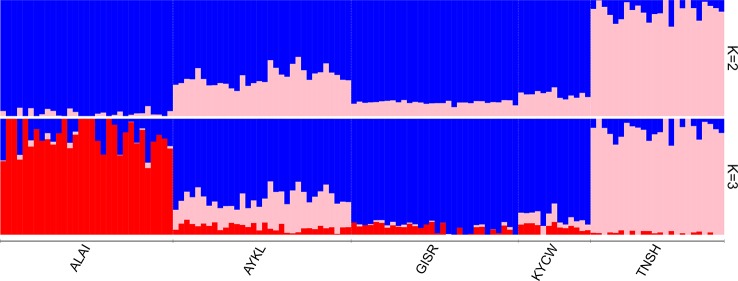
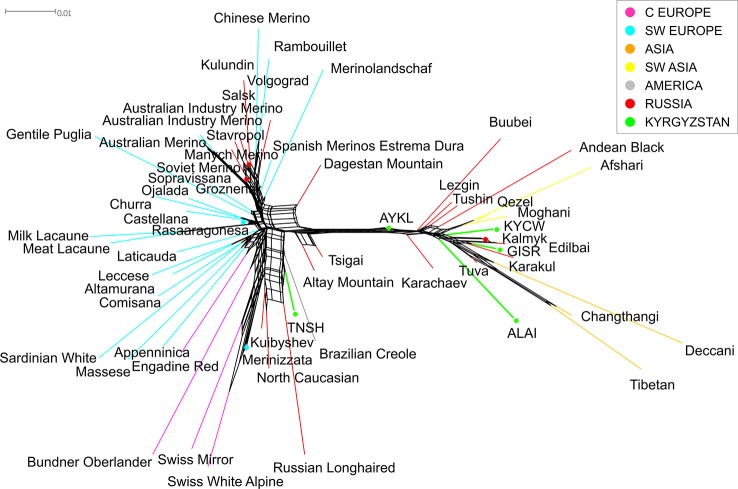
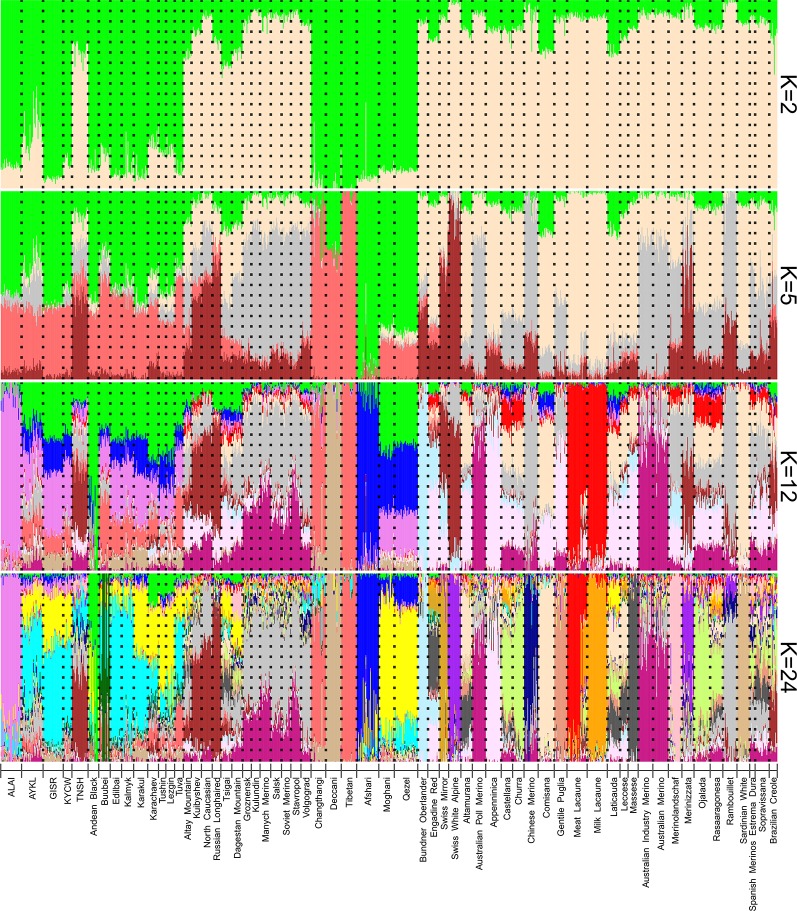
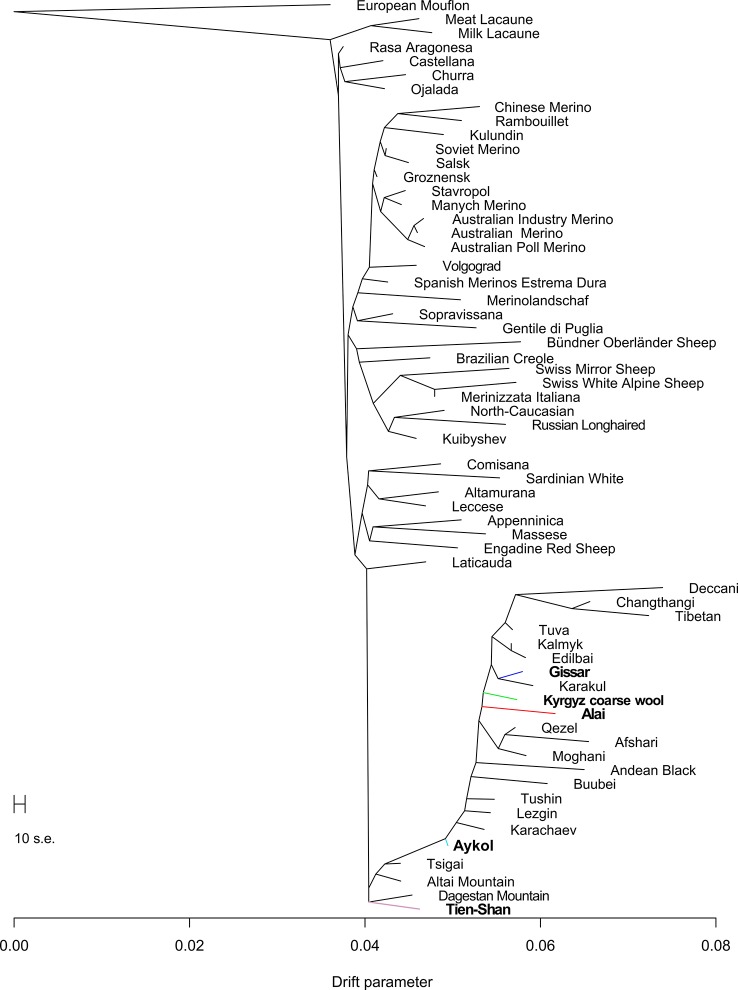
Sheep are a main livestock species of Kyrgyzstan, a Central Asian country with predominating mountain terrain. The current gene pool of local sheep resources has been forming under diverse climate conditions from the era of the trading caravans of the Great Silk Road, through the Soviet period of large-scale livestock improvements, which was followed by the deep crisis at the end of the 20th century, up to now. However, not much is known about the genetic background and variability of the local sheep populations. Therefore, our aims were to provide a characterization of the population structure and genetic relations within the Kyrgyz sheep breeds and to study their genetic connections with the global sheep breeds using SNP analysis. Samples of the Alai (n = 31), Gissar (n = 30), Kyrgyz coarse wool (n = 13), Aykol (n = 31), and Tien-Shan (n = 24) breeds were genotyped with the OvineSNP50 BeadChip or the Ovine Infinium HD BeadChip (Illumina Inc., USA). The measure of inbreeding based on runs of homozygosity showed a minimum value in the Aykol breed (F = 0.034), while the maximum was found in the Alai breed (F = 0.071). Short ROH segments (ROH ≤ 4 Mb) were predominant in all breeds. Long ROH segments (ROH > 16 Mb) were absent in the Gissar breed. The Gissar and Aykol breeds had the highest values of the effective population sizes estimated for five generations ago ( = 660 and 563), whereas the Alai and Kyrgyz coarse wool displayed lower values ( = 176 and 128, respectively). The synthetic origin of the Aykol breed was clearly evidenced by all analyses applied. Based on the network and admixture analyses of the Kyrgyz and global sheep breeds, the Tien-Shan and the Russian semi-fine wool breeds demonstrated a common ancestry that most likely is due to a contribution of the Lincoln breed. The Gissar, Aykol, and Kyrgyz coarse wool breeds showed a genetic background predominating in sheep populations from Iran and China whereas the Alai demonstrated the different ancestry type. The revealed admixture patterns probably resulted from the exchange and trade during the era of the Great Silk Road, which partly overlapped with historical and archeological findings.
绵羊是吉尔吉斯斯坦的主要牲畜品种,该国是一个以山地地形为主的中亚国家。当地绵羊资源的当前基因库自丝绸之路贸易商队时代起,历经苏联时期大规模的牲畜改良,再到20世纪末的深度危机,直至如今,一直在不同的气候条件下形成。然而,对于当地绵羊种群的遗传背景和变异性了解并不多。因此,我们的目标是通过单核苷酸多态性(SNP)分析来描述吉尔吉斯绵羊品种的种群结构和遗传关系,并研究它们与全球绵羊品种的遗传联系。使用OvineSNP50 BeadChip或Ovine Infinium HD BeadChip(美国Illumina公司)对阿赖(n = 31)、吉萨尔(n = 30)、吉尔吉斯粗毛羊(n = 13)、艾科勒(n = 31)和天山(n = 24)品种的样本进行基因分型。基于纯合子片段的近亲繁殖系数在艾科勒品种中显示出最小值(F = 0.034),而在阿赖品种中发现最大值(F = 0.071)。所有品种中短纯合子片段(ROH≤4 Mb)占主导。吉萨尔品种中不存在长纯合子片段(ROH>16 Mb)。吉萨尔和艾科勒品种在估计五代前的有效种群大小方面具有最高值(分别为660和563),而阿赖和吉尔吉斯粗毛羊的值较低(分别为176和128)。所有应用的分析都清楚地证明了艾科勒品种的合成起源。基于吉尔吉斯和全球绵羊品种的网络分析和混合分析,天山品种和俄罗斯半细毛羊品种显示出共同的祖先,这很可能是由于林肯品种的贡献。吉萨尔、艾科勒和吉尔吉斯粗毛羊品种显示出以来自伊朗和中国的绵羊种群为主的遗传背景,而阿赖则表现出不同的祖先类型。所揭示的混合模式可能源于丝绸之路时代的交流和贸易,这与历史和考古发现部分重叠。