Hameed Amber
Division of Life Sciences, University of Northampton, Northampton NN1 5PH, UK.
Immune Netw. 2019 Dec 2;19(6):e38. doi: 10.4110/in.2019.19.e38. eCollection 2019 Dec.
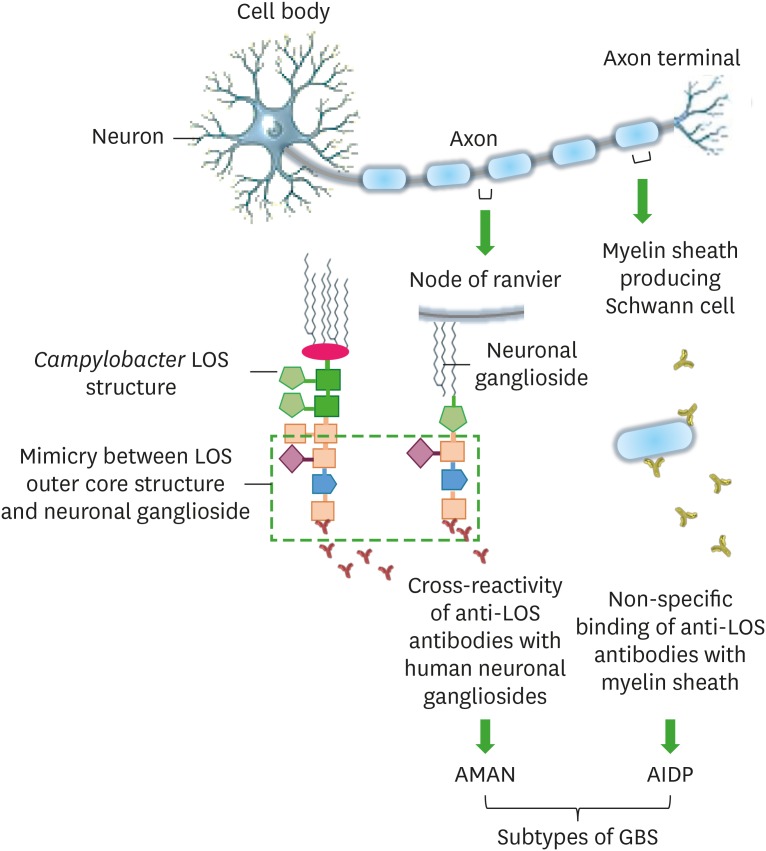
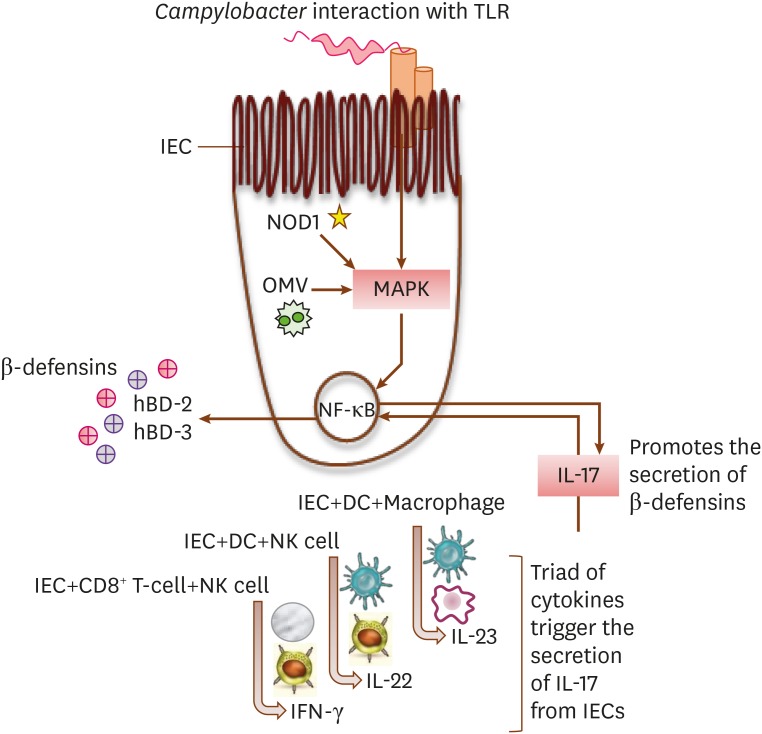
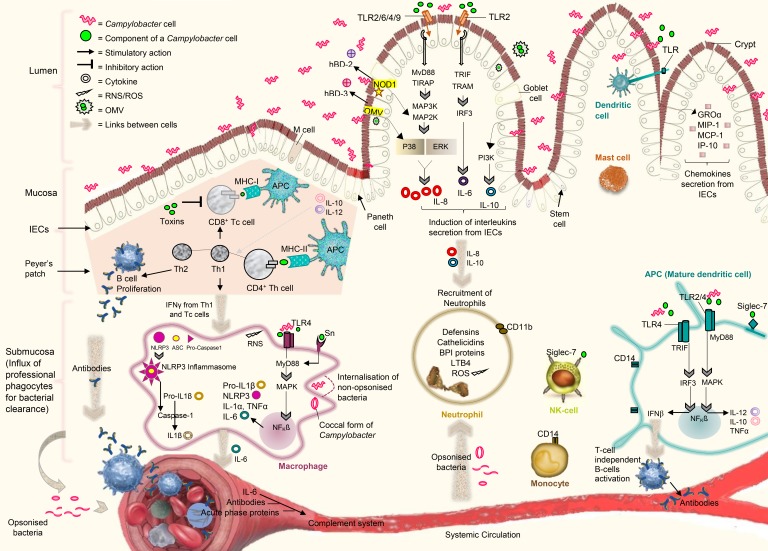
is a worldwide foodborne pathogen, associated with human gastroenteritis. The efficient translocation of and its ability to secrete toxins into host cells are the 2 key features of pathophysiology which trigger inflammation in intestinal cells and contribute to the development of gastrointestinal symptoms, particularly diarrhoea, in humans. The purpose of conducting this literature review is to summarise the current understanding of: i) the human immune responses involved in the elimination of infection and ii) the resistance potential in against these immune responses. This review has highlighted that the intestinal epithelial cells are the preliminary cells which sense cells by means of their cell-surface and cytosolic receptors, activate various receptors-dependent signalling pathways, and recruit the innate immune cells to the site of inflammation. The innate immune system, adaptive immune system, and networking between these systems play a crucial role in bacterial clearance. Different cellular constituents of , mainly cell membrane lipooligosaccharides, capsule, and toxins, provide protection to against the human immune system mediated killing. This review has also identified gaps in knowledge, which are related to the activation of following during infection: i) cathelicidins, bactericidal permeability-increasing proteins, chemokines, and inflammasomes in intestinal epithelial cells; ii) siglec-7 receptors in dendritic cell; iii) acute phase proteins in serum; and iv) T-cell subsets in lymphoid nodules. This review evaluates the existing literature to improve the understanding of human immunity against infection and identify some of the knowledge gaps for future research.
是一种全球性的食源性病原体,与人类肠胃炎有关。它的有效易位及其向宿主细胞分泌毒素的能力是其病理生理学的两个关键特征,这会引发肠道细胞炎症,并导致人类出现胃肠道症状,尤其是腹泻。进行这项文献综述的目的是总结当前对以下方面的理解:i)参与消除感染的人类免疫反应,以及ii)对这些免疫反应的抵抗潜力。该综述强调,肠道上皮细胞是通过其细胞表面和胞质受体感知细胞的初始细胞,激活各种受体依赖性信号通路,并将先天免疫细胞募集到炎症部位。先天免疫系统、适应性免疫系统以及这些系统之间的网络在细菌清除中起着至关重要的作用。的不同细胞成分,主要是细胞膜脂寡糖、荚膜和毒素,为提供保护,使其免受人类免疫系统介导的杀伤。该综述还确定了知识空白,这些空白与感染期间以下方面的激活有关:i)肠道上皮细胞中的cathelicidins、杀菌通透性增加蛋白、趋化因子和炎性小体;ii)树突状细胞中的siglec-7受体;iii)血清中的急性期蛋白;以及iv)淋巴小结中的T细胞亚群。本综述评估现有文献,以增进对人类针对感染的免疫力的理解,并确定一些未来研究的知识空白。