Martinez Cristina A, Cambra Josep M, Parrilla Inmaculada, Roca Jordi, Ferreira-Dias Graça, Pallares Francisco J, Lucas Xiomara, Vazquez Juan M, Martinez Emilio A, Gil Maria A, Rodriguez-Martinez Heriberto, Cuello Cristina, Álvarez-Rodriguez Manuel
Faculty of Veterinary Medicine, International Excellence Campus for Higher Education and Research "Campus Mare Nostrum", University of Murcia, Murcia, Spain.
Institute for Biomedical Research of Murcia (IMIB-Arrixaca), Campus de Ciencias de la Salud, Murcia, Spain.
Front Vet Sci. 2019 Dec 18;6:465. doi: 10.3389/fvets.2019.00465. eCollection 2019.
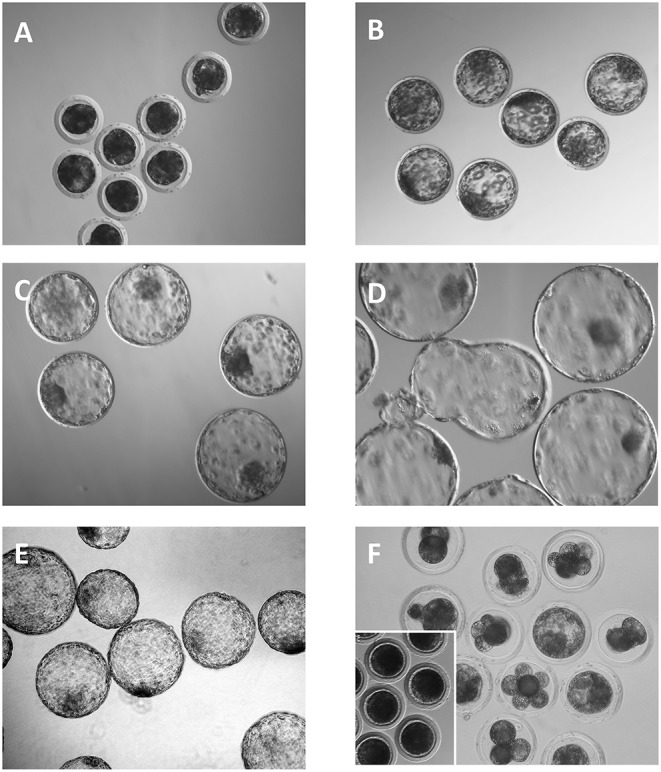
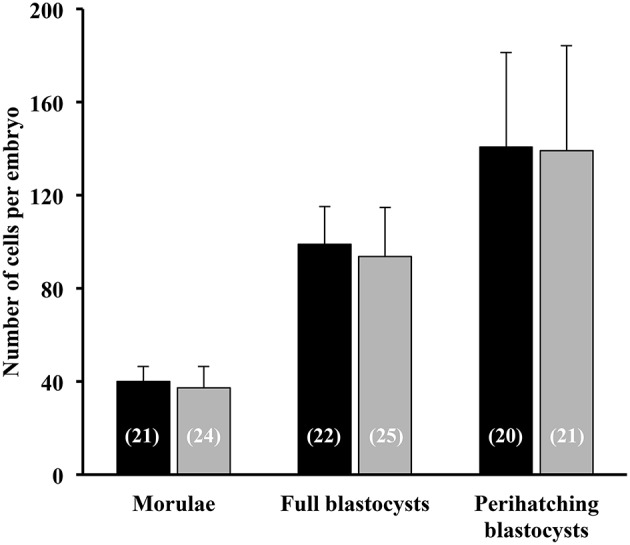
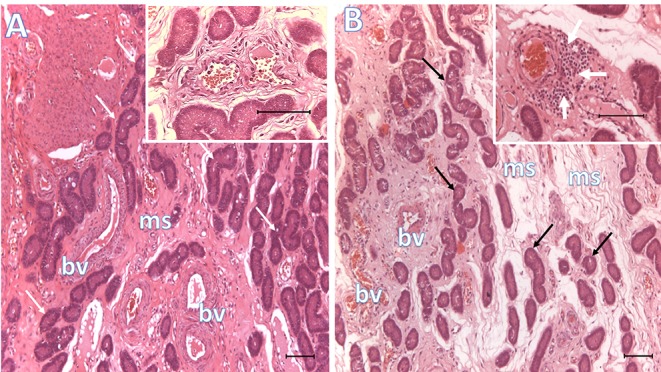
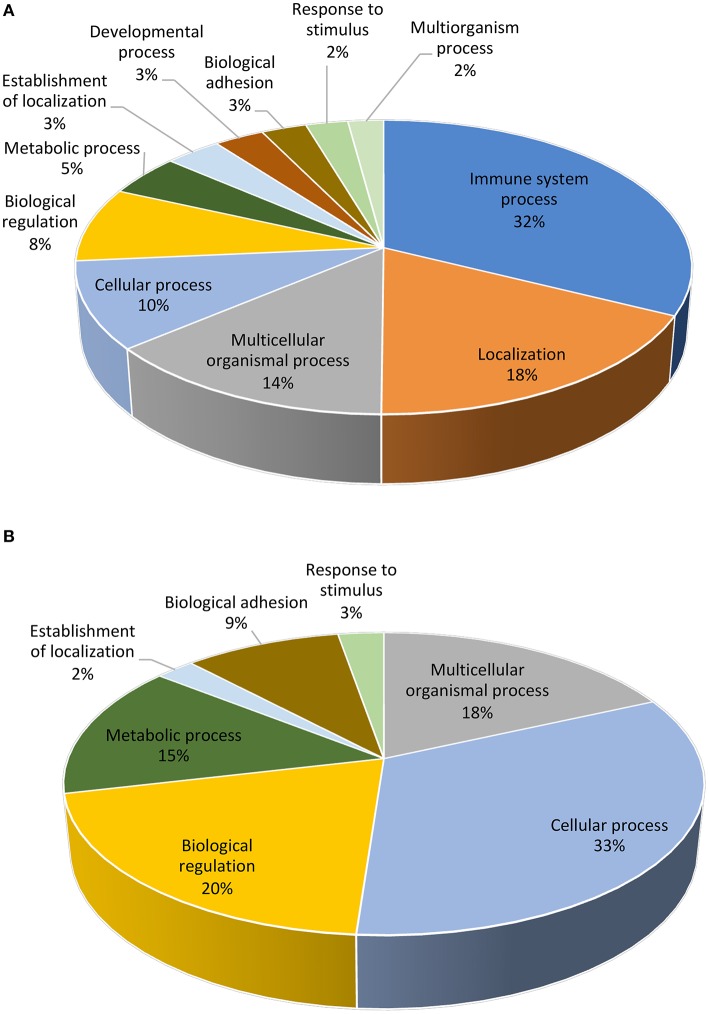
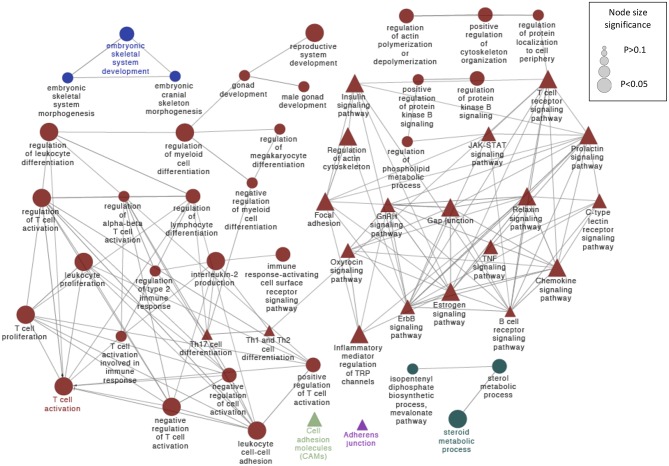
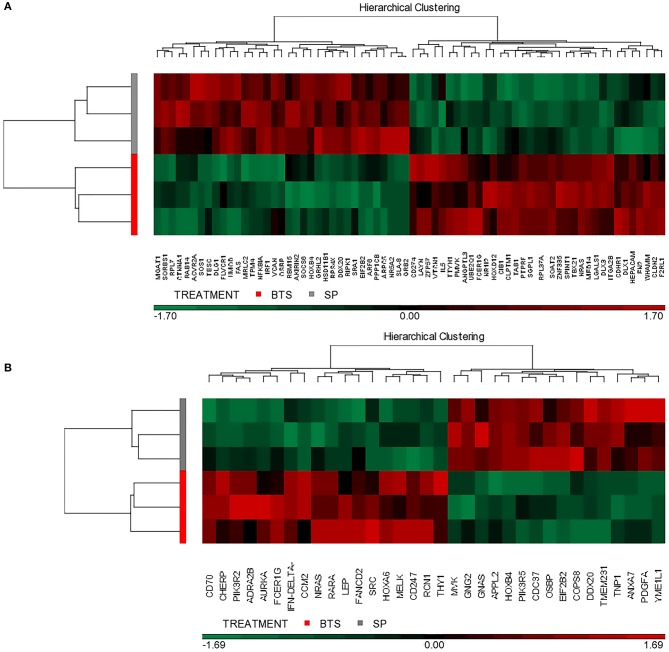
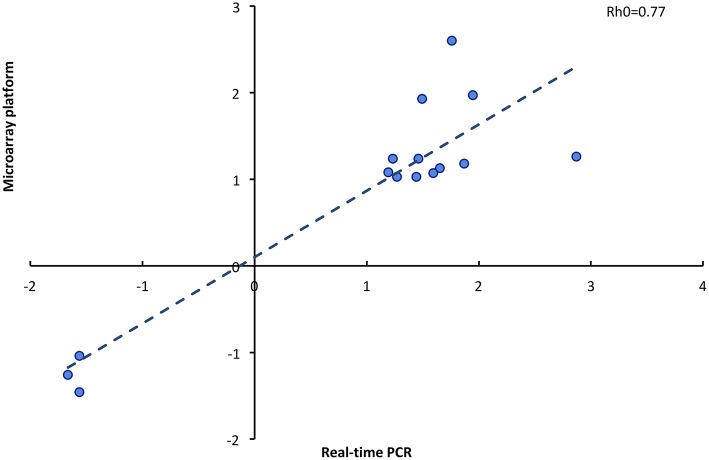
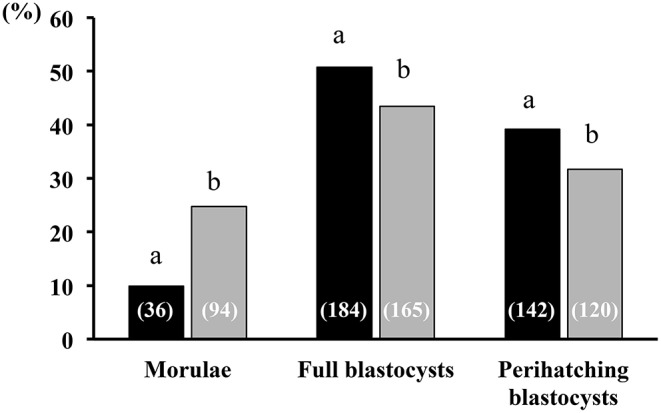
Seminal plasma (SP) promotes sperm survival and fertilizing capacity, and potentially affects embryo development, presumably via specific signaling pathways to the internal female genital tract. This study evaluated how heterologous SP, infused immediately before postcervical artificial insemination (AI) affected embryo development and the transcriptional pattern of the pig endometria containing embryos. Postweaning estrus sows ( = 34) received 40-mL intrauterine infusions of either heterologous pooled SP or Beltsville Thawing Solution (BTS; control) 30 min before AI of semen extended to 10% of homologous SP. Embryos (all sows) and endometrium samples (3 sows/group) were removed during laparotomy 6 days after the infusion of SP or BTS to morphologically evaluate the embryos to determine their developmental stage and to analyze the endometrial transcriptome using microarrays (PORGENE 1.0 ST GeneChip array, Affymetrix) followed by qPCR for further validation. Embryo viability was equal between the groups (~93%), but embryo development was significantly ( < 0.05) more advanced in the SP-treated group compared to control. A total of 1,604 endometrium transcripts were differentially expressed in the SP group compared to the control group. An enrichment analysis showed an overrepresentation of genes and pathways associated with the immune response, cytokine signaling, cell cycle, cell adhesion, and hormone response, among others. SP infusions prior to AI positively impacted the preimplantation embryo development and altered the expression of the endometrial genes and pathways potentially involved in embryo development.
精浆(SP)可促进精子存活和受精能力,并可能通过特定信号通路影响雌性生殖道内的胚胎发育。本研究评估了在子宫颈后人工授精(AI)前立即注入的异种精浆如何影响胚胎发育以及含有胚胎的猪子宫内膜的转录模式。断奶后发情的母猪(n = 34)在将精液稀释至同源精浆的10%后进行人工授精前30分钟,接受40毫升子宫内输注的异种混合精浆或贝尔茨维尔解冻液(BTS;对照)。在输注精浆或BTS后6天剖腹手术期间取出胚胎(所有母猪)和子宫内膜样本(每组3头母猪),对胚胎进行形态学评估以确定其发育阶段,并使用微阵列(PORGENE 1.0 ST基因芯片阵列,Affymetrix)分析子宫内膜转录组,随后进行qPCR进一步验证。两组之间的胚胎存活率相当(约93%),但与对照组相比,精浆处理组的胚胎发育明显更先进(P < 0.05)。与对照组相比,精浆组共有1604个子宫内膜转录本差异表达。富集分析表明,与免疫反应、细胞因子信号传导、细胞周期、细胞粘附和激素反应等相关的基因和通路过度表达。人工授精前输注精浆对植入前胚胎发育有积极影响,并改变了可能参与胚胎发育的子宫内膜基因和通路的表达。