Department of Biomedical & Clinical Sciences (BKV), BKH/Obstetrics & Gynaecology, Faculty of Medicine and Health Sciences, Linköping University, SE-58185 Linköping, Sweden.
Department of Medicine and Animal Surgery, Faculty of Veterinary Medicine, International Excellence Campus for Higher Education and Research "Campus Mare Nostrum", University of Murcia, 30100 Murcia, Spain.
Int J Mol Sci. 2021 Apr 22;22(9):4368. doi: 10.3390/ijms22094368.
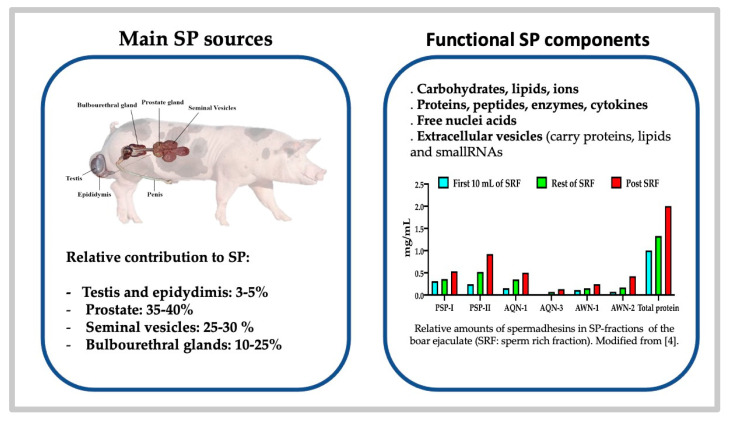
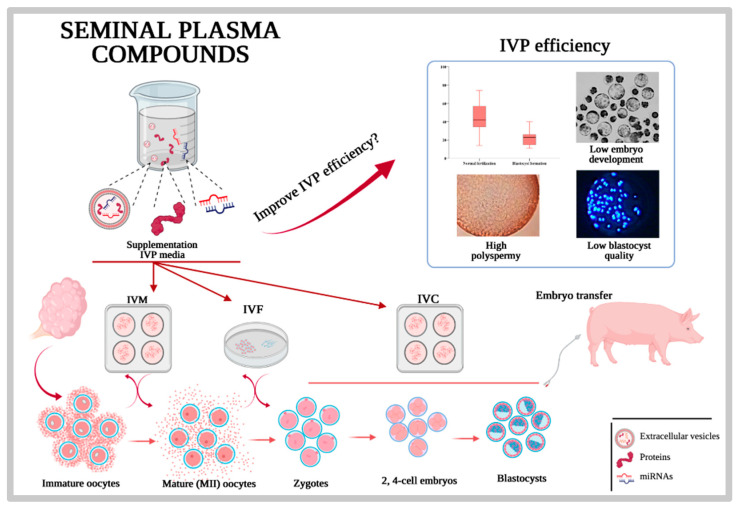
Seminal plasma (SP), the non-cellular component of semen, is a heterogeneous composite fluid built by secretions of the testis, the epididymis and the accessory sexual glands. Its composition, despite species-specific anatomical peculiarities, consistently contains inorganic ions, specific hormones, proteins and peptides, including cytokines and enzymes, cholesterol, DNA and RNA-the latter often protected within epididymis- or prostate-derived extracellular vesicles. It is beyond question that the SP participates in diverse aspects of sperm function pre-fertilization events. The SP also interacts with the various compartments of the tubular genital tract, triggering changes in gene function that prepares for an eventual successful pregnancy; thus, it ultimately modulates fertility. Despite these concepts, it is imperative to remember that SP-free spermatozoa (epididymal or washed ejaculated) are still fertile, so this review shall focus on the differences between the in vivo roles of the SP following semen deposition in the female and those regarding additions of SP on spermatozoa handled for artificial reproduction, including cryopreservation, from artificial insemination to in vitro fertilization. This review attempts, including our own results on model animal species, to critically summarize the current knowledge of the reproductive roles played by SP components, particularly in our own species, which is increasingly affected by infertility. The ultimate goal is to reconcile the delicate balance between the SP molecular concentration and their concerted effects after temporal exposure in vivo. We aim to appraise the functions of the SP components, their relevance as diagnostic biomarkers and their value as eventual additives to refine reproductive strategies, including biotechnologies, in livestock models and humans.
精浆(SP)是精液中的非细胞成分,是由睾丸、附睾和附属生殖腺分泌的异质复合液组成。尽管具有物种特异性的解剖学特点,但它的组成成分始终包含无机离子、特定激素、蛋白质和肽类,包括细胞因子和酶、胆固醇、DNA 和 RNA——后者通常在附睾或前列腺衍生的细胞外囊泡中受到保护。毫无疑问,SP 参与了精子受精前的各种功能。SP 还与生殖道的各个腔室相互作用,触发基因功能的变化,为最终成功怀孕做准备;因此,它最终调节生育能力。尽管有这些概念,但必须记住,没有 SP 的精子(附睾或射出的精子)仍然具有生育能力,因此,本综述将重点关注 SP 在体内的作用,包括在女性生殖道内的作用,以及在进行人工繁殖时对精子的作用,包括冷冻保存,从人工授精到体外受精。本综述试图包括我们自己在模式动物物种上的研究结果,批判性地总结 SP 成分在生殖中的作用的现有知识,特别是在我们自己的物种中,因为该物种越来越受到不孕的影响。最终目标是协调 SP 分子浓度与其在体内暴露后的协同作用之间的微妙平衡。我们旨在评估 SP 成分的功能、它们作为诊断生物标志物的相关性以及它们作为最终添加剂的价值,以完善包括生物技术在内的生殖策略,用于家畜模型和人类。