Walker David G, Shakya Reshma, Morrison Beth, Neller Michelle A, Matthews Katherine K, Nicholls John, Smith Corey, Khanna Rajiv
Newro Foundation The Wesley Hospital Brisbane QLD Australia.
School of Medicine University of Queensland Brisbane QLD Australia.
Clin Transl Immunology. 2019 Nov 5;8(11):e01088. doi: 10.1002/cti2.1088. eCollection 2019.
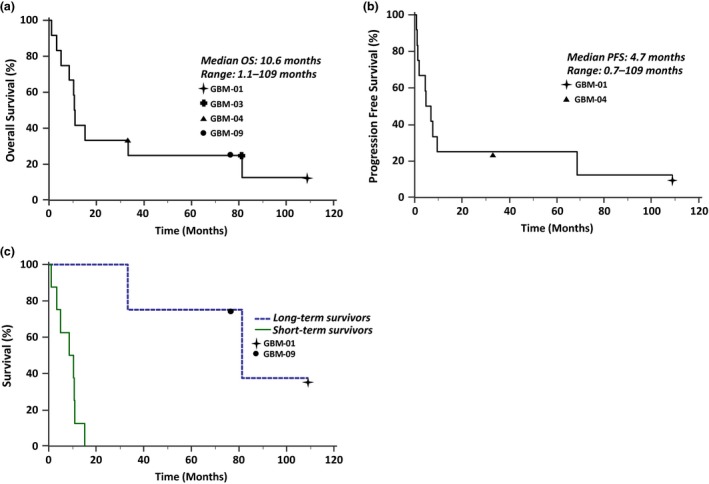
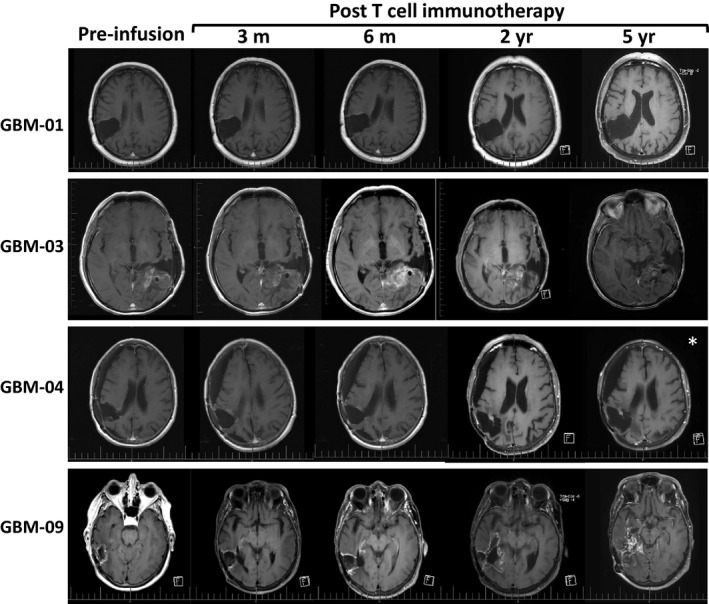
Clinical response to antibody-based immunotherapies targeting checkpoint inhibitors is critically dependent on the tumor immune microenvironment (TIME). However, the precise impact of the TIME on adoptive cellular immunotherapy remains unexplored. Here we have conducted a long-term follow-up analysis of patients with recurrent glioblastoma multiforme (GBM) who were treated with autologous CMV-specific T-cell therapy to delineate the potential impact of the TIME on their clinical response.
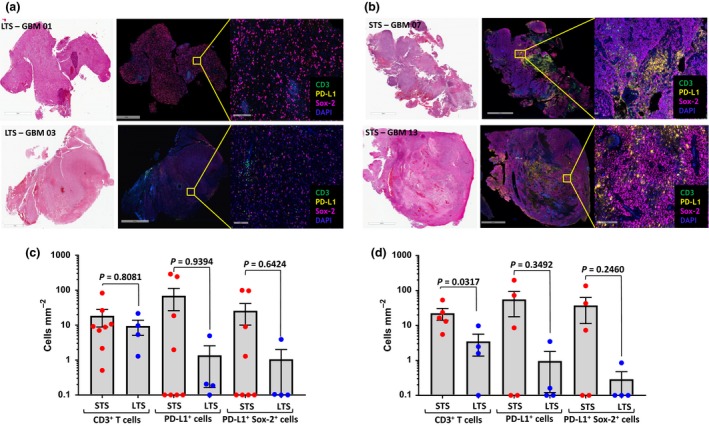
Multiplexed immunohistochemical analysis of CD3, PD-L1 and Sox-2 in GBM tissue biopsies obtained before autologous T-cell therapy was carried out and correlated with long-term survival of GBM patients adoptively treated with T-cell therapy.
Tumor microenvironment analyses revealed that the pre-treatment cellular composition of the tumor tissue may influence the subsequent response to adoptive T-cell therapy. GBM patients who showed prolonged overall survival following T-cell therapy had a significantly lower number of tumor-infiltrating CD3 T cells in recurrent tumors than that in patients with short-term survival. Furthermore, long-term surviving patients showed low or undetectable PD-L1 expression in tumor cells in recurrent GBM biopsies.
We hypothesise that lack of PD-L1-mediated immunosuppression in the TIME may allow efficient immune control following adoptive T-cell therapy. Future studies combining anti-PD-L1 or genetically modified T cells with PD-1 receptor knockdown could be considered to improve clinical responses in patients who have high PD-L1 expression in their tumors.
针对检查点抑制剂的基于抗体的免疫疗法的临床反应严重依赖于肿瘤免疫微环境(TIME)。然而,TIME对过继性细胞免疫疗法的确切影响仍未得到探索。在此,我们对接受自体巨细胞病毒特异性T细胞疗法治疗的复发性多形性胶质母细胞瘤(GBM)患者进行了长期随访分析,以明确TIME对其临床反应的潜在影响。
对在进行自体T细胞治疗前获取的GBM组织活检样本进行CD3、PD-L1和Sox-2的多重免疫组化分析,并将其与接受T细胞疗法过继性治疗的GBM患者的长期生存情况相关联。
肿瘤微环境分析显示,肿瘤组织的治疗前细胞组成可能会影响随后对过继性T细胞疗法的反应。在T细胞治疗后显示总体生存期延长的GBM患者,其复发性肿瘤中肿瘤浸润性CD3 T细胞的数量明显低于短期生存患者。此外,长期存活患者在复发性GBM活检样本的肿瘤细胞中显示出低水平或无法检测到的PD-L1表达。
我们推测,TIME中缺乏PD-L1介导的免疫抑制可能使过继性T细胞疗法后实现有效的免疫控制。未来可考虑将抗PD-L1或基因改造的T细胞与PD-1受体敲低相结合的研究,以改善肿瘤中PD-L1高表达患者的临床反应。