School of Life Science and Technology, Tokyo Institute of Technology.
Proc Jpn Acad Ser B Phys Biol Sci. 2020;96(1):1-9. doi: 10.2183/pjab.96.001.
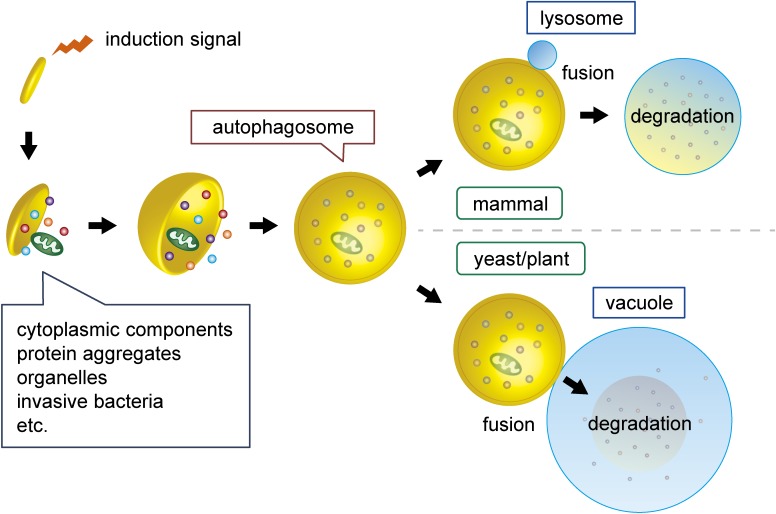
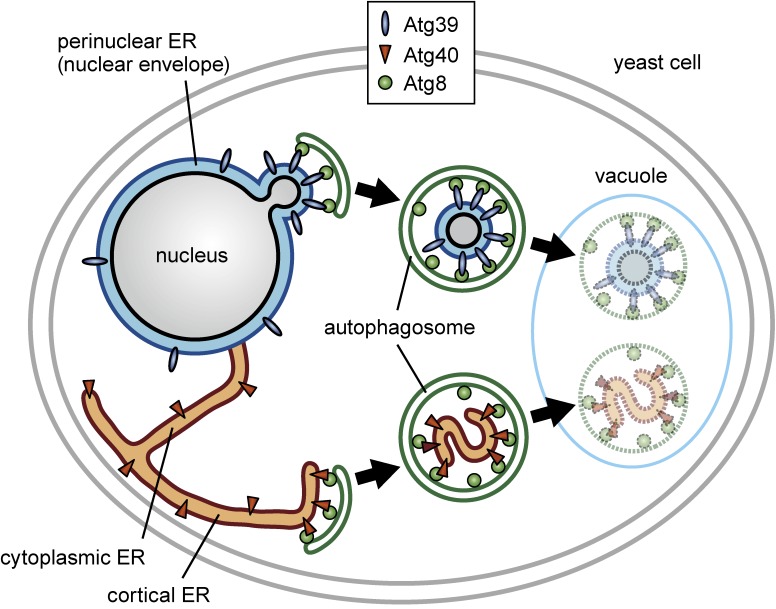
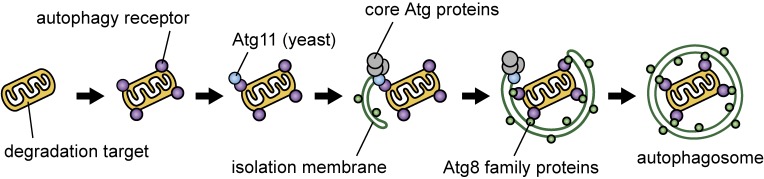
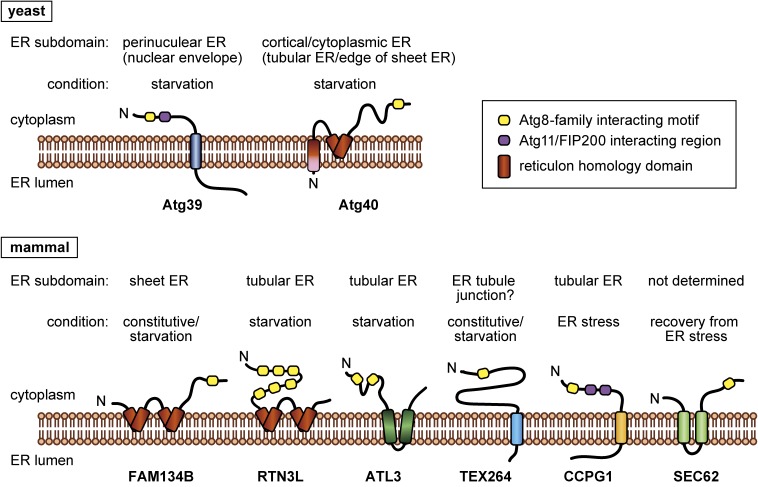
Autophagy is an intracellular degradation system that is present in most eukaryotes. In the process of autophagy, double membrane vesicles called autophagosomes sequester a wide variety of cellular constituents and deliver them to lytic organelles: lysosomes in mammals and vacuoles in yeast and plants. Although autophagy used to be considered a non-selective process in its target sequestration into autophagosomes, recent studies have revealed that autophagosomes can also selectively sequester certain proteins and organelles that have become unnecessary or harmful for the cell. We recently discovered that the endoplasmic reticulum (ER) is degraded by autophagy in a selective manner in the budding yeast Saccharomyces cerevisiae, and identified "receptor proteins" that play pivotal roles in this "ER-phagy" pathway. Moreover, several ER-phagy receptors in mammalian cells have also been reported. This report provides an overview of our current knowledge on ER-phagy and discuss their mechanisms, physiological roles, and possible links to human diseases.
自噬是一种存在于大多数真核生物中的细胞内降解系统。在自噬过程中,双层膜囊泡称为自噬体,可隔离多种细胞成分,并将其递送至溶酶体:哺乳动物中的溶酶体和酵母及植物中的液泡。尽管自噬过去被认为是一种非选择性的过程,其目标是将自噬体隔离,但最近的研究表明,自噬体也可以选择性地隔离某些已经对细胞变得不必要或有害的蛋白质和细胞器。我们最近发现,在出芽酵母酿酒酵母中,内质网(ER)通过自噬以一种选择性的方式被降解,并鉴定出在此“ER 自噬”途径中发挥关键作用的“受体蛋白”。此外,哺乳动物细胞中的几种 ER 自噬受体也已被报道。本报告概述了我们目前对内质网自噬的认识,并讨论了它们的机制、生理作用以及与人类疾病的可能联系。