City of Hope Comprehensive Cancer Center, Duarte, CA 91010, USA.
City of Hope Diabetes Metabolism Research Institute, Duarte, CA 91010, USA.
Int J Environ Res Public Health. 2020 Jan 13;17(2):493. doi: 10.3390/ijerph17020493.
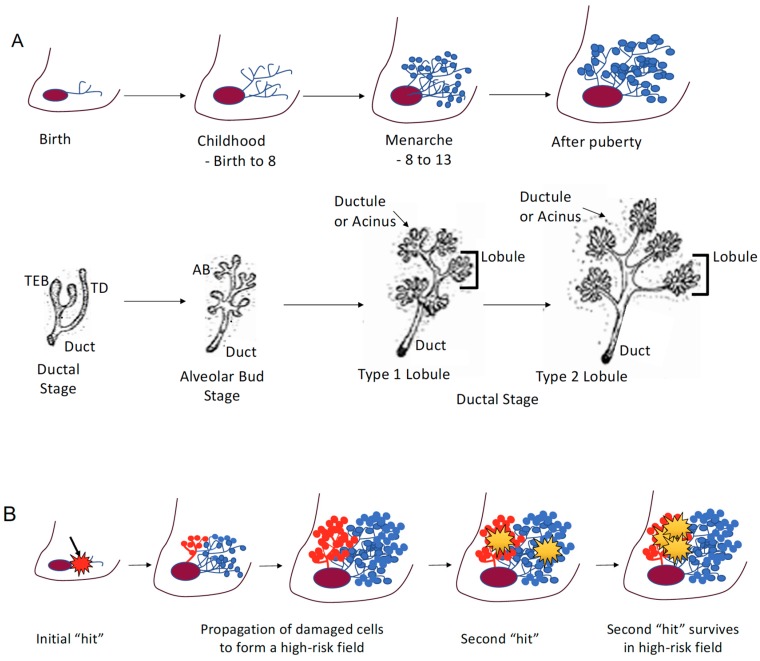
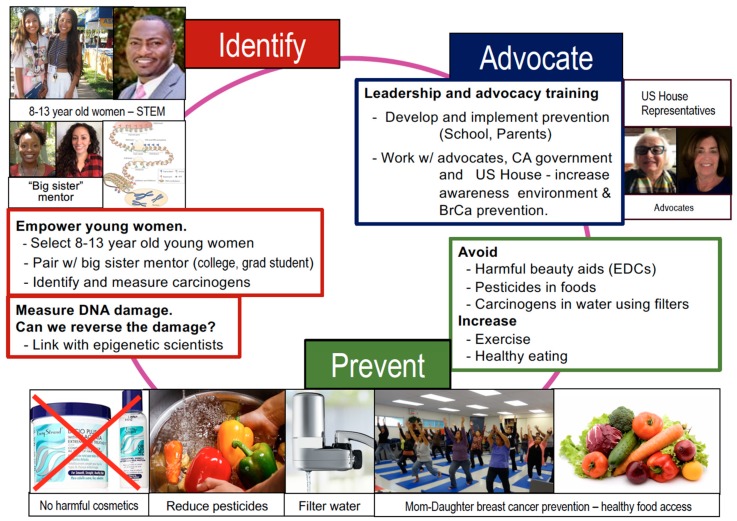
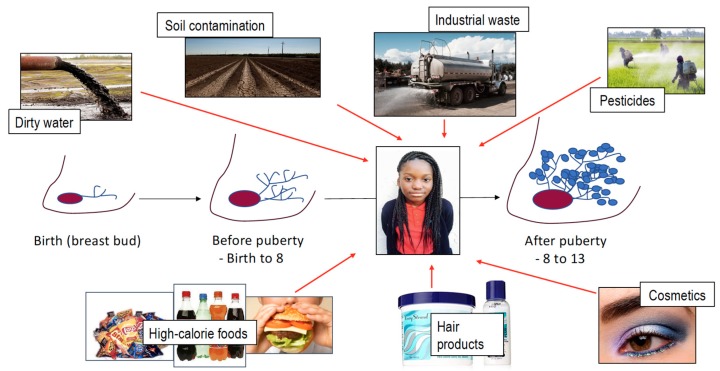
During puberty, a woman's breasts are vulnerable to environmental damage ("window of vulnerability"). Early exposure to environmental carcinogens, endocrine disruptors, and unhealthy foods (refined sugar, processed fats, food additives) are hypothesized to promote molecular damage that increases breast cancer risk. However, prospective human studies are difficult to perform and effective interventions to prevent these early exposures are lacking. It is difficult to prevent environmental exposures during puberty. Specifically, young women are repeatedly exposed to media messaging that promotes unhealthy foods. Young women living in disadvantaged neighborhoods experience additional challenges including a lack of access to healthy food and exposure to contaminated air, water, and soil. The purpose of this review is to gather information on potential exposures during puberty. In future directions, this information will be used to help elementary/middle-school girls to identify and quantitate environmental exposures and develop cost-effective strategies to reduce exposures.
在青春期,女性的乳房容易受到环境损害(“脆弱窗口”)。早期接触环境致癌物、内分泌干扰物和不健康的食物(精制糖、加工脂肪、食品添加剂)被认为会促进增加乳腺癌风险的分子损伤。然而,前瞻性的人体研究很难进行,也缺乏有效的干预措施来预防这些早期暴露。在青春期很难预防环境暴露。具体来说,年轻女性反复接触到宣传不健康食物的媒体信息。生活在贫困社区的年轻女性面临着更多的挑战,包括无法获得健康食品以及接触到污染的空气、水和土壤。本综述的目的是收集青春期潜在暴露的信息。在未来的方向上,这些信息将用于帮助小学/中学女孩识别和量化环境暴露,并制定经济有效的策略来减少暴露。