Department of Orthopaedic Surgery, Koenig-Ludwig-Haus, Center of Musculoskeletal Research, University of Wuerzburg, Wuerzburg, Germany.
Department of Trauma Surgery, Center of Musculoskeletal Research, University of Munich, Munich, Germany.
Biomed J. 2019 Dec;42(6):371-380. doi: 10.1016/j.bj.2019.05.005. Epub 2019 Dec 23.
The anterior-cruciate-ligament (ACL) contains mesenchymal stem cells (ACL-MSCs), suggesting the feasibility of regenerative treatments of this tissue. The immortalization of isolated cells results in cell-lines applicable to develop cell-based therapies. Immortal cell lines eliminate the need for frequent cell isolation from donor tissues. The objective of this study was to characterize cell lines that were generated from isolated ACL-MSCs using TERT gene transfer.
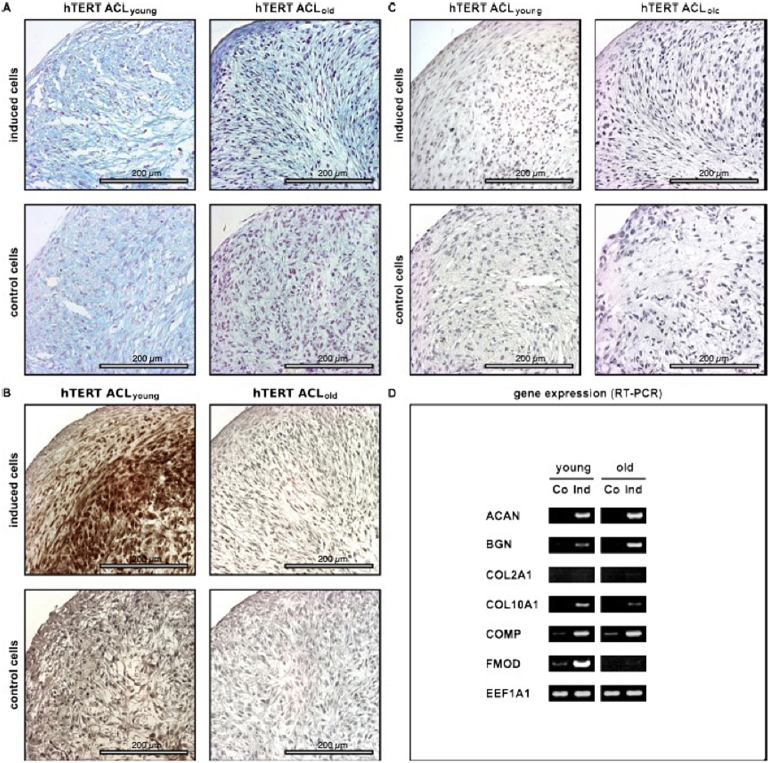
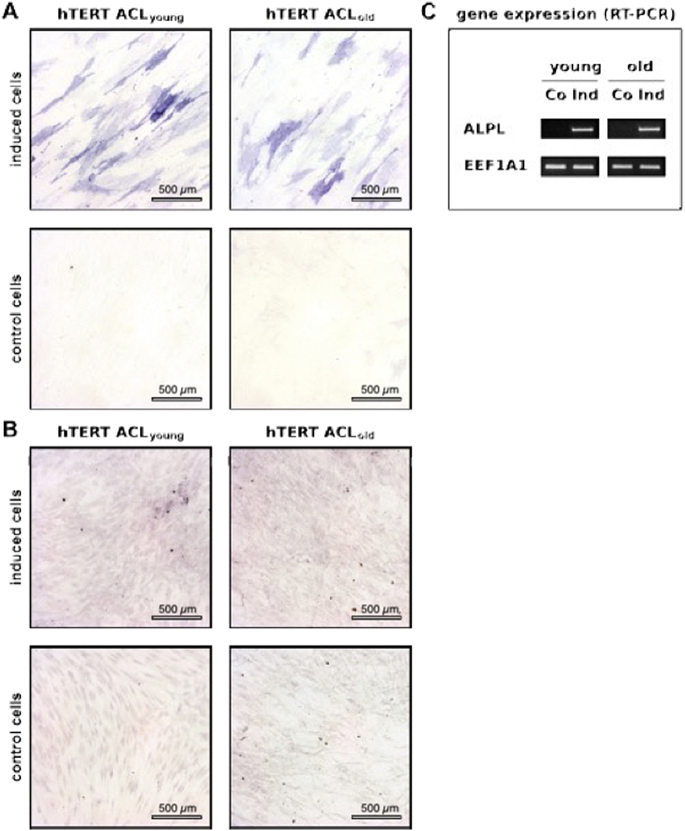
We isolated ACL-MSCs from human ACLs derived at the time of ACL reconstruction surgery or total knee arthroplasty. We generated cell lines and compared them to non-immortalized ACL-MSCs. We assessed the cellular morphology and we detected surface antigen expression. The resistance to senescence was inferred using the beta galactosidase activity. Histology, immunohistochemistry, and reverse transcriptase polymerase chain reaction (RT-PCR) were used to evaluate the multilineage differentiation capacity.
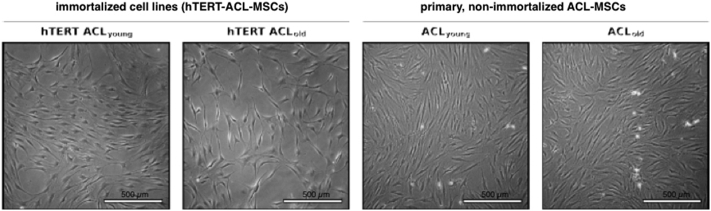
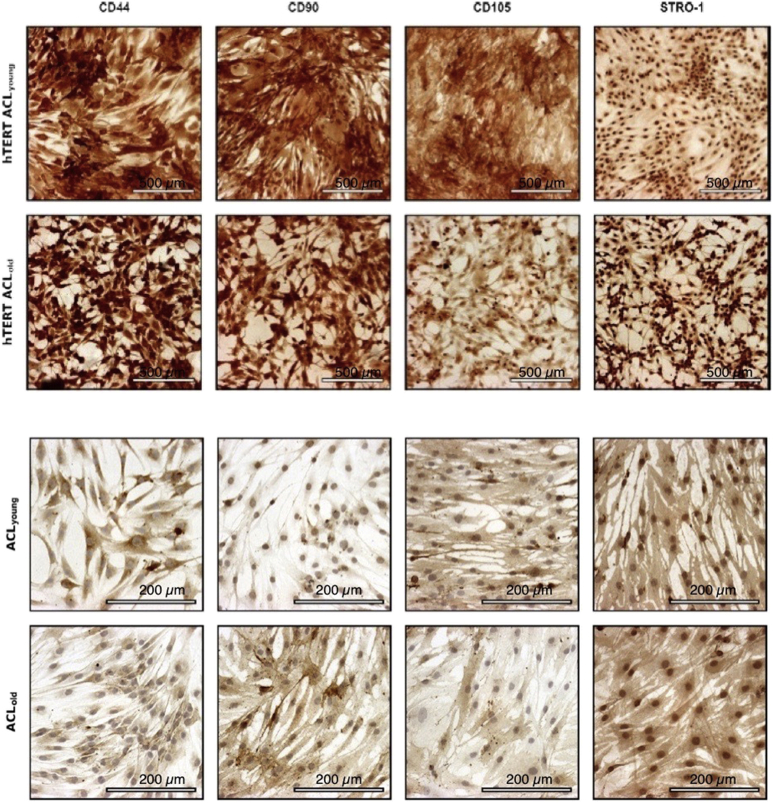
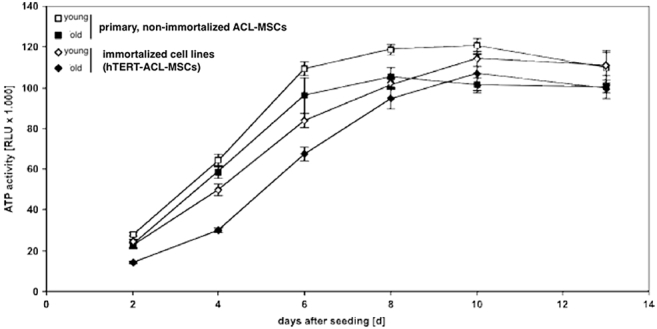
The morphology of hTERT-ACL-MSCs was similar to ACL up to the last assessment at passage eight. We detected a strong surface expression of CD44, CD90, CD105, and STRO-1 in hTERT-ACL-MSCs. No substantial reduction in the ATP activity was observed in hTERT-ACL-MSCs.
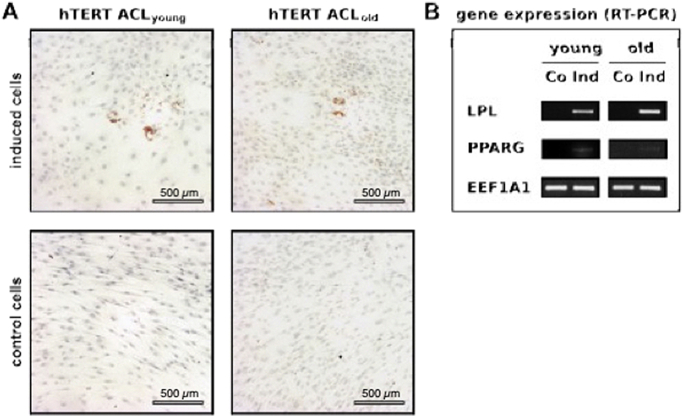
Cell lines generated from ACL-MSCs maintain their morphology, surface antigen expression profile, and proliferative capacity; while markers of senescence appear to be reduced. These cell-lines maintained their multilineage differentiation capacity. The demonstrated model systems can be used for further development of new cell-based regenerative approaches in anterior cruciate ligament research, which may lead to new therapeutic strategies in the future.
前交叉韧带(ACL)含有间充质干细胞(ACL-MSCs),这表明对该组织进行再生治疗是可行的。分离细胞的永生化导致可用于开发基于细胞的治疗方法的细胞系。永生化细胞系消除了从供体组织中频繁分离细胞的需要。本研究的目的是使用 TERT 基因转移来表征从分离的 ACL-MSCs 生成的细胞系。
我们从 ACL 重建手术或全膝关节置换术时获得的人 ACL 中分离 ACL-MSCs。我们生成了细胞系并将其与未永生化的 ACL-MSCs 进行了比较。我们评估了细胞形态并检测了表面抗原表达。通过β半乳糖苷酶活性推断出对衰老的抗性。组织学、免疫组织化学和逆转录聚合酶链反应(RT-PCR)用于评估多能分化能力。
hTERT-ACL-MSCs 的形态与 ACL 相似,直至第八代的最后一次评估。我们在 hTERT-ACL-MSCs 中检测到 CD44、CD90、CD105 和 STRO-1 的强烈表面表达。在 hTERT-ACL-MSCs 中未观察到 ATP 活性的明显降低。
从 ACL-MSCs 生成的细胞系保持其形态、表面抗原表达谱和增殖能力;而衰老标志物似乎减少。这些细胞系保持了多能分化能力。所展示的模型系统可用于进一步开发前交叉韧带研究中的新型基于细胞的再生方法,这可能为未来带来新的治疗策略。