Department of Audiology and Phoniatrics, Nofer Institute of Occupational Medicine, Lodz, Poland.
Centre de recherche de l'Institut universitaire de gériatrie de Montréal, Québec, Canada.
PLoS One. 2020 Jan 21;15(1):e0227978. doi: 10.1371/journal.pone.0227978. eCollection 2020.
Occupational exposure to styrene has been shown to be associated with an increased probability of developing hearing loss. However, the sites of lesions in the auditory system in humans remain unknown. The aim of this study was to investigate the possible adverse effects of styrene exposure on the cochlea of human subjects.
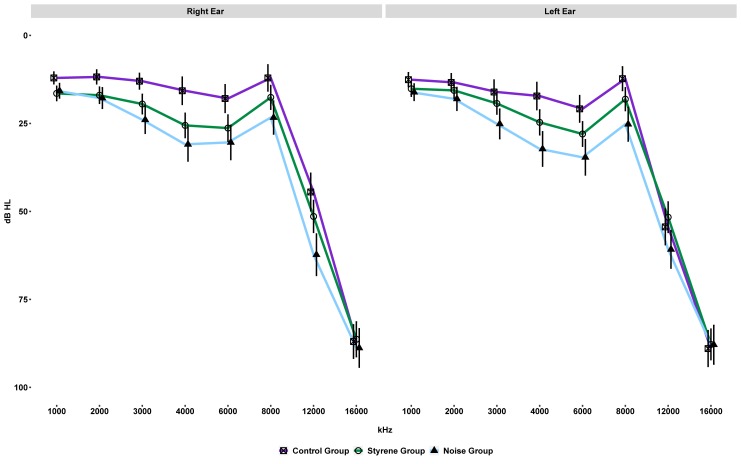
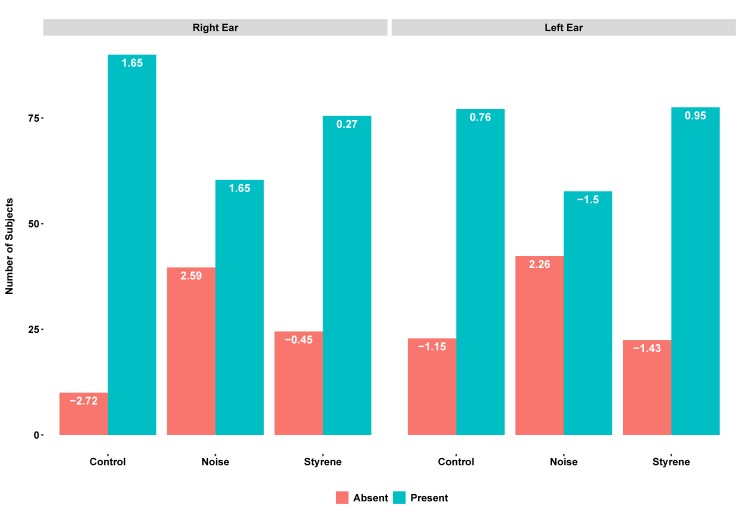
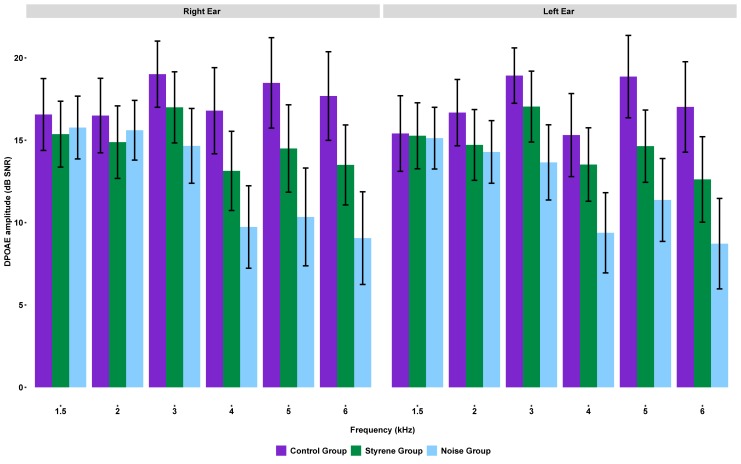
The hearing function of 98 styrene-exposed male workers from the glass fibre-reinforced plastics industry (mean concentration of 55 mg/m3) was evaluated bilaterally using pure-tone audiometry (1000-16000 Hz), distortion product otoacoustic emissions (DPOAEs), and auditory brainstem response (ABR). The results were compared to a group of 111 male workers exposed to noise (above 85 dBA) and 70 male white-collar workers exposed to neither noise nor solvents. Age and noise exposure levels were accounted for as confounding variables in all statistical models.
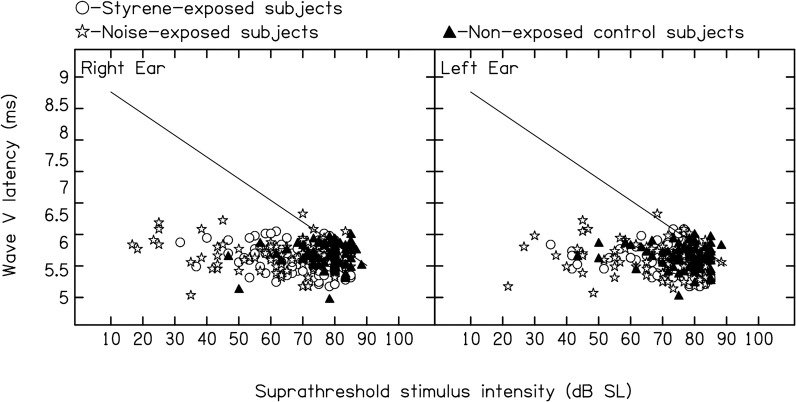
Styrene exposure was significantly associated with poorer pure-tone thresholds (1-8 kHz), lower DPOAE amplitudes (5-6 kHz), and shorter wave V latencies in both ears compared to control-group subjects. Similar results were found among noise-exposed subjects. A further analysis with wave V latency showed that styrene-exposed subjects showed significantly shorter latencies than expected according to normative data. These results suggest that occupational exposure to styrene at moderate concentrations is associated with cochlear dysfunction, at least at high frequencies. DPOAEs may be considered a valuable diagnostic tool in hearing conservation programs in workers exposed to styrene.
已有研究表明,职业性接触苯乙烯与听力损失风险增加有关。然而,人类听觉系统损伤的部位仍不清楚。本研究旨在探讨苯乙烯暴露对人体耳蜗可能产生的不良影响。
使用纯音测听(1000-16000 Hz)、畸变产物耳声发射(DPOAE)和听性脑干反应(ABR),对来自玻璃纤维增强塑料行业的 98 名男性苯乙烯暴露工人(平均浓度为 55mg/m3)进行双侧听力功能评估。将研究结果与一组暴露于噪声(85dBA 以上)的 111 名男性工人和 70 名既未接触噪声也未接触溶剂的男性白领工人进行比较。在所有的统计模型中,年龄和噪声暴露水平均被视为混杂变量。
与对照组相比,苯乙烯暴露工人的纯音阈值(1-8 kHz)较差,DPOAE 幅度(5-6 kHz)较低,双耳 V 波潜伏期较短。在噪声暴露组中也发现了类似的结果。进一步对 V 波潜伏期进行分析发现,苯乙烯暴露组的潜伏期明显短于根据参考数据得出的预期潜伏期。这些结果表明,职业性接触中等浓度的苯乙烯与耳蜗功能障碍有关,至少在高频时如此。DPOAE 可被视为接触苯乙烯工人听力保护计划中的一种有价值的诊断工具。