Mateu-Sanz Miguel, Tornín Juan, Brulin Bénédicte, Khlyustova Anna, Ginebra Maria-Pau, Layrolle Pierre, Canal Cristina
Biomaterials, Biomechanics and Tissue Engineering Group, Department Materials Science and Metallurgy, Technical University of Catalonia (UPC), Escola d'Enginyeria Barcelona Est (EEBE), c/Eduard Maristany 14, 08019 Barcelona, Spain.
Barcelona Research Center in Multiscale Science and Engineering, UPC, 08019 Barcelona, Spain.
Cancers (Basel). 2020 Jan 17;12(1):227. doi: 10.3390/cancers12010227.
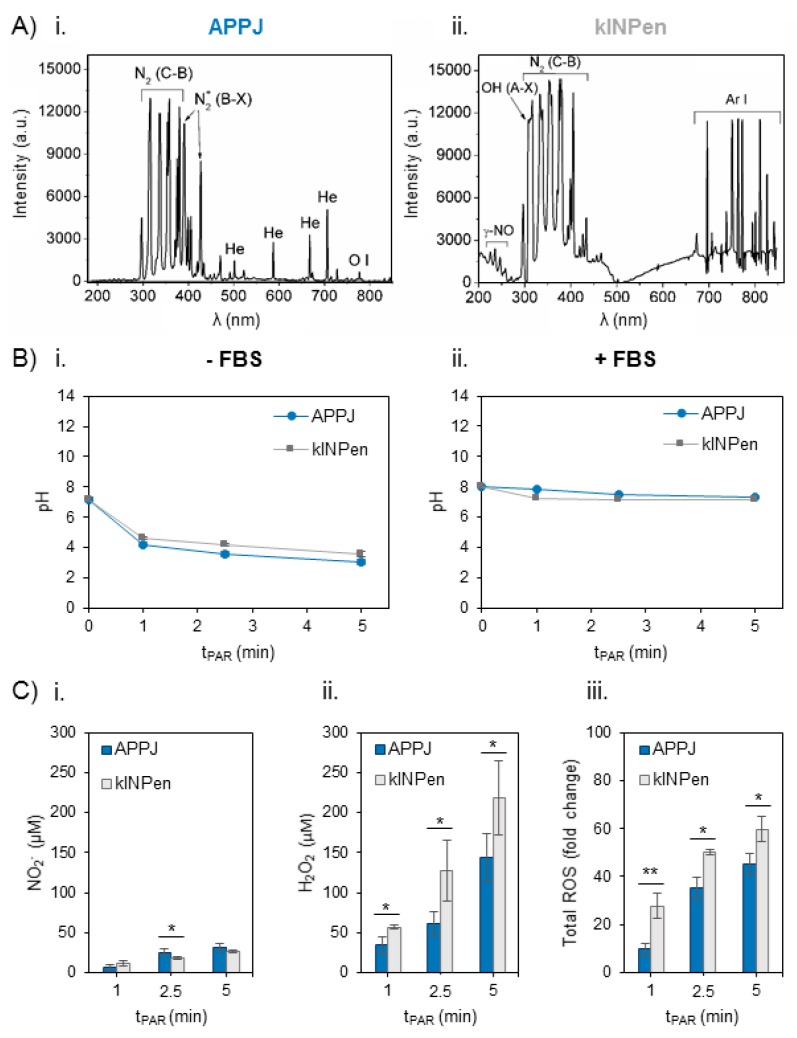
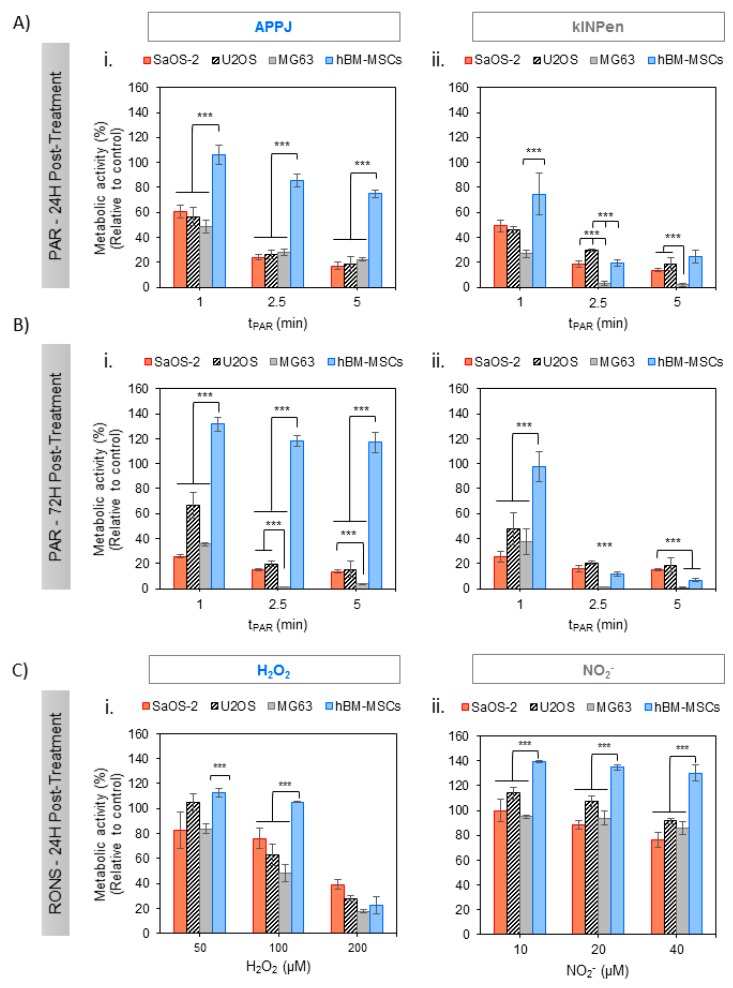
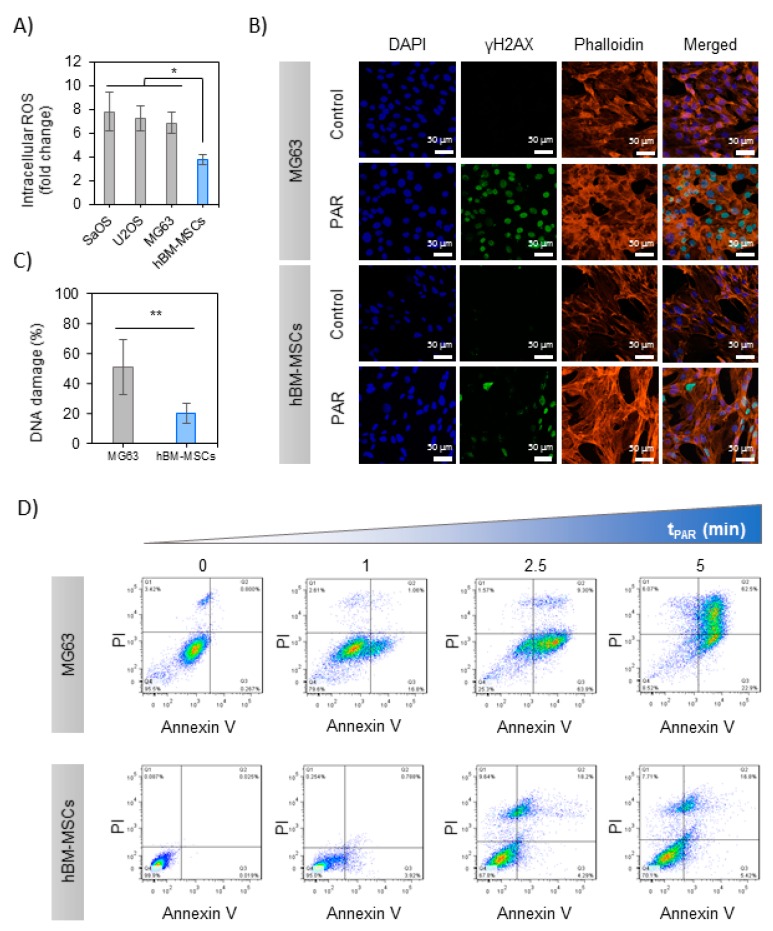
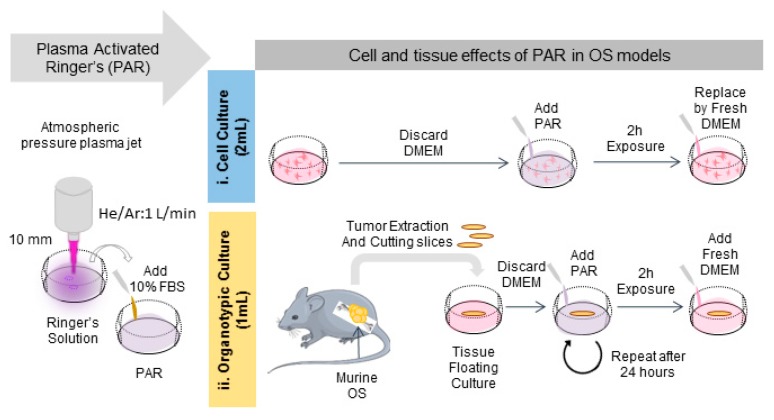
Osteosarcoma (OS) is the main primary bone cancer, presenting poor prognosis and difficult treatment. An innovative therapy may be found in cold plasmas, which show anti-cancer effects related to the generation of reactive oxygen and nitrogen species in liquids. In vitro models are based on the effects of plasma-treated culture media on cell cultures. However, effects of plasma-activated saline solutions with clinical application have not yet been explored in OS. The aim of this study is to obtain mechanistic insights on the action of plasma-activated Ringer's saline (PAR) for OS therapy in cell and organotypic cultures. To that aim, cold atmospheric plasma jets were used to obtain PAR, which produced cytotoxic effects in human OS cells (SaOS-2, MG-63, and U2-OS), related to the increasing concentration of reactive oxygen and nitrogen species generated. Proof of selectivity was found in the sustained viability of hBM-MSCs with the same treatments. Organotypic cultures of murine OS confirmed the time-dependent cytotoxicity observed in 2D. Histological analysis showed a decrease in proliferating cells (lower Ki-67 expression). It is shown that the selectivity of PAR is highly dependent on the concentrations of reactive species, being the differential intracellular reactive oxygen species increase and DNA damage between OS cells and hBM-MSCs key mediators for cell apoptosis.
骨肉瘤(OS)是主要的原发性骨癌,预后较差且治疗困难。冷等离子体可能是一种创新疗法,其显示出与液体中活性氧和氮物质生成相关的抗癌作用。体外模型基于经等离子体处理的培养基对细胞培养物的影响。然而,等离子体激活的生理盐水溶液在骨肉瘤中的临床应用效果尚未得到探索。本研究的目的是在细胞和器官型培养中获得关于等离子体激活的林格氏液(PAR)用于骨肉瘤治疗作用的机制性见解。为此,使用冷大气等离子体射流获得PAR,其在人骨肉瘤细胞(SaOS-2、MG-63和U2-OS)中产生细胞毒性作用,这与所产生的活性氧和氮物质浓度增加有关。在相同处理下,人骨髓间充质干细胞(hBM-MSCs)的持续活力证明了其选择性。小鼠骨肉瘤的器官型培养证实了在二维培养中观察到的时间依赖性细胞毒性。组织学分析显示增殖细胞减少(Ki-67表达降低)。结果表明,PAR的选择性高度依赖于活性物质的浓度,骨肉瘤细胞与hBM-MSCs之间细胞内活性氧物质的差异增加和DNA损伤是细胞凋亡的关键介质。